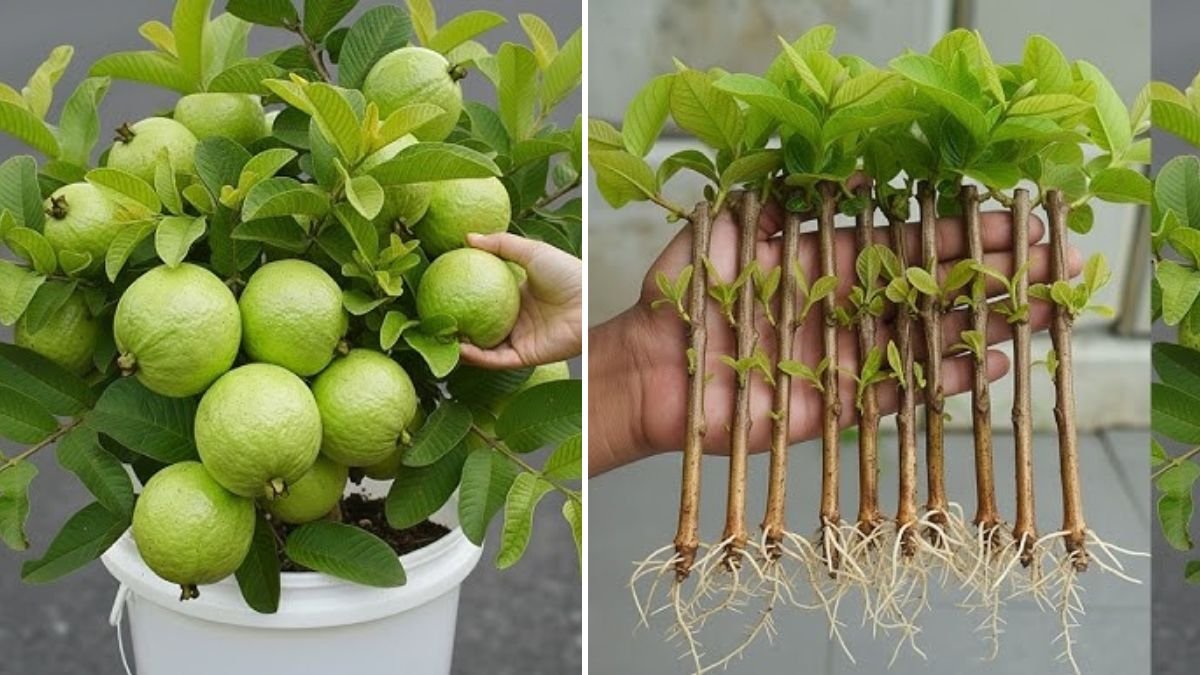
Guava is one of the most popular tropical fruits—sweet, nutritious, fragrant, and incredibly easy to grow at home when you use the right propagation method. While many people grow guava from seeds, the best way to get fast-growing, true-to-type, and high-yielding guava plants is through cuttings. This method ensures that the new plant carries all the characteristics of the mother tree—fruit size, taste, color, and productivity.
In this comprehensive 1200-word article, you’ll learn step-by-step how to propagate guava tree from cuttings, how to prepare the best rooting medium, and how to care for your new plants so they grow strong and healthy.
Why Grow Guava from Cuttings?
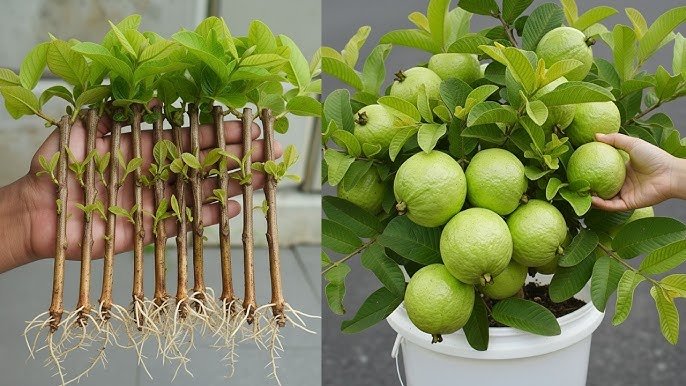
Growing guava from cuttings has many advantages:
- Guarantees identical fruit quality as the parent plant
- Faster fruiting compared to seed-grown plants
- Easy, low-cost, and perfect for beginners
- Allows you to multiply your favorite variety
- Higher success rate with the right method
Guava is hardy, disease-resistant, and grows well in pots and gardens, making propagation even more rewarding.
1. Best Season for Guava Propagation
Guava cuttings root best during warm and humid months.
Best Time to Propagate
- Late spring
- Early monsoon
- Late monsoon
- Early autumn
Avoid extreme cold or scorching summer afternoons.
Warm weather + moderate humidity = faster root formation.
2. Selecting the Right Cutting
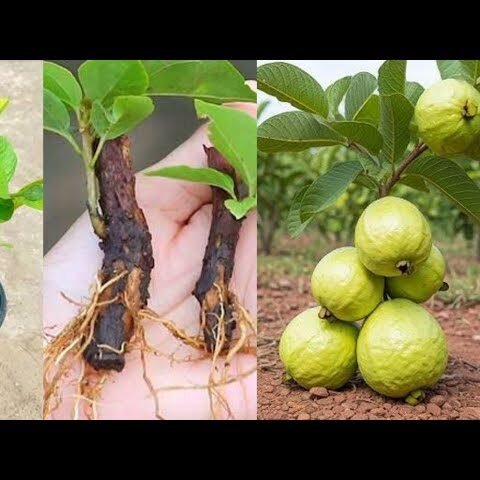
Choosing the correct type of branch increases success dramatically.
Characteristics of a Good Guava Cutting
- Length: 6–8 inches
- Thickness: similar to a pencil
- Semi-hardwood (neither too soft nor too woody)
- Comes from a healthy, disease-free tree
- At least 3–4 nodes present
- Mature leaves only at the top
How to Prepare the Cutting
- Make a clean 45° cut just below a node.
- Remove bottom leaves completely.
- Keep only 2–3 small leaves at the top.
- Slightly scrape the lower part to expose cambium—this triggers rooting.
- Let the cutting air-dry for 10 minutes to reduce moisture.
Your cutting is now ready for rooting.
3. Preparing the Best Soil Mix for Guava Cuttings
The rooting medium must be light, well-draining, and airy.
Perfect Soil Mix
- 40% river sand (for drainage)
- 40% cocopeat (for moisture retention)
- 20% compost (for mild nutrition)
Optional Additions
- A handful of perlite for extra aeration
- Neem cake powder to prevent fungus
Important:
Do NOT use heavy clay or garden soil—it suffocates the cutting and causes rotting.
4. Rooting Hormone: A Secret to Higher Success
Since guava is slightly harder to root than soft plants, rooting hormone helps tremendously.
You Can Use:
- Aloe vera gel (natural, effective)
- Commercial rooting powder (IBA)
- Honey + cinnamon mix (anti-fungal)
How to Apply:
- Dip the bottom 1–2 inches of the cutting.
- Shake off the excess powder/gel.
- Plant immediately.
Hormones speed up root formation and prevent fungal attacks.
5. Planting Guava Cuttings Step-by-Step
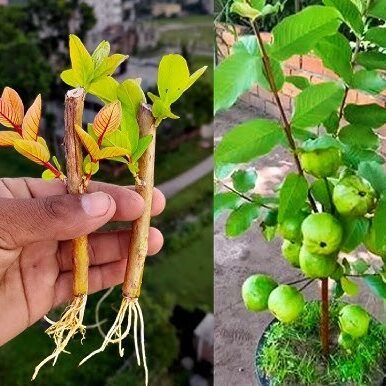
Follow these steps for the best results:
Step 1: Prepare Your Pot
Choose a 6–8 inch pot with multiple drainage holes.
Step 2: Fill it with the Soil Mix
Do not press too tightly—keep it loose.
Step 3: Make a Hole
Use a stick or pencil to create a deep hole.
Step 4: Insert the Cutting
- Insert 2–3 inches deep
- Ensure at least one node is buried
- Press soil gently around it
Step 5: Water Lightly
Just moisten the soil—do not soak it.
Step 6: Create a Mini Greenhouse
Cover the pot with:
- Transparent plastic bag, or
- A clear bottle, or
- Poly cup
This helps maintain high humidity, which is essential for guava rooting.
6. Light Requirements
Guava cuttings like bright light but not direct sunshine.
Best placement:
- Bright shade
- Under a tree
- Balcony with filtered light
- Near a window with indirect sun
Direct sunlight can burn the cutting or dry it too quickly.
7. Watering Routine
Watering is crucial for successful rooting.
Watering Rules:
- Keep soil slightly moist
- Water when top layer looks dry
- Avoid overwatering at all costs
Too much water = rotting
Too little water = drying
Balance is key.
8. Rooting Time: When Will Roots Form?
Guava roots slower than some plants, so be patient.
Rooting Timeline
- Early signs: 20–30 days
- Proper root development: 6–8 weeks
- Vigorous growth: 8–10 weeks
Signs of Successful Rooting
- New leaf buds appear
- Top leaves turn greener
- Cutting stands firm when touched
- No yellowing or blackening
If the cutting remains green for 2–3 weeks, it is likely rooting successfully.
9. Transplanting Rooted Guava Cuttings
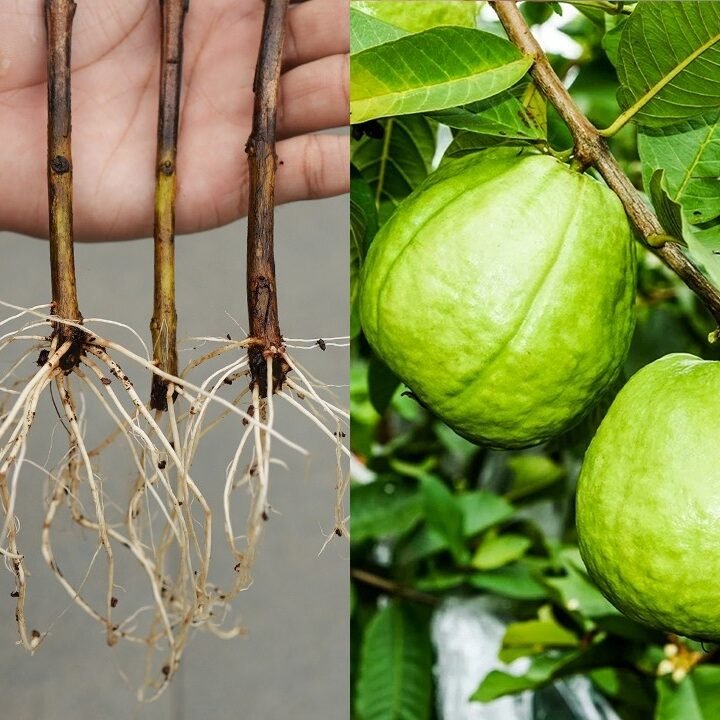
Once your cutting develops strong roots, it’s time to shift to a bigger pot.
When to Transplant:
- After 6–8 weeks
- When new leaves grow
- When roots appear through drainage holes
How to Transplant:
- Pick a 12–14 inch pot.
- Prepare rich soil mix:
- 40% garden soil
- 40% compost
- 20% sand/cocopeat
- Gently take out the cutting (do not disturb roots).
- Plant it carefully and water lightly.
- Keep in shade for 3–4 days before exposing to mild sun.
10. Caring for Young Guava Plants
Young guava plants grow quickly with proper care.
Give Them:
- 4–6 hours of sunlight
- Light watering
- Monthly organic fertilizer
- Mulching to preserve moisture
Best Fertilizers:
- Vermicompost
- Cow dung compost
- Banana peel liquid
- Mustard cake water
- Wood ash (stimulates flowering)
Avoid chemical fertilizers at early stages.
11. Common Issues and Solutions
Guava cuttings can develop problems, but all are manageable.
Cutting Turning Black
Cause: Fungus
Solution: Use neem oil spray & improve drainage.
Leaves Turning Yellow
Cause: Overwatering
Solution: Reduce watering & increase airflow.
No New Growth
Cause: Low humidity or cold weather
Solution: Cover with plastic & keep warm.
Drooping
Cause: Harsh sunlight
Solution: Move to shade immediately.
12. Tips for 100% Success in Guava Propagation
Follow these expert tips:
- Always use semi-hardwood cuttings.
- Maintain warm temperature (25–30°C).
- Use a humidity dome (bottle or plastic cover).
- Do not disturb the cutting for at least 3 weeks.
- Keep the soil mix light and airy.
- Apply neem oil every 10 days to prevent fungus.
Your success rate will significantly increase.
Conclusion
Propagating guava from cuttings is one of the most rewarding experiences for home gardeners. With a little patience and the right technique, you can grow strong, fruitful guava trees that produce delicious guavas for many years. This method saves money, preserves your favorite varieties, and helps you expand your garden naturally.