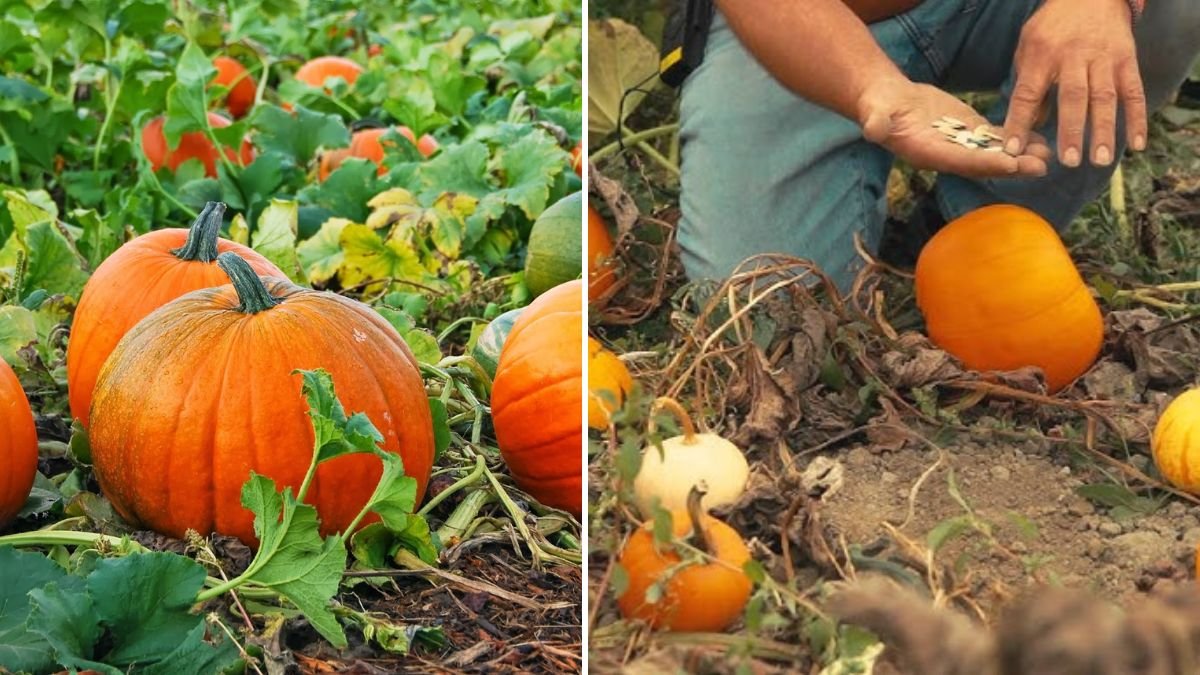
Pumpkins are one of the most satisfying plants you can grow. Their sprawling vines, bright yellow flowers, and large, beautiful fruits bring joy to every home garden. Whether you have a backyard, balcony, terrace, or even a small open space, you can grow a ton of pumpkins at home—as long as you know the secrets behind their explosive growth.
This guide reveals all the expert techniques to help you grow healthy vines, tons of flowers, and multiple large pumpkins in one season. Follow these steps, and your home garden will be overflowing with pumpkin harvests.
Why Growing Pumpkins at Home Is So Rewarding

Pumpkins are more than just a vegetable—they’re a complete gardening experience.
Fast-growing and highly productive
One plant can produce many fruits if trained correctly.
Beautiful garden aesthetics
Their large leaves and cheerful flowers make your space look lush.
Nutrient-rich food
Pumpkins are loaded with vitamins A, C, potassium, and antioxidants.
Grow anywhere
On the ground, in containers, on trellises, or even on rooftops.
Low maintenance
With the right care, pumpkins practically take care of themselves.
Step 1: Choose the Best Pumpkin Variety
Different pumpkin varieties produce different fruit sizes. Choose based on your space:
Small-space varieties
- Baby Bear
- Jack Be Little
- Sugar Pie
Medium to large varieties
- Cinderella
- Jack O’Lantern
- Kabocha
- Japanese Pumpkin (Kuri)
Giant varieties (requires big space)
- Big Max
- Atlantic Giant
Pick a fast-growing variety if you’re a beginner.
Step 2: Soil Preparation—The Secret to Massive Growth
Pumpkins love rich, loose, fertile soil.
The healthier the soil, the bigger your pumpkins.
Ideal Soil Mix:
- 40% garden soil
- 30% well-rotted cow dung or compost
- 20% cocopeat
- 10% sand or perlite
Add:
- A handful of bone meal (for strong roots)
- A handful of neem cake (to prevent pests)
- A few banana peels or wood ash (for potassium)
Why This Works:
Pumpkins are heavy feeders.
Rich soil = strong vines, more flowers, more fruits.
Step 3: Planting Seeds the Right Way

Pumpkin seeds germinate quickly when planted correctly.
Steps:
- Soak seeds in warm water for 4–6 hours.
- Plant them 1 inch deep.
- Keep soil moist but not soggy.
- Provide sunlight and warmth.
Seedlings appear in 4–7 days.
Tip:
Start seeds in cups, then transplant to avoid root damage.
Step 4: Sunlight—The Fuel for Fruit Production
Pumpkins need at least 6–8 hours of direct sunlight daily.
More sunlight = faster growth + more flowers + bigger fruits.
If growing indoors or on a balcony, place them in the brightest possible area.
Step 5: Watering—Keep It Consistent
Pumpkins need constant moisture.
Optimal Watering Tips:
- Water deeply, not lightly.
- Water at the base, not the leaves.
- Morning watering is best.
- Never let soil dry out completely.
Mulching with straw or dry leaves helps maintain moisture and reduces diseases.
Step 6: Vining & Training—The Secret to High Production

Pumpkin vines can grow 3–6 meters long.
To control them and increase productivity:
Training Techniques:
- Allow the main vine to grow straight.
- Prune side vines if space is limited.
- Pin down vines with soil to encourage more root points.
Why Train the Vines?
Each time you pin the vine to the ground, it creates secondary roots, which:
- Absorb more nutrients
- Strengthen the plant
- Increase fruit production
This is one of the biggest secrets to a heavy pumpkin harvest!
Step 7: Flowering & Pollination—Boost Fruit Set
Pumpkins produce two types of flowers:
- Male flowers (many)
- Female flowers (few and have tiny pumpkin-shaped ovaries)
To Increase Fruit Production:
- Encourage more female flowers by reducing nitrogen after 5 weeks.
- Give potassium-rich fertilizers like banana peel water.
- Water consistently.
- Provide full sun.
Pollination Tip:
If bees are few:
- Pick a male flower.
- Gently rub its pollen onto the female flower’s center.
- Do this early morning for best results.
Hand pollination significantly increases the number of pumpkins you harvest.
Step 8: Fertilization Schedule—Feed for Maximum Output

Pumpkins grow FAST and need regular nutrients.
Week-by-Week Feeding Guide:
Weeks 1–4 (Leaf Growth Stage)
- High nitrogen fertilizer
- Compost tea
- Seaweed solution (optional)
Weeks 5–8 (Flowering Stage)
- Reduce nitrogen
- Increase phosphorus and potassium
- Banana peel water
- Wood ash water
Weeks 9+ (Fruit Development Stage)
- Add bone meal or fish meal
- Use molasses water for sweetness (optional)
Feed every 10–12 days for explosive growth.
Step 9: Pest & Disease Prevention
Pumpkin plants are vigorous, but still vulnerable.
Common Pests:
- Aphids
- Fruit flies
- Beetles
- Caterpillars
Organic Solutions:
- Neem oil spray weekly
- Soap water spray for aphids
- Ash dusting to repel insects
Diseases:
- Powdery mildew
- Fungus from humidity
Cure by:
- Improved airflow
- Baking soda spray
- Cutting affected leaves
Step 10: Secrets to Growing Huge Pumpkins

Want extra-large pumpkins? Follow these hidden tips:
Select only 1–2 fruits per vine
This directs all energy into fewer pumpkins.
Remove small or deformed fruits early
Let the plant focus on strong ones.
Provide a soft base
Place the fruit on cardboard or straw to avoid rot.
Keep vines healthy
More leaves = more food production.
Maintain even moisture
Dry-wet cycles cause fruit cracking.
Place fruit towards the east
Morning sunlight encourages even coloring.
Step 11: Harvesting at the Perfect Time
Pumpkins are ready when:
- Skin is hard and cannot be pierced easily
- Stem turns yellow or corky
- Fruit has deep, rich color
- Leaves around the fruit begin to dry
How to Harvest:
- Use sharp scissors or pruners.
- Leave 2–3 inches of stem attached.
- Do NOT twist the fruit (stem damage shortens storage life).
Cure the pumpkin in sunlight for 5–7 days before storing.
How to Use Your Homegrown Pumpkins
Pumpkins are incredibly versatile:
- Soups
- Curries
- Purees
- Pies
- Sweets
- Roasted dishes
- Steamed snacks
Leaves and flowers are edible too!
Common Mistakes Beginners Should Avoid
Planting too close
Pumpkins need room to breathe.
Too much nitrogen
Produces leaves, not fruit.
Inconsistent watering
Results in poor fruit quality.
Ignoring pests
Pumpkins attract insects quickly.
Not training vines
Untrained plants waste energy.
Final Thoughts: You Can Grow Tons of Pumpkins at Home!
With the right soil, sunlight, feeding schedule, pollination support, and vine management, pumpkin plants will reward you with multiple large, sweet, beautiful pumpkins—even in small spaces.
This guide gives you all the secrets to:
- Grow vigorous vines
- Produce more female flowers
- Increase fruit set
- Grow big, flavorful pumpkins
- Maximize your harvest in limited space
Whether you’re gardening on a rooftop, balcony, backyard, or side yard, pumpkins are a powerful, productive, and fun crop to grow.