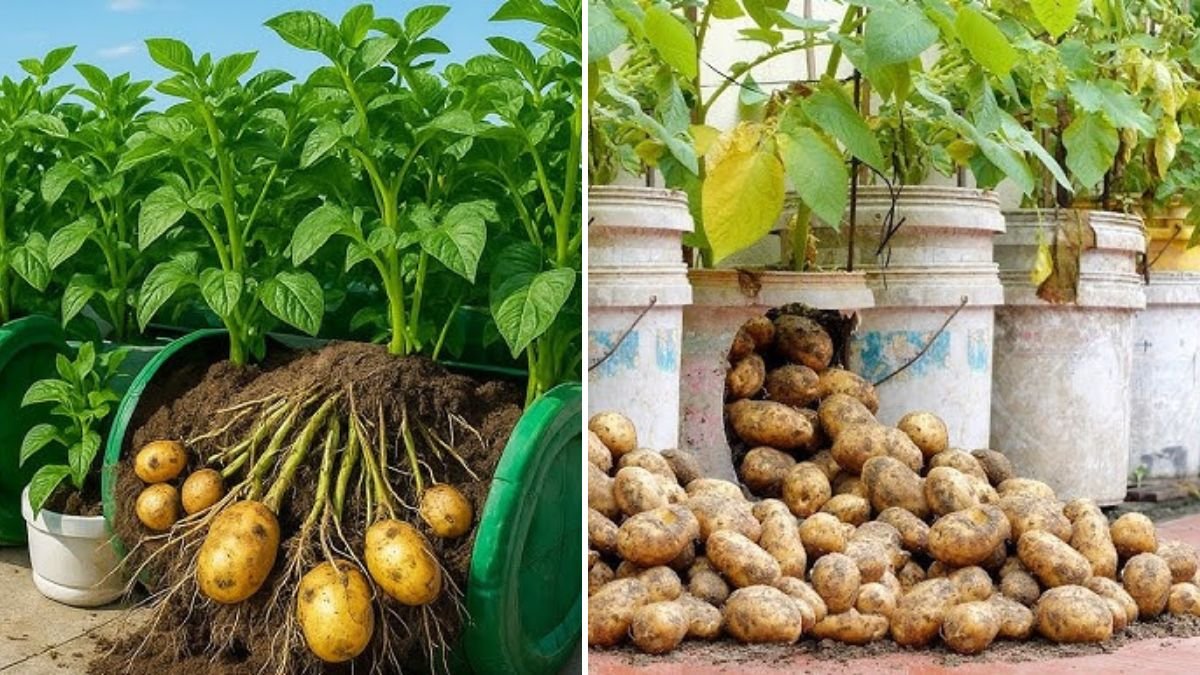
Growing potatoes doesn’t require a vast field or a traditional garden bed. With the right method, you can transform even a tiny balcony into a surprisingly productive potato farm. Container potato gardening is simple, space-saving, and incredibly rewarding—imagine harvesting handfuls of golden, fresh potatoes just steps from your living room!
This complete guide will show you exactly how to grow potatoes in containers successfully, from selecting seed potatoes to harvesting a bumper crop. Whether you’re a beginner or a seasoned gardener, these practical tips will help you enjoy continuous harvests in any season.
Why Grow Potatoes in Containers?

Potatoes are among the easiest crops to grow in containers, making them perfect for urban gardeners and apartment dwellers. Container growing solves many common problems like soil pests, poor drainage, and inadequate space. Even better, you control the environment—sunlight, water, soil quality—which often leads to healthier plants and larger yields.
Advantages of Container Potatoes
- Ideal for small balconies, patios, or rooftops
- Protects plants from pests like potato beetles and soil diseases
- Allows easier, cleaner harvesting
- Lets you grow potatoes year-round
- Great for experimenting with different varieties
With a well-prepared container and healthy seed potatoes, a high-yield harvest is only weeks away!
1. Choosing the Right Potato Variety

Potatoes come in many shapes, colors, and growth habits. For containers, choose varieties known for compact growth and reliable production.
Great Varieties for Container Growing
- Yukon Gold – Creamy, buttery, perfect for cooking
- Red Pontiac – Prolific and disease-resistant
- Fingerlings – Long, narrow tubers ideal for small containers
- Russet – Classic baking potato
- Charlotte or Maris Peer – Excellent for new potatoes
Short-season varieties mature faster, making them ideal if you want multiple harvests per year.
2. Selecting the Perfect Container

The container you choose plays a huge role in how well your potatoes grow.
Container Requirements
- Depth: Minimum 12–18 inches
- Capacity: At least 10–15 liters (larger for higher yields)
- Material: Grow bags, buckets, plastic tubs, large pots, or even recycled sacks
- Drainage: MUST have drainage holes—potatoes rot in soggy soil
Grow bags are especially popular because they encourage airflow and reduce the risk of root disease.
Pro Tip:
The deeper the container, the more soil you can add later—and the more potatoes your plant can produce.
3. Preparing the Ideal Potting Mix
Healthy potatoes need loose, airy soil so the tubers can expand freely.
Best Soil Mix for Potatoes
- 40% potting soil or garden soil
- 30% compost or aged manure
- 20% coco peat (for moisture retention)
- 10% perlite or sand (for drainage)
Add a handful of:
- Wood ash (boosts potassium and encourages tubers)
- Bone meal (for root and tuber development)
Potatoes grown in rich organic soil always produce better yields.
4. Preparing Seed Potatoes the Right Way

Potatoes grown from grocery-store potatoes often don’t sprout well because they’re treated to prevent sprouting. Use certified seed potatoes whenever possible.
How to Chit (Pre-Sprout) Seed Potatoes
- Leave potatoes in a bright, cool place for 1–2 weeks.
- Sprouts (called eyes) will start to emerge.
- For large potatoes, cut them into chunks with at least 2 eyes per piece.
- Let the cut pieces dry for a day to form a protective layer.
Pre-sprouted potatoes grow faster and produce bigger yields.
5. Planting Potatoes in Containers
Follow this simple planting method for the best results:
Step-by-Step Planting Guide
- Fill the container with 4–6 inches of soil mix.
- Place the seed potatoes (sprouts facing up) on the soil.
- Space them 6 inches apart in larger containers.
- Cover with another 3–4 inches of soil.
- Water thoroughly but don’t soak the soil.
As the plants grow, you’ll “hill up” the soil—one of the secrets to producing more potatoes.
6. Sunlight: The True Key to Higher Yields

Potatoes love sunlight.
Sunlight Requirement
- 6–8 hours of direct sunlight daily
- South-facing balconies work best
- Rotate containers weekly for even growth
More sunlight = stronger stems + bigger tubers.
7. Watering the Right Way
Potatoes need consistently moist soil but will rot if overwatered.
Watering Tips
- Water every 2–3 days, depending on your climate
- In hot weather, water daily
- Avoid waterlogging
- Stick a finger into the soil; if it feels dry 2 inches down, water immediately
Mulching with dry leaves or straw keeps the soil cool and moist.
8. Hill Up to Increase Potato Production
This is one of the most important steps. As the plant grows, add more soil around the stem.
Why Hilling Works
- Encourages more tubers to form
- Protects potatoes from sunlight (prevents greening)
- Provides support to the plant
How to Hill Properly
- When stems reach 6–8 inches tall, add 3–4 inches of soil.
- Keep covering the stem until only the top leaves show.
- Repeat every two weeks until the container is filled.
More hilling = more potatoes.
9. Feeding Your Potato Plants
Potatoes are heavy feeders.
Organic Fertilizers to Use
- Compost
- Banana peel tea (for potassium)
- Diluted seaweed solution
- Vermicompost
- Bone meal
Feeding Schedule
- At planting
- At 30 days
- When flowering begins
Potassium-rich fertilizers help develop bigger and more abundant tubers.
10. Managing Pests Naturally
Container potatoes usually have fewer pests, but keep an eye out for:
- Aphids
- Whiteflies
- Mites
- Fungal issues
Natural Controls
- Neem oil spray
- Garlic-chili spray
- Good airflow
- Avoid overhead watering
Healthy plants resist pests better.
11. When and How to Harvest Potatoes
Harvesting potatoes is one of the most exciting parts of the process.
For Baby Potatoes
- Harvest at 8–10 weeks
- Gently dig around and pick the small tubers
For Full-Sized Potatoes
- Wait until the foliage turns yellow and dries
- Stop watering for 7–10 days
- Gently empty the container and collect the potatoes
Let them air-dry for a few hours before storing.
12. How Many Potatoes Can You Expect?
A single container can produce:
- 3–5 kg from a 5-gallon pot
- 8–12 kg from larger tubs
- Even more if you hill well and feed consistently
Small balcony… huge harvest!
Final Thoughts: Your Balcony Can Be a Potato Goldmine
Growing potatoes in containers is one of the most satisfying gardening projects you can try. It’s simple, requires minimal space, and rewards you with abundant, homegrown potatoes that are far tastier than anything from the store.
With the right soil mix, enough sunlight, proper watering, and consistent hilling, your balcony can become a mini potato farm producing fresh tubers for roasting, boiling, frying, or storing.
Start with just one container—and soon you’ll have an entire balcony filled with lush, productive potato plants. Happy growing!