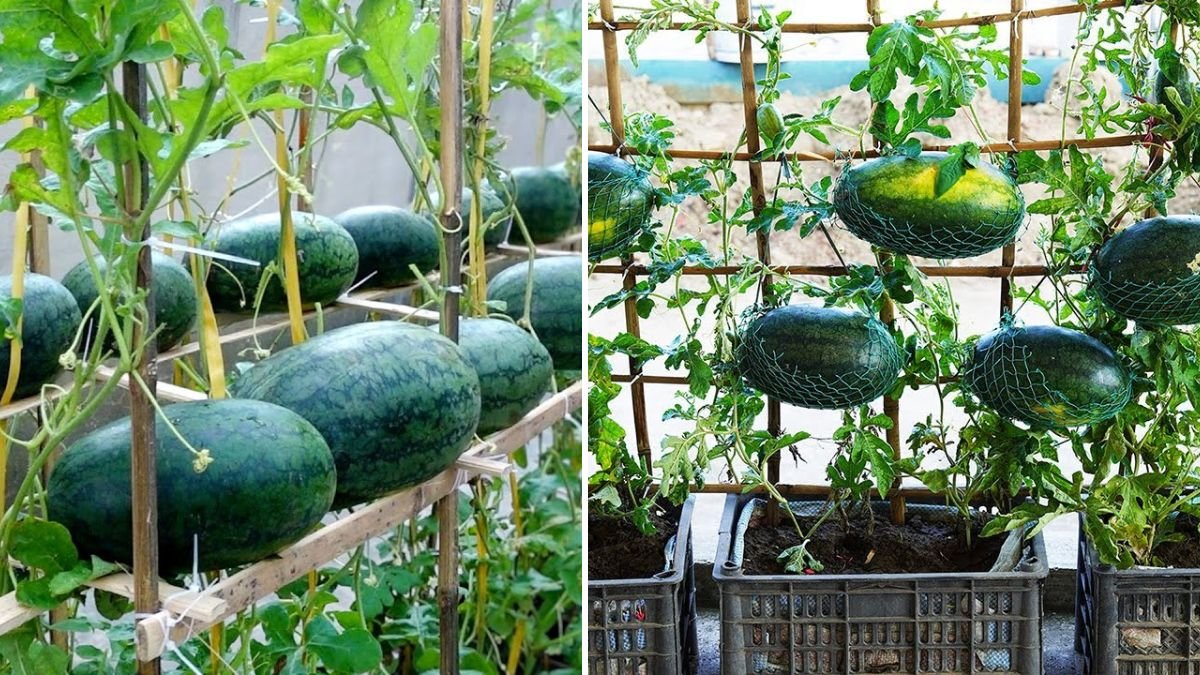
Growing watermelons at home often feels like a challenge. They need space, constant watering, and proper soil—things many urban gardeners simply don’t have. But what if you could grow large, sweet, juicy watermelons without soil, without a garden, and without daily watering?
This is the magic of the wall-mounted hydroponic watermelon system, a revolutionary setup that lets you grow heavy, delicious fruits vertically on your balcony, outdoor wall, rooftop, or even indoors near a sunny window. It saves space, saves water, and delivers surprisingly large harvests with minimal effort.
In this complete guide, you’ll learn how this system works, how to build your own, and the step-by-step method to grow watermelons hydroponically—effortlessly and efficiently.
Why a Wall-Mounted System Works So Well
Watermelons are traditionally sprawling plants that need plenty of land. But hydroponics changes everything.

Benefits of a Wall-Mounted Hydroponic Watermelon Garden
✔ Zero daily watering — The system recirculates water automatically
✔ Space-saving vertical design — Perfect for small balconies or courtyards
✔ Faster growth — Nutrients delivered directly to roots
✔ Cleaner, soil-free fruits — No pests, no rot, no weeds
✔ Allows large varieties — Even big watermelons thrive
✔ Beautiful living wall — A green display of curling vines and hanging fruits
This setup transforms watermelon-growing into a clean, modern, effortless process.
1. Choosing the Right Watermelon Variety

Most watermelons will grow in hydroponics, but smaller or early-maturing varieties are ideal for beginners.
Recommended Varieties
- Sugar Baby – Compact vines, fast growth, sweet 3–5 kg fruits
- Golden Midget – Small, round fruits with golden skin
- Mini Love – Excellent for vertical support
- Jubilee Baby – Fast-growing and productive
- Crimson Sweet – Larger fruits but handles hydroponics well
Pick according to your space and fruit preference.
2. Setting Up the Wall-Mounted Hydroponic System
A wall-mounted hydroponic system is simply a vertical frame attached to a wall, with a network of pipes or containers that circulate nutrient-rich water.
Basic Components
- PVC pipes or vertical grow channels
- Net pots (small containers that hold each plant)
- Support frame (wood, metal, or plastic)
- Water tank/reservoir
- Submersible pump
- Flexible tubing
- Hydroponic growing medium (coco peat, perlite, clay pebbles)
- Trellis or netting for vines
How It Works
- The pump sends nutrient water upward into the pipes.
- The water flows downward past each plant’s roots.
- The water collects back into the tank.
- The cycle repeats automatically.
This means no manual watering—ever. Just refill the tank every 7–14 days.
3. Preparing the Hydroponic Growing Medium

Watermelons don’t grow in water alone—they need a medium to anchor their roots.
Best Mediums
- Clay pebbles – Excellent aeration
- Perlite + coco peat – Best moisture retention
- Rockwool cubes – Great for seed starting
Aim for a mix that drains well yet stays slightly moist.
4. Germinating Watermelon Seeds for Hydroponics
Starting strong seedlings is crucial.
Germination Steps
- Soak seeds for 8 hours.
- Place them in moist rockwool or coco pellets.
- Keep warm (25–28°C).
- Seeds sprout within 3–5 days.
- Move seedlings into net pots once roots are 2–3 cm long.
Healthy seedlings adapt quickly to hydroponic conditions.
5. Planting in the Wall-Mounted System

Once your seedlings are ready:
- Insert each one into a net pot filled with clay pebbles or perlite.
- Ensure roots touch the nutrient water film inside the pipe.
- Space plants 35–50 cm apart along the wall.
- Turn on the water pump and let the system run.
The adventure begins—your baby watermelon vines will soon start climbing!
6. Nutrient Solution: The Real Secret to Big Watermelons
Hydroponic plants grow significantly faster because they receive precise nutrients.
Nutrient Requirements
- Early stage (Growth): Higher nitrogen
- Vining stage: Balanced NPK
- Flowering and fruiting: High potassium + calcium
Ideal EC Levels
- Seedling: 1.0–1.2
- Growth: 1.5–1.8
- Fruiting: 2.0–2.4
pH Range
- 5.8 – 6.2
Maintaining this range ensures optimal nutrient absorption.
Refill the tank every 1–2 weeks depending on weather and vine size.
7. Training Watermelon Vines on a Wall

This is where the beauty begins.
How to Train Vines Vertically
- Use netting, trellis, or sturdy strings.
- Guide the vines upward gently.
- Prune side shoots if vines become too bushy.
- Keep 1–2 main vines for best fruit size.
Vertical growing improves airflow, reduces disease, and saves enormous space.
8. Pollinating Watermelon Flowers
Hydroponic setups often rely on assisted pollination.
How to Hand-Pollinate
- Identify male flowers (thin stems) and female flowers (tiny fruit behind petals).
- Use a small brush or cotton swab.
- Transfer pollen from male to female.
- Do this early morning for best results.
Proper pollination = large, well-shaped fruits.
9. Supporting the Watermelon Fruits
As fruits grow heavier, they need strong support.
Support Methods
✔ Fruit hammocks made of cloth or net
✔ Reusable slings
✔ Mesh bags tied to the trellis
This prevents the fruit from detaching early and promotes even growth.
10. Lighting and Sun Requirements
Watermelons love the sun.
Ideal Lighting
- 6–8 hours of direct sunlight daily
- If indoors, use LED grow lights for at least 12 hours
- Ensure strong light during fruit-setting for sweet watermelons
More sunlight = higher sugar content = sweeter fruit.
11. Common Hydroponic Problems & Easy Fixes
Yellow leaves?
Likely low nitrogen or improper pH.
Weak vines?
Increase potassium and provide stronger trellis support.
Fruits not forming?
Improve pollination or increase sunlight.
Roots brown?
Ensure oxygenation—add an air stone if needed.
Hydroponics is simple once you learn the signals.
12. Harvesting Your Hydroponic Watermelons
Watermelons are ready when:
- The tendril nearest the fruit turns brown
- The underside turns creamy yellow
- The fruit surface becomes dull, not shiny
- Knocking produces a deep, hollow sound
Most hydroponic watermelons mature in 70–85 days, often faster than soil-grown ones.
Cut the fruit gently and enjoy the unmatched sweetness!
Final Thoughts: Anyone Can Grow Wall-Mounted Watermelons
A wall-mounted hydroponic system allows anyone—whether you live in an apartment, a small home, or a crowded city—to grow large, juicy watermelons without soil, without daily watering, and without complex maintenance.
It’s clean, efficient, eye-catching, and surprisingly productive.
With basic materials and a little care, your wall can become a lush green curtain of vines holding sweet, hanging watermelons. Few gardening experiences are as magical—or as delicious.
If you want, I can also create:
🍉 A YouTube narration script
🍉 A step-by-step infographic version
🍉 A short 500-word article
🍉 A social media caption version