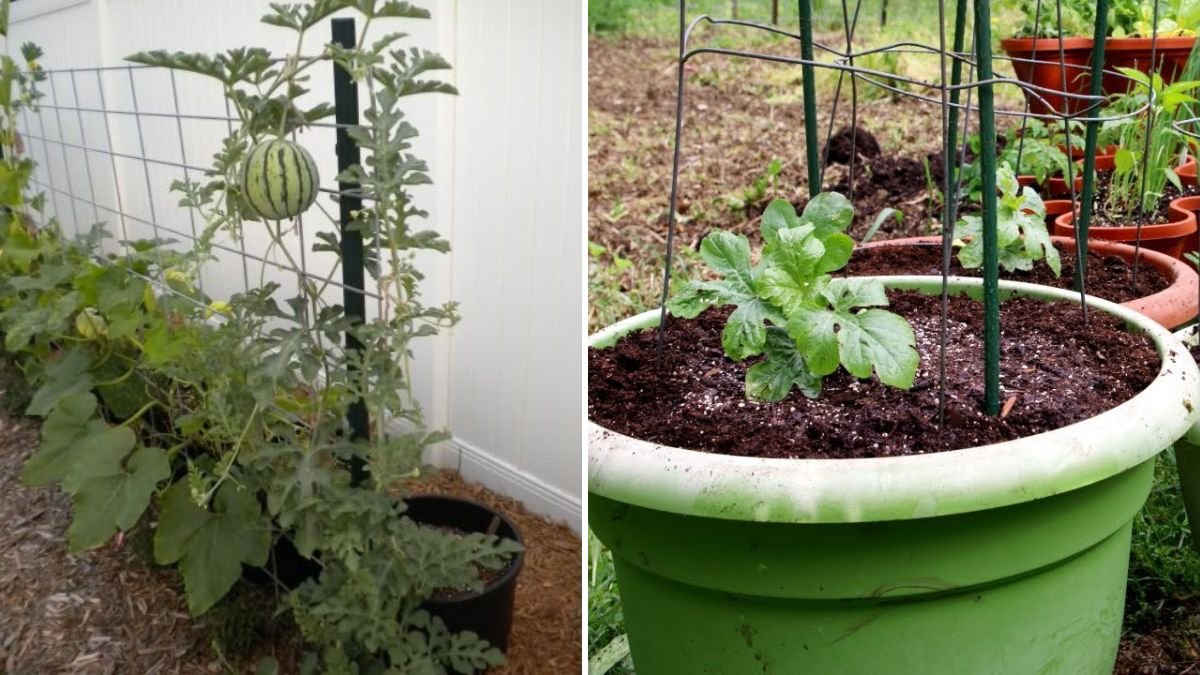
Growing watermelon is a dream for many gardeners, but limited space often discourages them. What most people don’t know is that you can grow large, sweet, juicy watermelons—even in containers! With the right methods, proper soil mix, and consistent care, container-grown watermelons can rival field-grown ones in size and flavor. Whether you have a balcony, terrace, or small backyard, this guide will show you exactly how to grow watermelon successfully in pots.
Why Grow Watermelon in Containers?
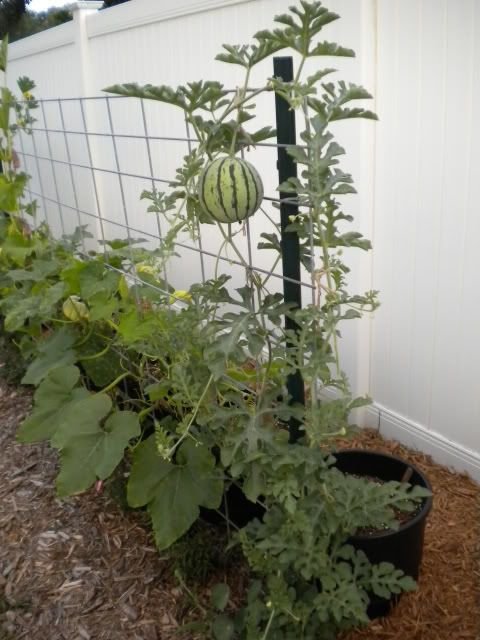
Many gardeners assume watermelon needs a huge field and sprawling vines. While melons do love space, container gardening offers several surprising advantages:
1. Space-Saving
Vines can be trained vertically or guided along the balcony floor, saving ground space.
2. Soil Control
Containers allow you to create the perfect soil mix—loose, well-draining, and nutrient-rich.
3. Fewer Pests and Diseases
Container-grown plants have reduced exposure to soil-borne diseases and crawling pests.
4. Perfect for Urban Gardeners
Anyone with sunlight and a container can grow watermelon—no farm required!
5. Better Water Management
You control how much moisture your plant gets, reducing the risk of overwatering or rot.
Growing watermelon in containers may take a bit of planning, but the rewards are worth every minute.
Choosing the Right Watermelon Variety
Not all melons are ideal for containers. Select compact or small-fruit varieties that produce well in limited soil volume:
Recommended Varieties:
- Sugar Baby (Very popular, sweet, 2–4 kg fruits)
- Golden Midget
- Mini Love
- Bush Sugar Baby
- Patio Baby Watermelon
- Orangeglo Mini
These varieties form smaller vines and mature quickly—perfect for pots.
Best Container Size for Watermelon
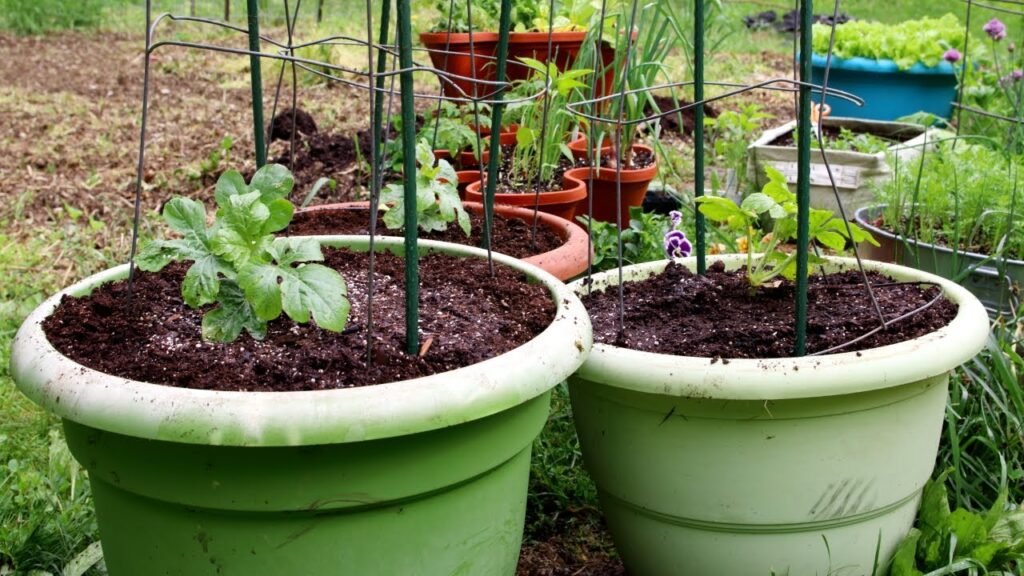
Watermelons need deep and wide containers because their roots grow extensively.
Minimum Container Size:
- 40–60 liters (10–15 gallons) for small varieties
- 20–24 inches diameter
- Deep, at least 18 inches
Container Types That Work Best:
- Plastic tubs
- Fabric grow bags
- Buckets
- Large clay pots
- Half-barrels
Fabric grow bags are especially good because they allow more oxygen to reach the roots.
Tip: Ensure your container has multiple drainage holes. Watermelon roots hate standing water.
Perfect Soil Mix for Container Watermelons
Watermelons thrive in light, fertile, well-drained soil. Your container soil must be:
- Loose
- Airy
- Rich in organic matter
- Moist but not soggy
Ideal Soil Mix:
Mix the following:
- 40% garden soil or potting mix
- 30% compost or vermicompost
- 20% coco peat (for moisture retention)
- 10% perlite or sand (for aeration)
Extra Nutrient Boost:
Add any of the following:
- Bone meal
- Neem cake
- Banana peel fertilizer
- Seaweed powder
This blend provides slow-release nutrients essential for strong vines and sweet fruits.
Planting Watermelon Seeds in Containers
Step 1: Seed Preparation
Soak seeds in warm water for 8 hours to speed germination.
Step 2: Sowing Seeds
- Plant 2–3 seeds in the center of the container.
- Sow them 1 inch deep.
- Keep the soil moist—not wet.
Seeds germinate in 5–10 days.
Step 3: Thinning Seedlings
Once seedlings reach 3–4 inches tall:
- Keep the strongest one
- Remove the others carefully
This ensures maximum energy goes into one productive plant.
Watering: The Secret to Sweet Melons
Watermelon roots love consistent moisture, but overwatering invites fungal diseases.
Watering Rules:
- Water deeply 2–3 times per week
- Keep soil moist during vine growth
- Reduce watering slightly during fruit ripening for sweeter melons
- Avoid wetting the leaves
A moisture meter or finger test helps prevent underwatering or overwatering.
Sunlight: Watermelons Love Heat!
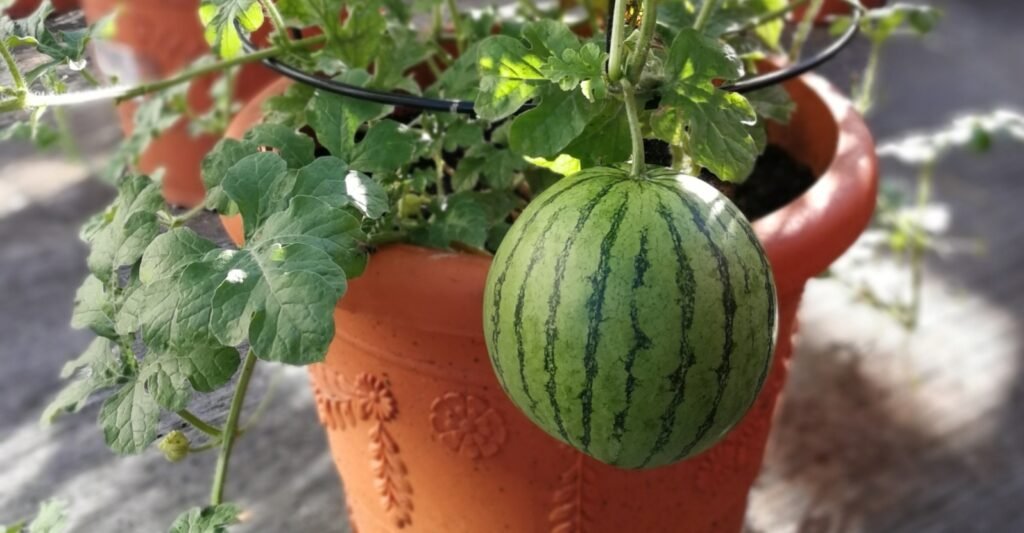
Watermelon plants require full sunlight for rapid vine growth and fruit sweetness.
Minimum Requirement:
- 6–8 hours of direct sunlight daily
- More sun = sweeter fruit
If growing indoors or on shady balconies, consider using grow lights.
Fertilizing at the Right Stages
Watermelons are heavy feeders.
Early Stage (Vine growth)
Use a nitrogen-rich fertilizer:
- Compost tea
- Fish emulsion
- Vermicompost
Flowering Stage
Switch to phosphorus-heavy fertilizers to boost bloom formation.
Fruit Development
Use potassium-rich feeds for sweetness and size:
- Banana peel tea
- Ash water
- Seaweed extract
Apply fertilizer every 10–15 days.
Training the Vines in Containers
Watermelon vines can grow 8–12 feet long. Training helps manage the space.
Options:
1. Trellis Training
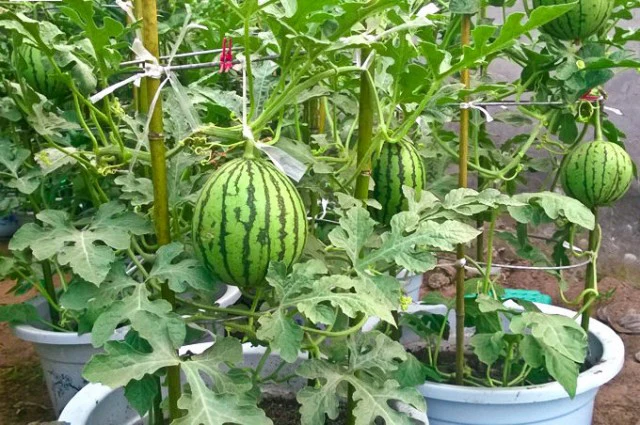
Use a strong trellis or bamboo frame:
- Tie vines loosely
- Support fruits with cloth slings or net bags
2. Ground Training
Let vines trail along the floor or balcony tiles.
Tip: Rotate melons occasionally to prevent flat spots.
Pollination: Helping the Flowers Become Melons
In containers, pollination may be weaker, especially on balconies or indoors.
How to Hand-Pollinate:
- Identify male flowers (thin stem) and female flowers (tiny fruit behind petals).
- Pluck a male flower.
- Gently rub the pollen onto the center of the female flower.
This increases your chances of fruit formation dramatically.
Common Problems & Solutions
1. Yellow Leaves
- Overwatering
- Poor drainage
- Nitrogen deficiency
Fix: Reduce watering; add compost.
2. Flowers Falling Off
This is normal for male flowers.
Female flowers dropping? Lack of pollination.
3. Fruits Not Growing
- Low sunlight
- Not enough potassium
- Too many fruits on one plant
Fix: Remove extra fruits; give more K-rich fertilizer.
4. Fruit Rot
Happens when melons touch wet soil.
Fix: Place cardboard, straw mulch, or tiles under fruits.
Harvesting: When Is the Watermelon Ready?
Watermelons don’t ripen after picking, so timing is crucial.
Signs of Perfect Ripeness:
- The tendrils near the fruit turn brown and dry.
- The bottom spot turns creamy yellow.
- The fruit sounds deep and hollow when tapped.
- The skin becomes harder and less shiny.
Cut the melon gently with pruning shears, leaving a small stem attached.
Advantages of Container-Grown Watermelons
- Grow anywhere—balconies, rooftops, patios
- Easy pest control
- Better soil customization
- Ideal for beginners
- Sweet, homegrown fruits with no chemicals
There’s something magical about slicing into a watermelon you grew yourself in a bucket or grow bag!
Conclusion: Your Sweetest Harvest Awaits
Growing watermelon in containers may seem challenging, but with the right methods, anyone can harvest delicious, homegrown melons—even in small spaces. All it takes is:
- A large container
- A compact variety
- Rich soil
- Plenty of sunlight
- Proper watering
- Occasional fertilizing
Soon, your balcony or terrace will be home to sprawling vines and plump, juicy melons. Every bite will taste sweeter because it comes from your own effort and care. With this guide, your journey from container to harvest becomes enjoyable, rewarding, and filled with the joy of growing food—even in the smallest spaces.