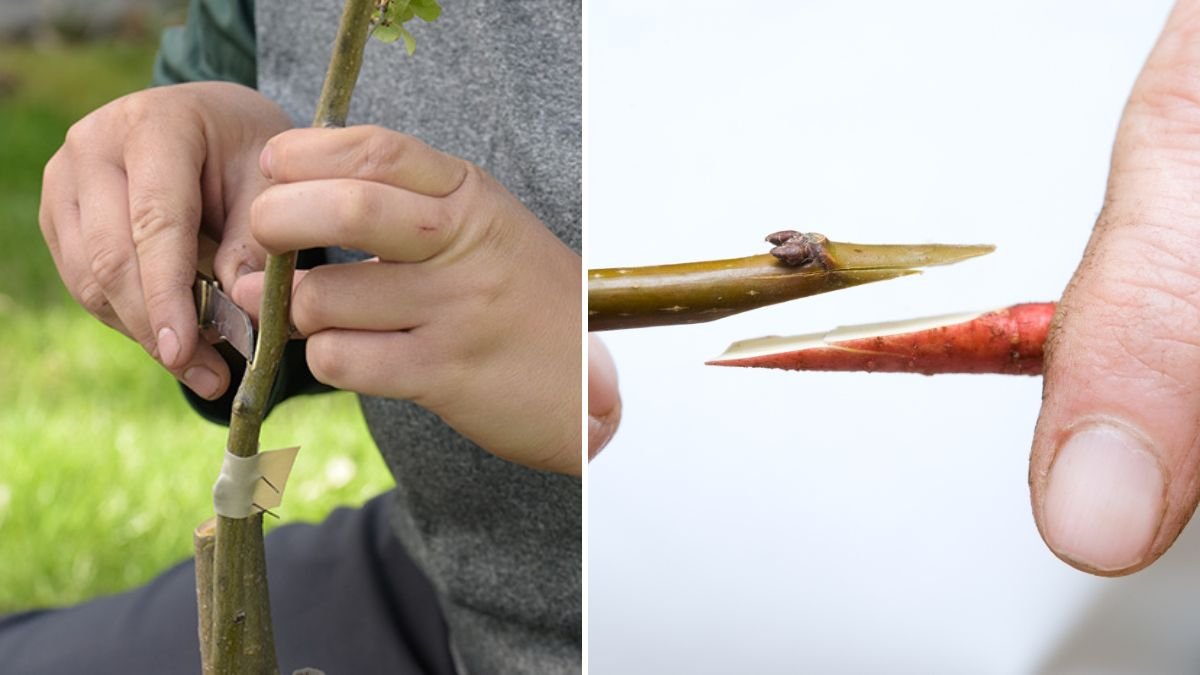
Grafting is one of the most powerful techniques in horticulture, enabling gardeners and farmers to produce healthier plants, faster fruiting trees, and superior-quality crops. Traditional grafting methods, while effective, can sometimes be slow, require experience, or have variable success rates. Today, thanks to innovative approaches, there is a new technique for grafting that improves efficiency, increases success rates, and produces robust plants faster.
In this comprehensive guide, we’ll explore everything about this new grafting technique, step-by-step instructions, suitable plants, aftercare, and the benefits that make it an indispensable method for modern horticulture.
1. Understanding Grafting and Its Benefits
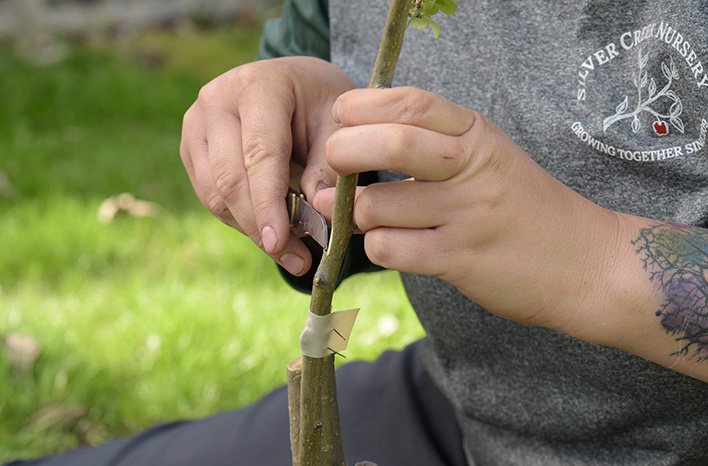
Grafting involves joining two plant parts:
- Scion: The top portion of the plant that bears flowers or fruits.
- Rootstock: The bottom portion, which forms the roots and supports the scion.
The two parts grow together to form a single, stronger plant. The benefits include:
- Early fruiting: Grafted plants can bear fruit within 2–3 years, compared to 6–8 years for seed-grown trees.
- High-quality produce: Ensures the fruits or flowers are identical to the parent plant.
- Disease resistance: Strong rootstock can confer resistance to soil-borne diseases.
- Space efficiency: Multiple scions can be grafted onto a single rootstock to grow different varieties on one tree.
Secret Advantage: Grafting combines the best traits of two plants, producing a faster-growing, high-yielding, and resilient plant.
2. Choosing the Right Rootstock and Scion
The success of grafting depends heavily on selecting the right rootstock and scion:
Rootstock Selection
- Choose healthy, disease-free seedlings or young trees.
- Should have vigorous growth and well-developed roots.
- Compatible rootstock ensures strong union and reduces rejection rates.
Scion Selection
- Use disease-free, mature branches from high-yielding plants.
- Scions should have 2–4 buds or nodes.
- Select branches with desired fruit quality or flower traits.
Pro Tip: Choosing compatible and healthy materials increases grafting success dramatically.
3. Tools and Materials Required
Modern grafting relies on precision tools for better results:
- Sterilized grafting knife or scalpel
- Pruning shears
- Grafting tape or parafilm
- Grafting wax or sealant
- Rootstock seedlings
- Selected scion branches
- Clean cloth and disinfectant
Secret Tip: Always sterilize tools to prevent infections and improve survival rates.
4. The New Technique: Modified Side Veneer Grafting
The new grafting technique is a modified side veneer graft, designed to be faster, simpler, and more successful than traditional methods. It combines elements of cleft grafting and veneer grafting, ensuring better cambium alignment and faster healing.
Step-by-Step Instructions
- Prepare the Rootstock
- Select a young, vigorous seedling.
- Remove leaves near the grafting point.
- Make a slanted cut about 2–3 cm long on the side of the rootstock.
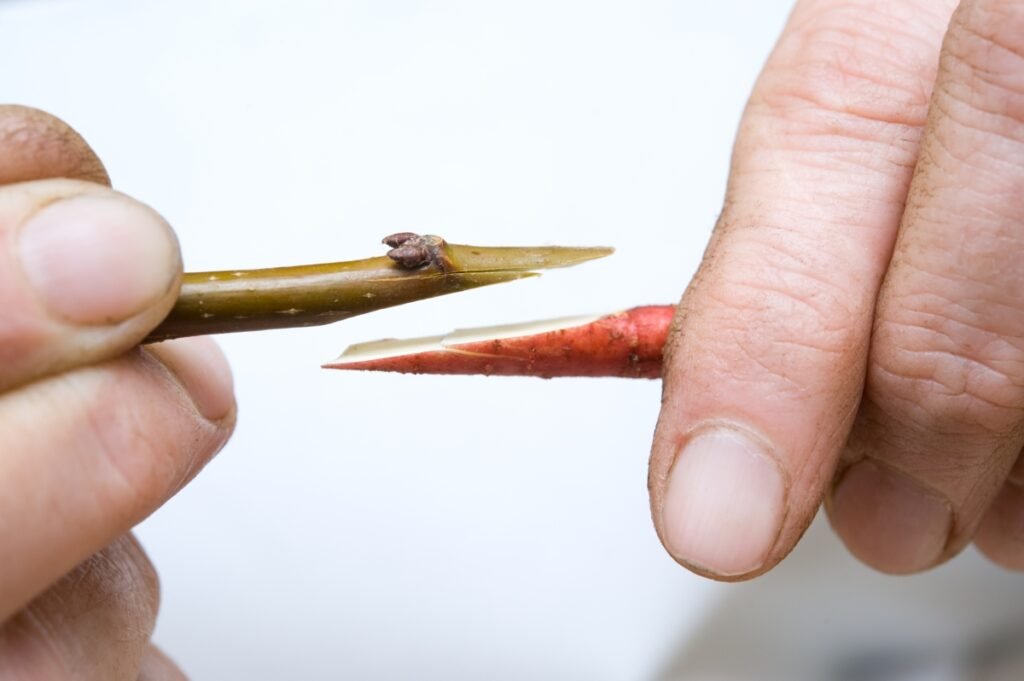
- Prepare the Scion
- Cut the scion into a wedge shape to fit snugly into the slanted cut.
- Ensure the cambium layers align for optimal nutrient flow.
- Join the Scion and Rootstock
- Insert the wedge-shaped scion into the cut of the rootstock.
- Ensure a tight fit, with cambium layers in direct contact.
- Secure the Graft
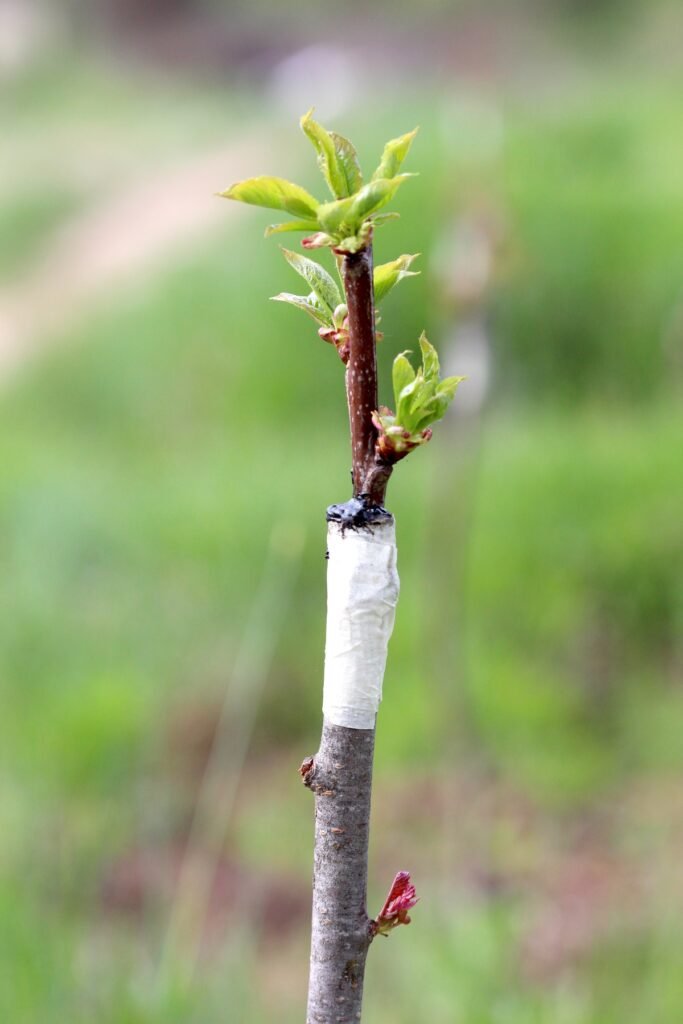
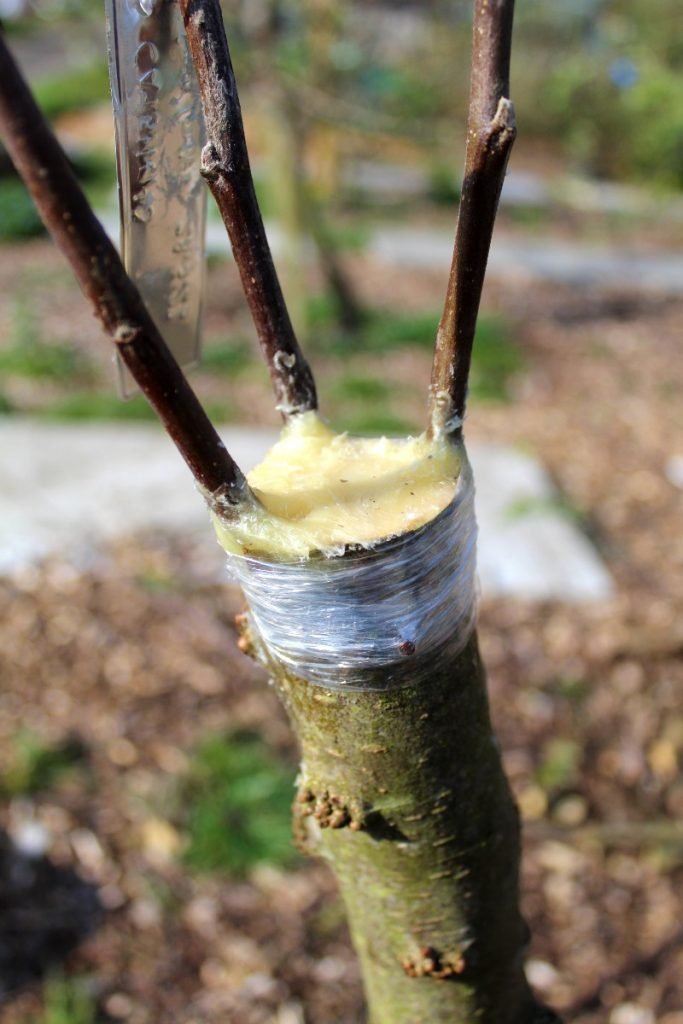
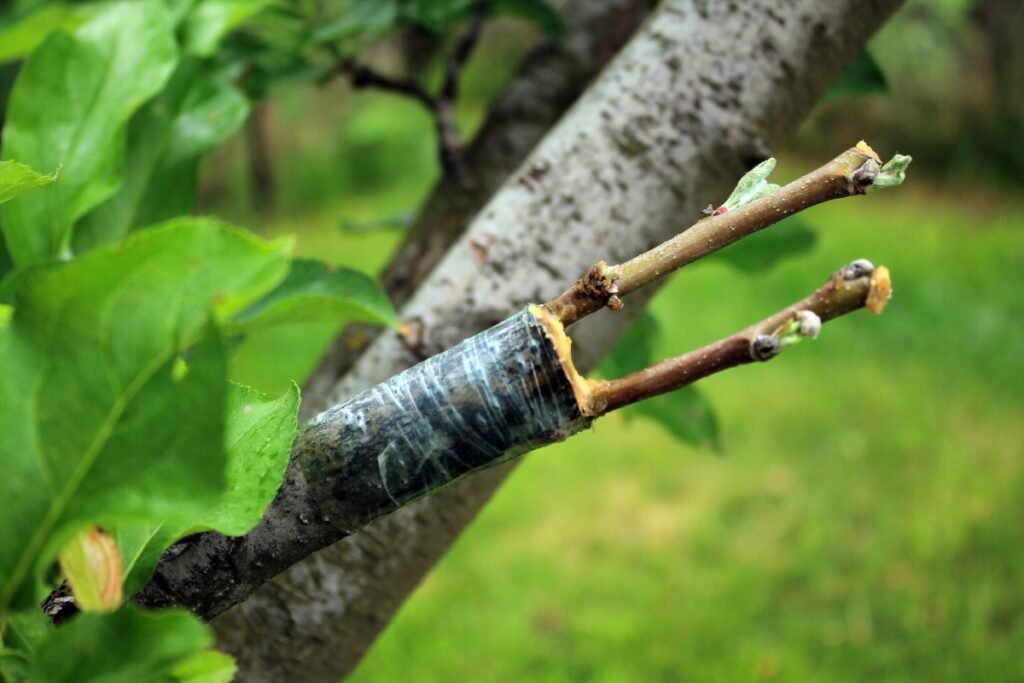
- Wrap the union tightly with grafting tape or parafilm to hold it in place.
- Apply grafting wax or sealant to prevent moisture loss and infection.
- Provide Proper Aftercare
- Place the grafted plant in partial shade for 2–4 weeks.
- Keep soil moist and avoid waterlogging.
- Monitor the graft for new growth, which should appear in 2–3 weeks.
Secret Advantage: This technique reduces graft failure, promotes faster growth, and allows even beginners to achieve high success rates.
5. Suitable Plants for This Technique
This new grafting method works for a wide range of fruit trees, ornamental plants, and medicinal plants:
- Fruit Trees: Mango, guava, jackfruit, citrus, sapota, papaya
- Ornamental Plants: Roses, hibiscus, bougainvillea
- Medicinal Plants: Aloe, neem, and other high-value plants
Pro Tip: Always match the rootstock and scion species for compatibility and ensure both are disease-free.
6. Aftercare for Grafted Plants
Aftercare is critical to ensure graft survival and plant health:
Watering
- Keep soil evenly moist but not soggy.
- Reduce watering if leaves appear wilted or stressed.
Sunlight
- Provide partial shade initially to reduce stress.
- Gradually expose to full sun as the graft heals.
Fertilization
- Apply balanced fertilizers like NPK 10:10:10 in small amounts.
- Organic compost helps in root development and overall growth.
Pest Management
- Inspect regularly for aphids, mealybugs, or fungal infections.
- Use neem oil or organic sprays if needed.
Secret Advantage: Proper aftercare ensures faster establishment, stronger growth, and early fruiting.
7. Common Problems and Solutions
Even with modern grafting, problems can occur. Here’s how to prevent them:
- Scion Dieback: Usually caused by poor cambium alignment.
Solution: Ensure proper alignment and tight binding. - Infection: Can occur from unsterilized tools or open graft wounds.
Solution: Use sterilized tools and seal grafts with wax. - Weak Union: Often caused by improper binding or environmental stress.
Solution: Secure graft firmly and provide shelter from wind or sun. - Delayed Growth: Nutrient deficiencies or improper watering can slow growth.
Solution: Maintain proper watering, fertilization, and soil health.
Secret Advantage: Being proactive prevents graft failure and ensures healthy, productive plants.
8. Benefits of the New Grafting Technique
Adopting this new technique provides several advantages:
- Higher Success Rate: Better cambium alignment and sealing reduce failures.
- Faster Growth: New shoots appear sooner, shortening the time to fruiting.
- Uniform Plants: Produces trees true to the parent plant with predictable traits.
- Disease Resistance: Healthy rootstock supports strong scion growth.
- Ease of Use: Beginner-friendly and adaptable to multiple plant types.
9. Long-Term Care and Maintenance
- Prune regularly to maintain shape and improve airflow.
- Support young branches to prevent breakage under fruit weight.
- Continue fertilization and watering as per plant requirements.
- Monitor for pests and diseases throughout the growing season.
Secret Advantage: Consistent care ensures the grafted plant thrives, producing high-quality fruits or flowers for years.
10. Conclusion: Revolutionize Your Gardening with Grafting
Grafting is a game-changer in horticulture, and this new technique makes it accessible, faster, and more reliable than ever. By following the steps:
- Selecting healthy rootstock and scion
- Using the modified side veneer graft
- Providing proper aftercare
…you can enjoy early fruiting, stronger plants, and high-quality crops.
Whether you are a hobbyist, gardener, or commercial grower, this technique opens up new possibilities for plant propagation, improving productivity and ensuring healthier, more resilient plants.
Start applying this new grafting method today, and witness your garden or orchard thrive with vigorous growth and abundant yields.