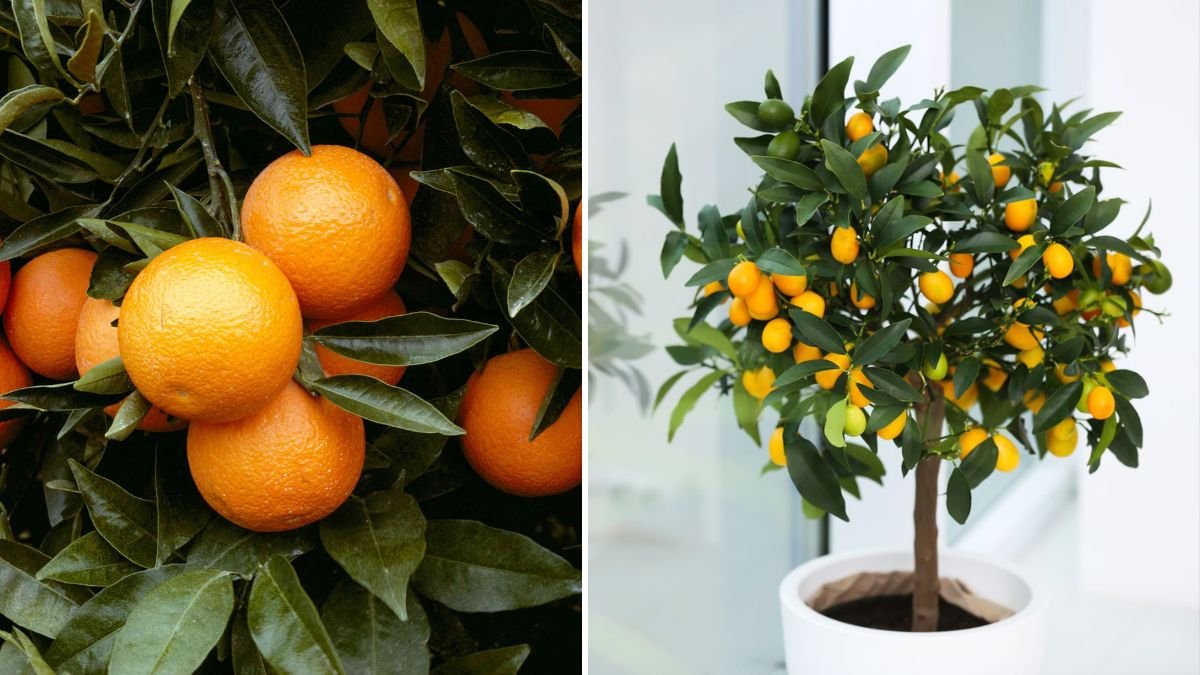
Orange trees are one of the most beloved fruit trees worldwide, celebrated for their delicious, juicy fruits and fragrant blossoms. Whether you want to grow oranges in your backyard, garden, or even in pots on your balcony, learning how to grow orange trees is both rewarding and surprisingly simple.
In this guide, we’ll cover everything—from selecting the right variety and planting to watering, fertilizing, pruning, pest management, and harvesting—so you can enjoy fresh, homegrown oranges year after year.
Why Grow Orange Trees at Home?
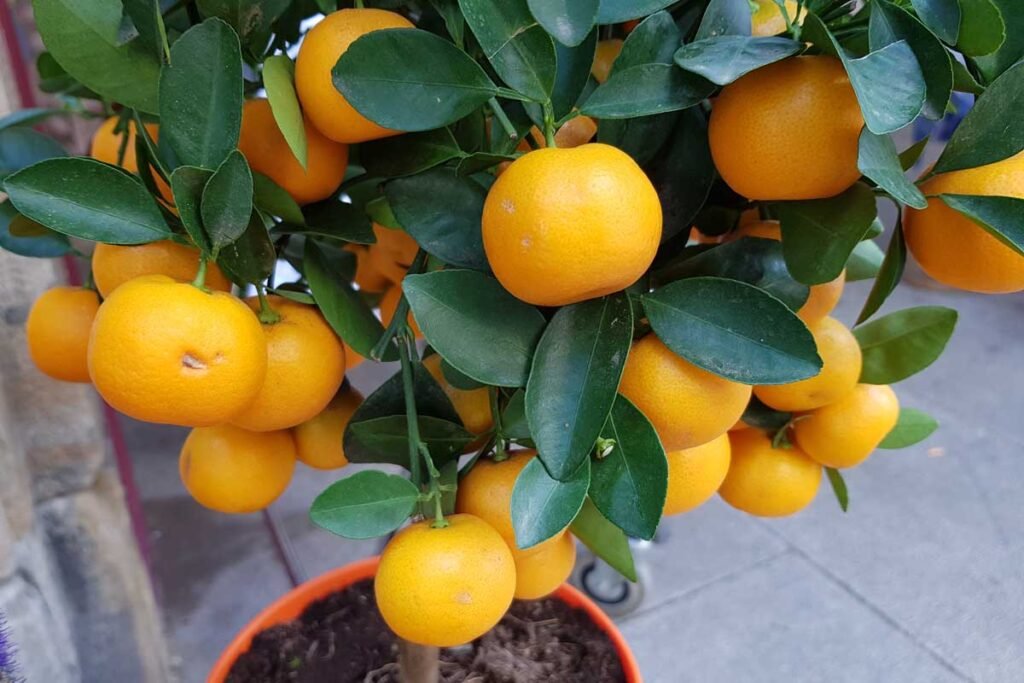
Growing your own orange trees offers many benefits:
- Fresh and chemical-free fruit: Enjoy safe, pesticide-free oranges.
- Health benefits: Oranges are rich in vitamin C, antioxidants, and fiber.
- Aesthetic appeal: Orange trees with green leaves and white blossoms enhance your garden.
- Cost-effective: Save money by growing your own fruit rather than buying it.
- Therapeutic gardening: Caring for trees reduces stress and promotes mental well-being.
Whether for personal use, gifting, or home décor, orange trees are a perfect addition to any garden.
Choosing the Right Orange Variety
Selecting the right variety is the first step for a successful orange harvest. Some popular types include:
1. Valencia Orange
- Sweet and juicy, ideal for fresh juice
- Grows well in warm climates
- Produces fruit 6–9 months after flowering
2. Navel Orange
- Easy to peel and seedless
- Ideal for eating fresh
- Early fruiting variety
3. Blood Orange
- Distinct red flesh with tangy flavor
- Requires moderate warmth and sunlight
- Attractive for ornamental gardens
4. Seville Orange
- Bitter variety, often used in jams and marmalades
- Hardy and disease-resistant
For container planting or small spaces, dwarf varieties like dwarf Valencia or dwarf Navel are excellent choices.
Best Time to Plant Orange Trees
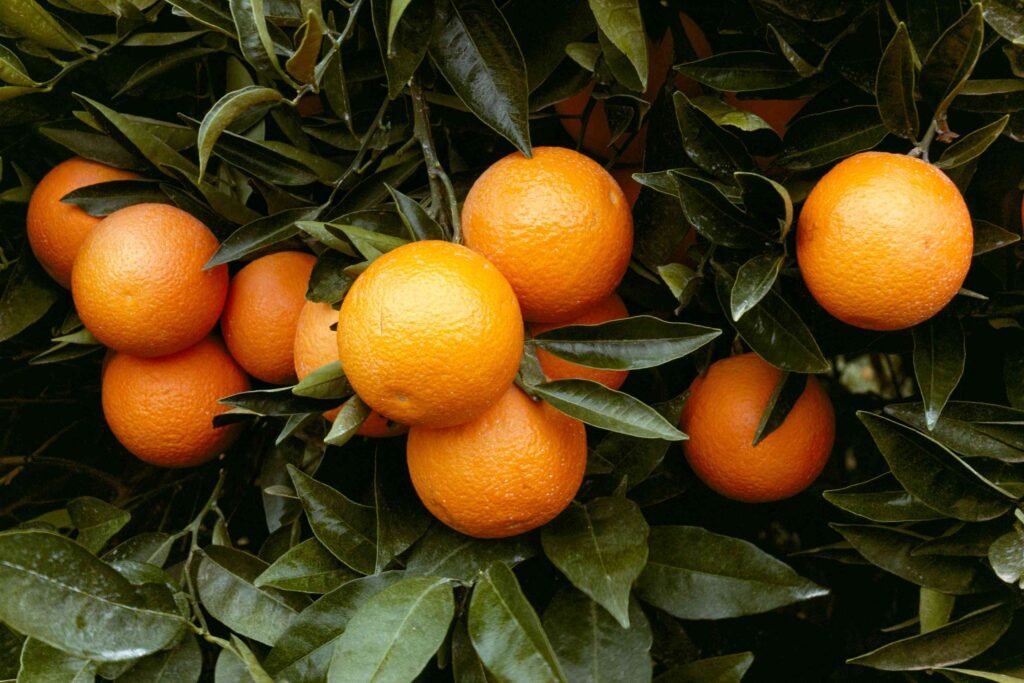
Orange trees thrive in subtropical and tropical climates.
- Planting season: Spring to early summer is ideal
- Temperature: 15–30°C for optimal growth
- Avoid frost: Orange trees are sensitive to cold and can get damaged in freezing temperatures
Soil Requirements
Healthy soil ensures a strong, productive tree.
Ideal Soil Conditions:
- Type: Well-draining sandy loam or loamy soil
- pH: Slightly acidic to neutral (5.5–6.5)
- Nutrient-rich: Enrich soil with compost or well-rotted cow dung
Soil Preparation Steps:
- Remove weeds, rocks, and debris from the planting site
- Mix compost or organic manure into the soil
- Ensure loose, aerated soil for proper root penetration
For pots, use a mix of garden soil, compost, and sand or cocopeat for excellent drainage.
Planting Orange Trees
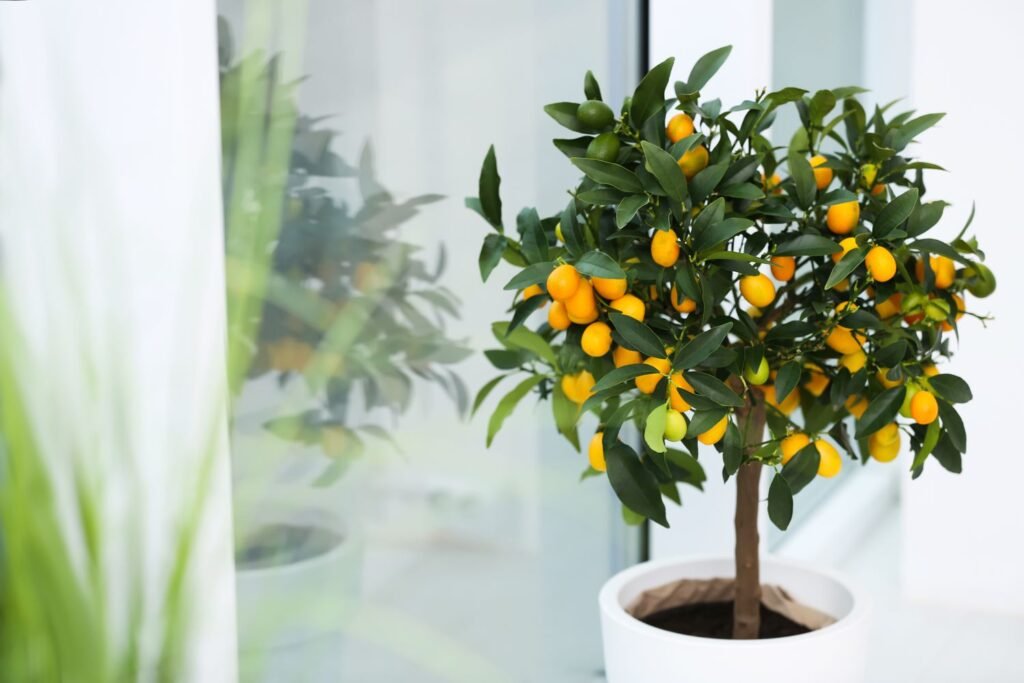
Orange trees can be grown from seeds, saplings, or grafted plants.
1. Planting from Seeds
- Extract seeds from a fresh orange and wash them
- Soak seeds in water for 24 hours to improve germination
- Sow seeds 1–2 cm deep in well-draining soil
- Keep soil moist; germination occurs in 2–4 weeks
2. Planting Saplings or Grafted Trees
- Dig a hole twice the width of the root ball
- Place the sapling in the center and backfill with soil
- Water deeply to settle the soil
- Space trees 10–12 feet apart for proper growth
Watering Orange Trees
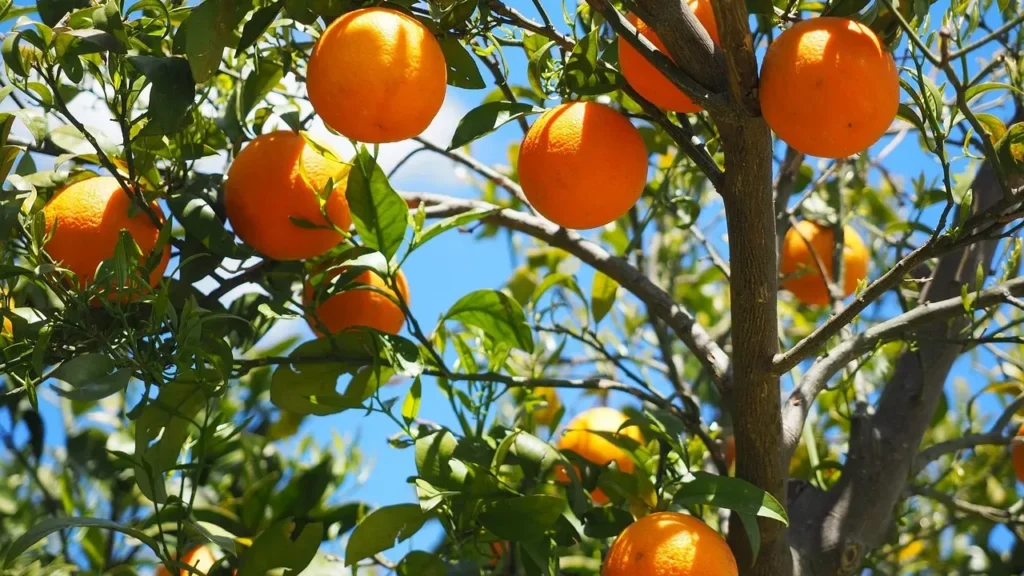
Watering is critical for healthy orange trees.
- Young trees: Water 2–3 times per week
- Mature trees: Water deeply once or twice a week
- Method: Water at the base to prevent wetting leaves, which reduces disease risk
- Mulching: Apply organic mulch around the base to retain moisture and regulate soil temperature
Proper watering ensures healthy leaves, flowers, and juicy fruits.
Fertilizing Orange Trees
Orange trees are heavy feeders, especially when young or fruiting.
Recommended Fertilizers:
- Organic: Compost, cow dung, vermicompost
- Chemical: Balanced NPK 10:10:10 or 12:12:12
- Micronutrients: Magnesium, zinc, and iron for leaf health
Fertilization Schedule:
- Young trees: Apply compost every 2–3 months
- Flowering and fruiting stage: Fertilize every 30–45 days
- Avoid over-fertilization, which can damage roots and reduce fruit quality
Encouraging Flowering and Fruiting
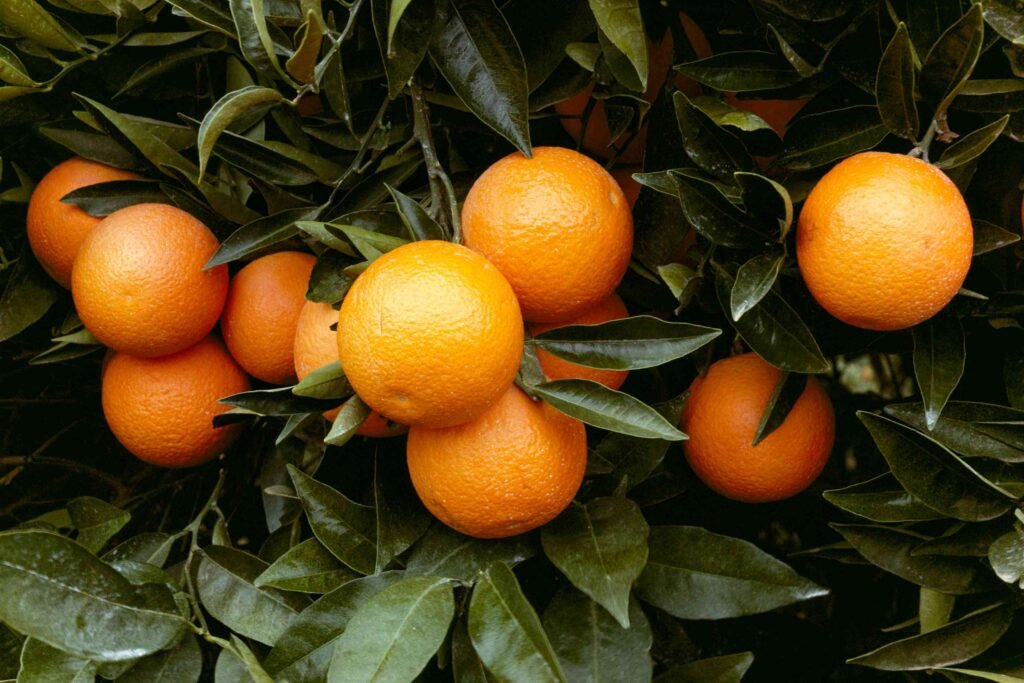
Orange trees produce flowers that eventually turn into fruits. To boost flowering:
- Ensure full sunlight (6–8 hours daily)
- Maintain balanced watering and nutrition
- Prune dead or weak branches to focus energy on flowers
- Protect flowers from pests and environmental stress
Regular care promotes abundant flowering and juicy fruits.
Pruning Orange Trees
Pruning is essential to maintain tree shape, health, and productivity.
- Timing: Late winter or early spring
- Tools: Clean, sharp pruning shears
- Steps:
- Remove dead, diseased, or crossing branches
- Trim weak or crowded shoots
- Maintain a balanced canopy for sunlight and airflow
Pruning increases fruit size, prevents disease, and improves overall tree health.
Pests and Disease Management
Orange trees can be affected by common pests and diseases:
1. Aphids
- Small insects feeding on sap
- Spray neem oil or insecticidal soap
2. Citrus Leaf Miner
- Causes curling and discoloration of leaves
- Prune affected areas and apply neem oil
3. Scale Insects
- Sticky residue on leaves and branches
- Use soft brushes and horticultural oils to remove
4. Fungal Diseases (Citrus Canker, Root Rot)
- Maintain proper drainage
- Remove infected parts promptly
- Apply fungicide if necessary
Healthy soil, proper spacing, and good care prevent most issues.
Harvesting Oranges
- Oranges take 7–12 months to mature after flowering, depending on variety
- Fruits are ready when they turn fully orange or yellow-orange
- Pick fruits by twisting gently or cutting with scissors
- Regular harvesting encourages continuous production
Growing Oranges in Containers
Even without a garden, you can grow oranges in pots:
- Pot size: Minimum 15–20 liters for dwarf varieties
- Soil mix: Garden soil + compost + sand/cocopeat
- Watering: Keep soil moist, not waterlogged
- Sunlight: Place in full sun for at least 6 hours
- Support: Provide a stake for young trees if needed
Container oranges are perfect for balconies, terraces, and small spaces.
Tips for Higher Yield
- Use grafted or healthy saplings for faster fruiting
- Apply mulch to retain moisture and regulate temperature
- Regularly prune dead or overcrowded branches
- Fertilize appropriately and water consistently
- Protect flowers and young fruits from pests
Following these tips ensures juicy, sweet, and abundant oranges every season.
Final Thoughts
Growing orange trees at home is a fulfilling and rewarding experience. With proper planning, soil preparation, planting, and care, anyone can enjoy fresh, sweet oranges right from their backyard or balcony.
Whether you choose seeds, saplings, or grafted plants, consistent watering, sunlight, fertilization, and pruning are keys to success. Protect your trees from pests and diseases, and harvest regularly for the best results.