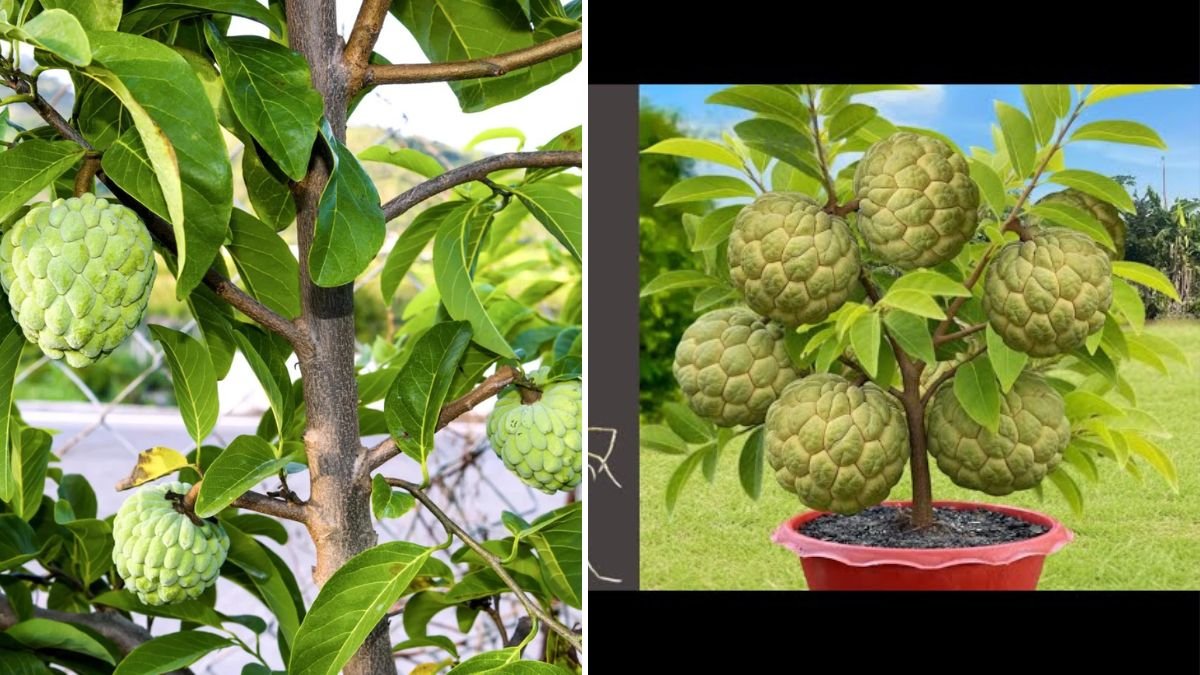
Sweetsop, also known as sugar-apple or Annona squamosa, is a tropical fruit tree loved for its sweet, creamy, and nutritious fruits. While the fruit is delicious and highly nutritious, growing a sweetsop tree from seeds can take years before it bears fruit. Fortunately, modern propagation techniques allow gardeners and farmers to grow healthy, fruit-bearing trees faster and more efficiently.
In this comprehensive guide, we’ll explore how to propagate sweetsop trees, covering seed propagation, vegetative methods, grafting, air layering, soil preparation, aftercare, and tips for achieving higher survival and productivity.
1. Why Propagate Sweetsop Trees?

Propagation is the process of producing new plants from an existing plant. For sweetsop trees, propagation offers several advantages:
- Faster fruiting: Some vegetative methods allow trees to bear fruit within 2–3 years.
- True-to-type fruits: Grafting and cuttings maintain the quality of the parent tree.
- Stronger, healthier trees: Proper propagation ensures disease resistance and strong root systems.
- Efficient use of space: Multiple techniques allow you to grow trees in home gardens or small orchards effectively.
Secret Advantage: Propagating sweetsop trees allows you to enjoy quality fruits earlier than growing from seeds alone.
2. Selecting the Parent Plant
The first step in propagation is choosing a healthy, high-yielding parent tree. Consider the following:
- Fruit quality: Sweet, creamy, and large fruits are preferred.
- Disease-free: Avoid plants showing signs of pests or diseases.
- Vigorous growth: Healthy branches and roots ensure successful propagation.
Pro Tip: Choosing the right parent plant directly affects the quality and vigor of the new trees.
3. Propagation from Seeds
Seed propagation is the simplest and most common method for sweetsop trees, but it requires patience:
Step 1: Collecting Seeds
- Extract seeds from fully ripe fruits.
- Wash seeds thoroughly to remove pulp.
- Dry seeds in shade for 1–2 days to prevent fungal infection.
Step 2: Preparing Seeds for Planting
- Soak seeds in water for 24 hours to improve germination.
- Some gardeners use natural stimulants like coconut water to boost early growth.
Step 3: Sowing Seeds
- Fill pots or seedbeds with well-draining soil mixed with organic compost.
- Plant seeds 1–2 cm deep and cover lightly with soil.
- Maintain soil moisture by watering gently.
Step 4: Germination and Care
- Seeds typically germinate within 3–4 weeks.
- Keep seedlings in partial shade initially.
- Transplant to larger pots or the field once seedlings are strong.
Secret Advantage: Seed propagation is ideal for producing a large number of trees but may take longer for fruiting.
4. Vegetative Propagation: Cuttings
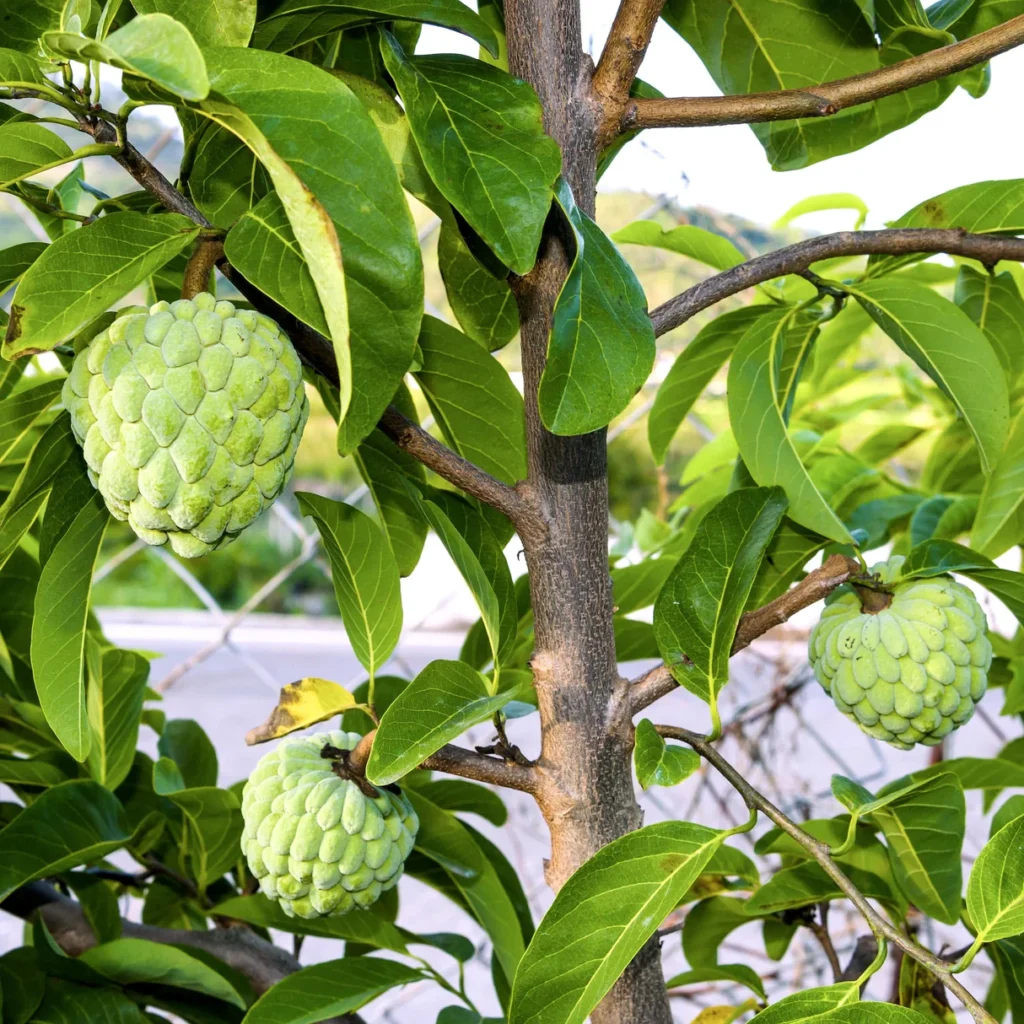
Vegetative propagation is faster and produces trees identical to the parent plant:
Step 1: Selecting Cuttings
- Use semi-hardwood branches 10–15 cm long with 2–3 nodes.
- Choose disease-free and vigorous branches.
Step 2: Preparing Cuttings
- Remove lower leaves to reduce moisture loss.
- Dip the cut ends in rooting hormone powder or gel.
Step 3: Planting Cuttings
- Insert cuttings into well-draining soil or sand.
- Maintain high humidity using a plastic cover or mini greenhouse.
- Place in partial shade and water regularly.
Step 4: Root Development
- Roots develop within 4–6 weeks.
- Once rooted, gradually acclimate to full sunlight.
Secret Advantage: Cuttings ensure faster growth and fruiting than seeds, with trees that are true-to-type.
5. Air Layering Method
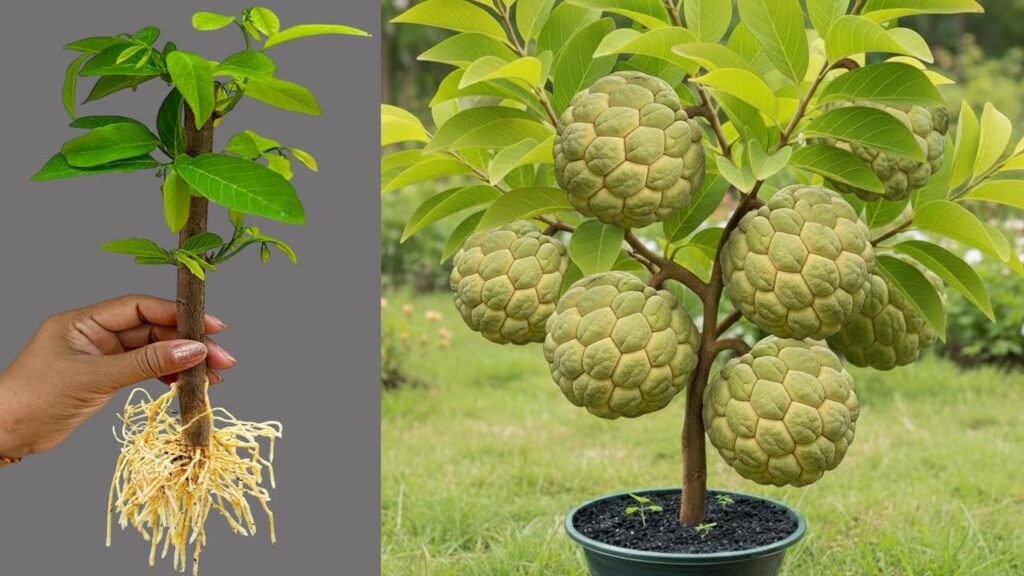
Air layering is ideal for sweetsop trees, especially for branches from high-yielding parent trees:
Steps for Air Layering
- Select a healthy branch 1–2 years old.
- Make a ring cut about 2–3 cm wide, removing bark around the stem.
- Apply rooting hormone to the exposed area.
- Wrap with moist sphagnum moss and cover with plastic to retain humidity.
- After 4–8 weeks, roots will develop, and the branch can be cut and planted.
New Idea: Using natural stimulants like coconut water or liquid seaweed extract can accelerate root growth.
Secret Advantage: Produces strong, independent trees while still connected to the parent.
6. Grafting Sweetsop Trees
Grafting ensures early fruiting and high-quality fruits:
Methods for Grafting
- Cleft Grafting: Ideal for young rootstock.
- Side Veneer Grafting: Works for slightly older seedlings.
- Approach Grafting: High success rate but requires more space.
Step-by-Step Grafting
- Prepare the rootstock by making a clean cut.
- Shape the scion into a wedge.
- Insert the scion and align cambium layers carefully.
- Wrap with grafting tape and seal with grafting wax.
- Provide partial shade and maintain moisture until new growth appears.
Secret Advantage: Grafting can reduce the fruiting period to 2–3 years, much faster than seed-grown trees.
7. Soil and Fertilization Tips
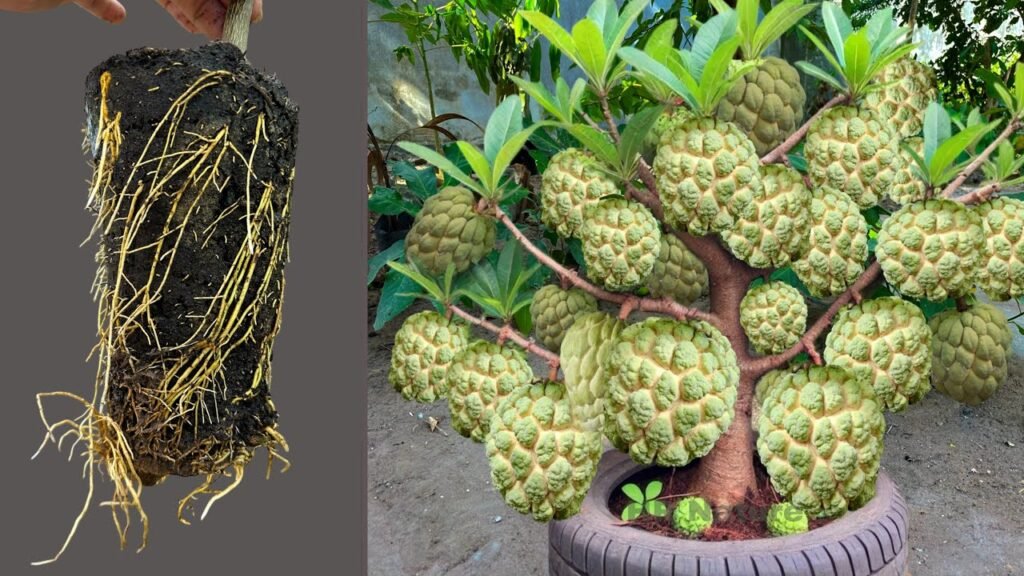
Healthy soil ensures successful propagation:
- Use well-draining soil with a mix of sand, compost, and garden soil.
- Maintain pH 6–7 for optimal growth.
- Fertilize with NPK 10:10:10 or organic compost for balanced nutrition.
- Mulch around the base to conserve moisture and improve soil structure.
Secret Advantage: Fertile soil promotes vigorous growth, strong roots, and higher fruit yield.
8. Watering and Care
Proper watering is essential for propagating sweetsop trees:
- Keep soil moist but avoid waterlogging to prevent root rot.
- Use misting or humidity domes for cuttings and air-layered plants.
- Gradually reduce humidity as the plant establishes.
Other tips include pruning weak shoots, monitoring for pests, and providing shade for young trees.
9. Common Problems and Solutions
- Cuttings Drying Out: Ensure humidity and proper watering.
- Fungal Infection: Use sterilized tools and fungicides if necessary.
- Poor Rooting: Apply rooting hormone and ensure proper soil drainage.
- Pests: Monitor for aphids, mealybugs, and use organic sprays like neem oil.
Secret Advantage: Proactive care increases survival rates and ensures strong, healthy trees.
10. Benefits of Propagating Sweetsop Trees
- Early fruiting: Especially with grafting or air layering.
- True-to-type fruits: Vegetative propagation maintains fruit quality.
- Healthier plants: Strong roots reduce disease susceptibility.
- Efficient multiplication: Produce multiple trees from a single parent.
- Higher yield and profitability: Ideal for home gardens and commercial orchards.
Conclusion: Grow Healthy, Fruitful Sweetsop Trees
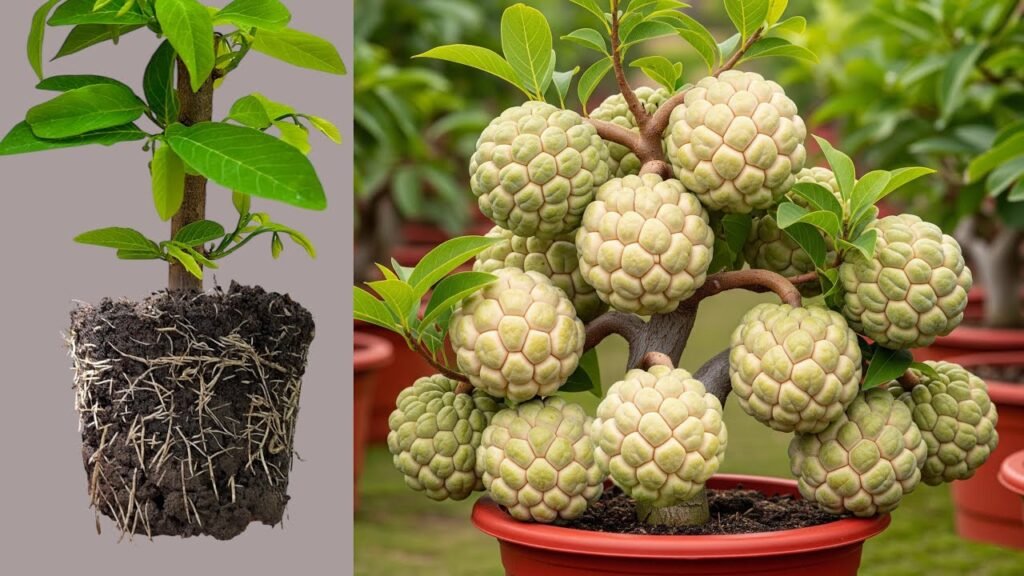
Propagating sweetsop trees is both rewarding and practical. By choosing the right propagation method—seed, cutting, air layering, or grafting—you can produce healthy, fast-growing, and fruit-bearing trees. Modern techniques like air layering and grafting significantly shorten the time to fruiting while maintaining the parent plant’s desirable traits.
With proper soil preparation, watering, fertilization, and pest management, your propagated sweetsop trees will thrive and provide sweet, delicious fruits for years. Whether for home gardening or commercial purposes, these propagation techniques allow you to enjoy the full potential of sweetsop cultivation efficiently and effectively.