
Walnuts are one of the most popular nuts globally, valued for their health benefits and culinary uses. Worldwide, production has expanded significantly in recent decades. Different countries contribute varying amounts to global supply. The largest walnut producer has consistently led production with modern cultivation techniques and large-scale orchards. Knowing the leading country helps understand global trade dynamics. Walnuts play a key role in international agriculture. Demand continues to grow due to health trends. This article explores current production statistics, contributing countries, and market trends.
Factors Influencing Walnut Production
Walnut production depends on climate, soil quality, and agricultural practices. Optimal temperatures and rainfall promote healthy tree growth. Fertile, well-drained soils support large yields. Access to modern irrigation and fertilizers increases productivity. Pest and disease management are critical. Technological adoption improves efficiency. Government support impacts farm expansion. Production factors combine to define global leadership.
Top Walnut Producing Countries Overview
Several countries dominate walnut production. They include China, the United States, Iran, and Turkey. Each country employs specific cultivation techniques. Orchards range in size from small farms to industrial operations. Local climate and soil conditions affect yield. Export policies influence global supply. Understanding global players contextualizes market dynamics. Production volume shapes international trade.
China: The Leading Walnut Producer
China is currently the largest walnut producer worldwide. Extensive orchards and favorable climate contribute to high yields. Modern farming methods enhance efficiency. China’s walnut production exceeds other countries significantly. Domestic consumption is high, but exports remain substantial. Technological advancements improve nut quality. Government support fosters expansion. China maintains leadership due to consistent investment and favorable growing conditions.
Walnut Varieties Cultivated in China
China cultivates multiple walnut varieties. The common types include Persian and English walnuts. Varieties differ in size, shell hardness, and kernel quality. Selective breeding improves yield and disease resistance. Varieties suit different climatic regions. Cultivation strategies optimize production. Quality control ensures market competitiveness. Varieties are adapted to regional needs.
United States Walnut Production
The United States is a major walnut producer, particularly in California. The state’s climate supports high-quality walnut growth. Production focuses mainly on English walnuts. Orchards employ advanced irrigation and harvesting techniques. The US is a top exporter of shelled and in-shell walnuts. Organic walnut farming is increasing. Quality standards are rigorous. The US contributes significantly to the global market.
Iran’s Role in Global Walnut Production
Iran is known for high-quality walnut production. Traditional farming methods coexist with modern techniques. Iran grows Persian walnuts predominantly. Export markets are growing steadily. Local consumption is high. Government initiatives support farm expansion. Climate variability affects production. Iran maintains a strong position among top producers.
Turkey’s Walnut Production Highlights
Turkey produces walnuts mainly in its western regions. Varieties include local and imported types. Turkey exports to European and Middle Eastern markets. Orchards range from small family farms to larger estates. Organic cultivation is common. Seasonal rainfall supports growth. Production continues to rise gradually. Turkey is a significant contributor to the global supply.
Global Production Statistics
Recent statistics show China produces the majority of global walnuts, followed by the United States, Iran, and Turkey. Production volume is measured in metric tons. Export and domestic consumption data provide insight into trade patterns. Technological adoption impacts yield per hectare. Market demand influences production decisions. Statistical tracking ensures accurate reporting. Comparison of countries highlights leaders and trends.
Table Global Walnut Production Comparison
Country China United States Iran Turkey Annual production metric tons 1,700,000 600,000 250,000 150,000 Major varieties English Persian English Persian Local Export ranking 1 2 3 4
Factors Supporting China’s Leadership
China’s leadership stems from large-scale orchards and mechanization. Access to labor and modern technology increases efficiency. Investment in irrigation systems improves yield. Government incentives encourage orchard expansion. Selective breeding produces high-quality nuts. Consistent research supports productivity. China adapts to market trends effectively. All these factors sustain global leadership.
Challenges in Walnut Production
Global walnut production faces challenges such as climate change, pest infestations, and water scarcity. Extreme weather impacts yield and quality. Disease management is critical. Labor shortages affect harvesting. Maintaining soil fertility is ongoing. Export market fluctuations influence planning. Producers must innovate continuously. Addressing challenges ensures stability.
Trade and Export Trends
Global walnut trade is influenced by production volume and quality. Major exporters include China, the US, and Turkey. Importers seek high-quality nuts at competitive prices. Trade policies affect market access. Supply chain efficiency impacts profitability. Value-added processing boosts market appeal. Demand trends in health-conscious markets drive growth. Trade data highlights key players and routes.
Health Benefits Driving Demand
Walnuts are rich in omega-3 fatty acids and antioxidants. They are associated with heart health, cognitive function, and weight management. Growing awareness of health benefits increases global demand. Culinary versatility expands consumption. Snack markets and confectionery industries utilize walnuts extensively. Demand drives production expansion. Health trends influence global supply strategies. Consumers increasingly prefer high-quality walnuts.
Technological Innovations in Walnut Farming
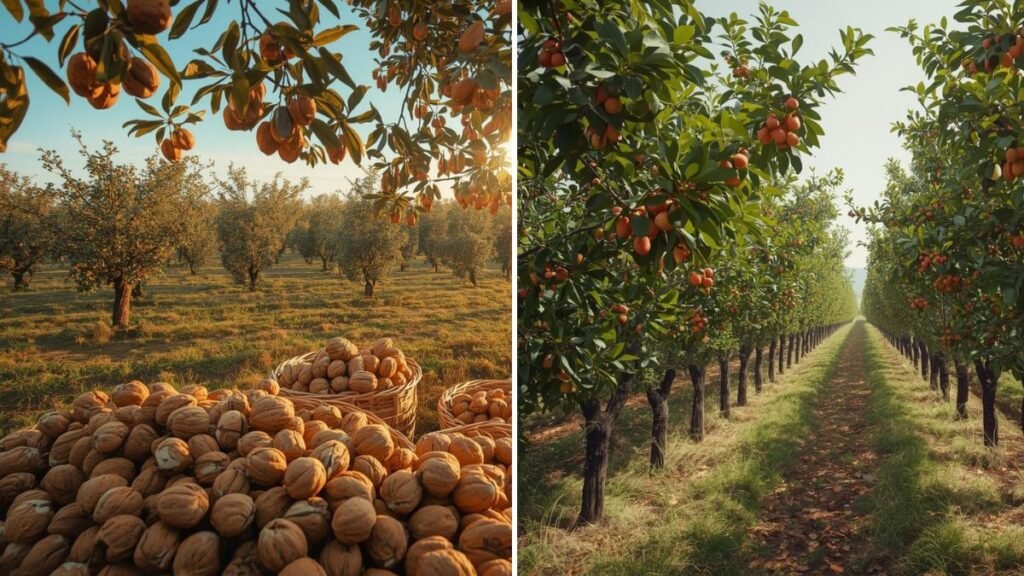
Innovations include drip irrigation, mechanized harvesting, and improved pest management. Advanced monitoring systems optimize water and nutrient delivery. Breeding programs enhance yield and disease resistance. Technology adoption varies by country. Innovations reduce labor intensity and improve efficiency. Quality control technologies ensure consistency. Continuous research fosters production sustainability. Technology supports global competitiveness.
Environmental Considerations
Sustainable walnut farming reduces water consumption and chemical use. Organic cultivation methods are increasingly adopted. Soil conservation and biodiversity practices protect ecosystems. Environmental certification adds market value. Climate-resilient varieties mitigate risk. Sustainable practices attract eco-conscious buyers. Green practices ensure long-term productivity. Environmental care is critical for global production.
Future Trends in Global Walnut Production
Future trends indicate growing demand in emerging markets. Expansion of high-quality orchards is expected. Technological advancements will continue to enhance efficiency. Climate change may influence cultivation areas. Consumer preference for organic and sustainable nuts rises. Investment in research and infrastructure supports growth. Production diversification increases resilience. Trends highlight global expansion opportunities.
Conclusion: China’s Dominance and Global Implications
China is currently the largest walnut producer, supported by scale, technology, and government incentives. Other countries like the US, Iran, and Turkey maintain significant production levels. Global demand continues to rise due to health trends and culinary uses. Sustainable and innovative farming practices are shaping the future. Understanding global production helps in trade and consumption decisions. Walnut production is a dynamic sector with ongoing opportunities. Observing trends provides insight for producers, exporters, and consumers alike. The global walnut market remains competitive and evolving.