
Onions are one of the most essential vegetables in everyday cooking. They are easy to grow and store well. Onions adapt to different climates and soil types. Growing onions at home ensures fresh and chemical-free produce. They require minimal space and care. Both beginners and experienced gardeners can grow onions. Understanding the growth cycle is important. Proper care results in healthy bulbs and high yields.
Choosing the Right Onion Variety
Onion varieties differ by climate and day length. Short-day onions suit warm regions. Long-day onions thrive in cooler climates. Intermediate varieties suit moderate regions. Red, white, and yellow onions serve different culinary uses. Choose disease-resistant varieties. Bulb size depends on variety selection. Correct choice ensures successful harvests.
Best Time to Plant Onions
Onions prefer cool temperatures during early growth. Planting time depends on climate. In warm regions, plant in winter. In cold regions, plant in early spring. Proper timing ensures bulb formation. Late planting reduces yield. Soil temperature affects germination. Timing is critical for healthy onions.
Soil Preparation for Onions
Onions need loose, well-drained soil. Compact soil restricts bulb growth. Add compost before planting. Maintain neutral pH levels. Remove stones and debris. Soil richness affects bulb size. Good drainage prevents rot. Proper soil preparation improves harvest quality.
Growing Onions from Seeds
Seeds offer more variety options. Start seeds indoors if climate is cold. Germination takes ten to fourteen days. Seedlings require thinning. Seed-grown onions take longer to mature. Proper care improves survival. Seeds are cost-effective. Patience leads to strong plants.
Growing Onions from Sets
Onion sets are small bulbs. They grow faster than seeds. Sets are beginner-friendly. Plant sets shallowly. Avoid planting too deep. Sets reduce risk of failure. They mature quicker. Sets are widely available.
Transplanting Onion Seedlings
Handle seedlings gently during transplanting. Space plants properly. Plant at the same depth. Water immediately after transplanting. Avoid bending roots. Transplant during cooler hours. Proper handling reduces shock. Healthy starts ensure bulb development.
Spacing Requirements
Spacing affects bulb size. Leave adequate space between plants. Crowded onions remain small. Rows should be well spaced. Proper spacing improves airflow. Good spacing reduces disease. Planning layout improves yield. Space is essential for growth.
Watering Onion Plants
Onions need consistent moisture. Avoid waterlogging. Water deeply but less frequently. Reduce watering near harvest time. Excess water causes rot. Dry periods stress plants. Balanced watering improves bulb quality. Moisture control is crucial.
Fertilizing Onions
Onions are heavy feeders. Nitrogen supports leaf growth early. Phosphorus supports root development. Potassium improves bulb formation. Avoid excess nitrogen later. Organic fertilizers work best. Timely feeding improves yield. Balanced nutrients are essential.
Mulching Benefits
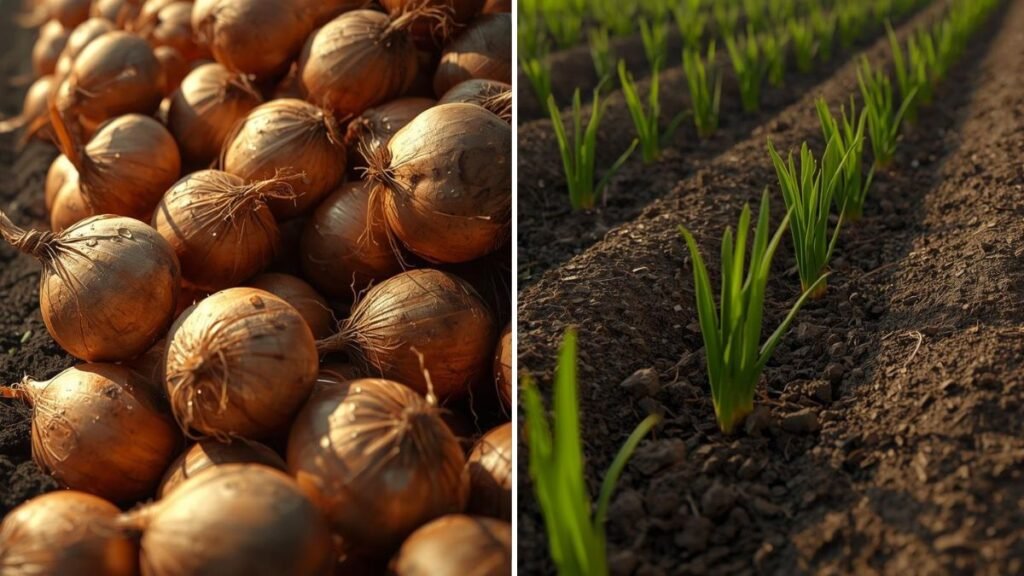
Mulch retains soil moisture. It suppresses weeds. Mulch regulates soil temperature. Straw and dry leaves work well. Avoid heavy mulch near bulbs. Mulching improves soil health. Weed control reduces competition. Mulch supports onion growth.
Weed Control
Weeds compete for nutrients. Remove weeds regularly. Hand weeding is safest. Avoid damaging onion roots. Mulching reduces weed growth. Weed control improves bulb size. Clean beds ensure healthy plants. Consistent weeding is necessary.
Pest Management
Onion pests include thrips and maggots. Neem oil helps control pests. Crop rotation reduces infestations. Inspect leaves regularly. Remove infected plants. Healthy soil resists pests. Early action prevents spread. Organic control is effective.
Disease Prevention
Fungal diseases affect onions easily. Avoid overcrowding. Ensure good drainage. Rotate crops yearly. Remove diseased foliage. Avoid overhead watering. Clean tools after use. Prevention maintains healthy crops.
Signs of Maturity
Leaves turning yellow indicate maturity. Tops fall naturally. Stop watering at this stage. Bulbs swell fully. Avoid harvesting too early. Mature onions store better. Observation ensures perfect timing. Patience improves quality.
Harvesting Onions
Harvest on a dry day. Loosen soil gently. Pull bulbs carefully. Avoid bruising. Cure onions before storage. Proper harvesting prevents rot. Gentle handling improves shelf life. Harvest timing matters.
Curing and Storage
Cure onions in a dry, airy place. Dry outer skins thoroughly. Trim roots and tops after curing. Store in cool, dry conditions. Avoid moisture during storage. Proper curing increases shelf life. Good storage prevents spoilage. Onions store for months.
Onion Growing Tips Table
| Factor | Recommendation | Benefit |
|---|---|---|
| Soil | Loose and fertile | Large bulbs |
| Water | Moderate and consistent | Prevents rot |
| Spacing | Proper gaps | Bigger onions |
| Fertilizer | Balanced nutrients | Healthy growth |
| Harvest | After tops fall | Better storage |
Conclusion
Growing onions at home is simple and productive. With correct timing and care, yields can be excellent. Onions require basic soil preparation and watering. Proper spacing improves bulb size. Pest and disease management ensure healthy crops. Homegrown onions store well and taste better. Beginners can succeed easily. Start growing onions for a reliable harvest.