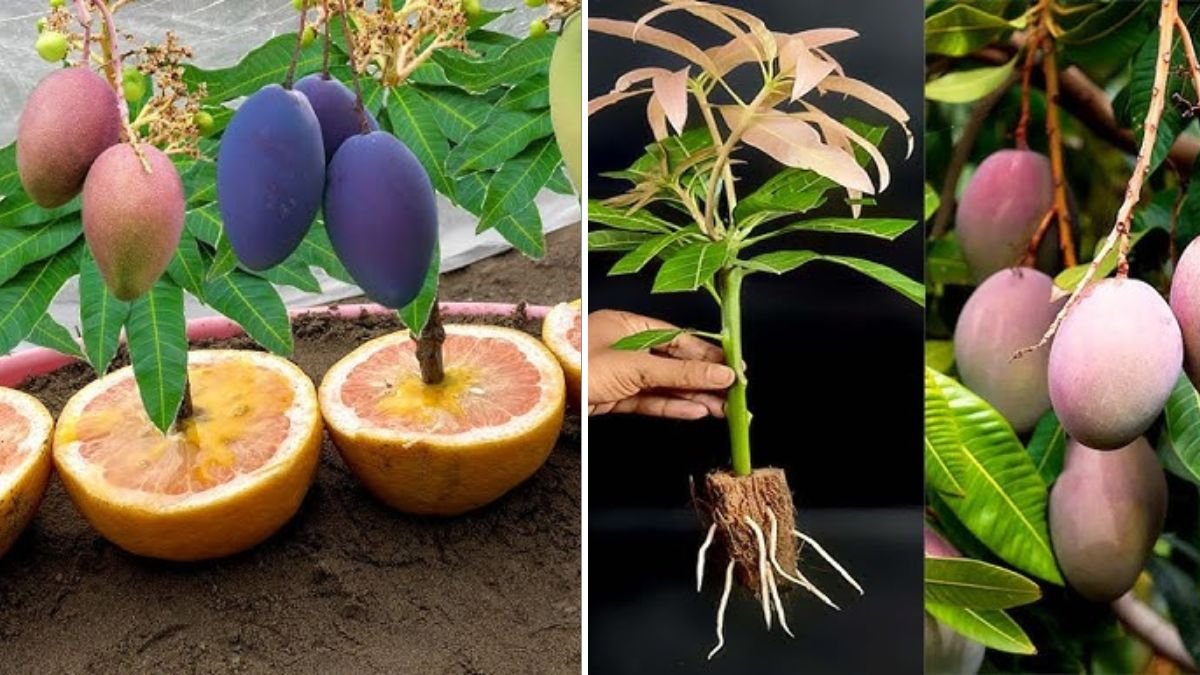
Growing a mango tree at home might sound like a dream reserved for tropical farmers, but the truth is—yes, you absolutely can grow a mango tree at home, even in a pot or a small balcony. Mango trees are hardy, adaptable, and surprisingly easy to care for once you understand the basics.
Whether you want fresh mangoes from your own garden or simply enjoy the beauty of this tropical tree, growing a mango at home is both fun and rewarding. With the right soil, sunlight, watering, and pruning techniques, you can grow a strong mango tree that fruits earlier and grows faster.
In this detailed 1200-word guide, you’ll discover:
How to grow a mango tree from seed or cutting
Soil and fertilizer secrets
Watering techniques
Growth boosters
Pruning methods
Pest control
How to get fruits earlier
Let’s explore whether growing a mango tree at home is possible—and how to do it like a pro.
1. Can You Really Grow a Mango Tree at Home? (The Answer Is YES!)
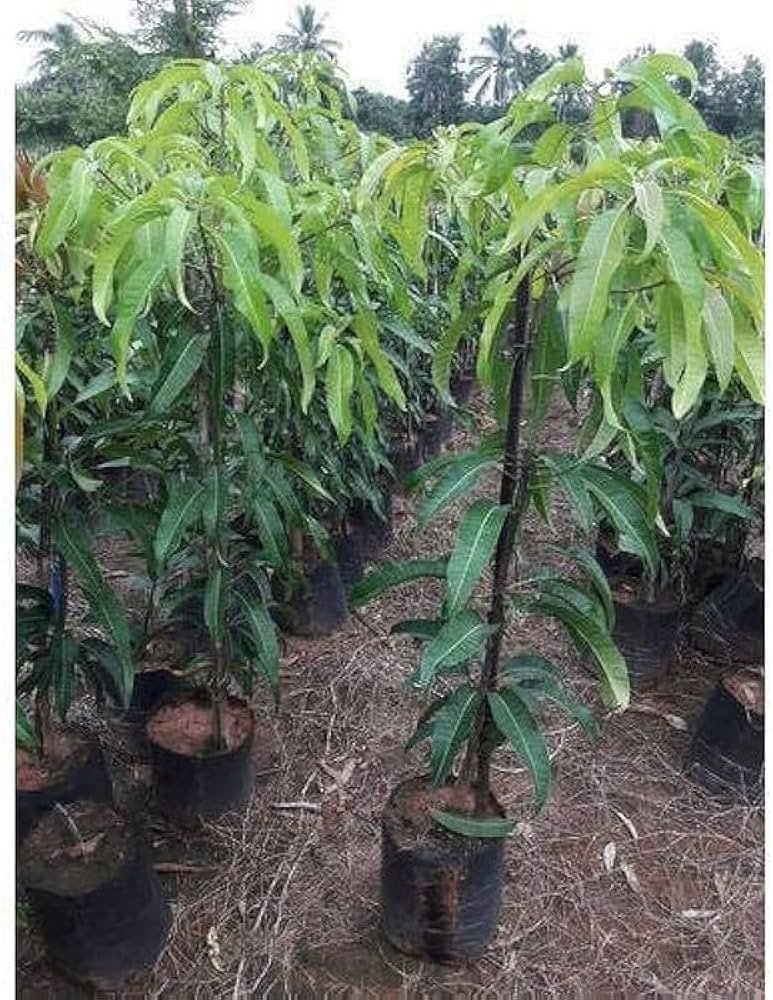
Many people believe mango trees need huge farms or special climates.
But mango trees are actually:
- Highly adaptable
- Fast-growing
- Drought tolerant
- Suitable for pots
- Capable of fruiting in small spaces
With proper care, a mango tree can thrive in:
- Backyards
- Terraces
- Balconies
- Pots
- Containers
You won’t need special equipment—just the right technique.
2. Choose the Best Method: Seed, Cutting, or Grafted Plant
There are three ways to start a mango tree.
From Seed
Easy but slow to fruit
- Fruits take 6–10 years
- Fruit quality varies
- Good for beginners
From Cutting
Moderate success
- Fruits take 3–4 years
- Needs careful rooting
Grafted Plant (Best Method!)
- Fruits in 2–4 years
- Same fruit quality as the parent
- Stronger, healthier plant
If you want quick fruits → always choose a grafted sapling.
3. Prepare the Perfect Soil Mix for Mango Growth
Mango trees require loose, fertile, well-draining soil.
Best Soil Mix:
- 40% garden soil
- 30% compost or cow dung
- 20% sand/perlite
- 10% cocopeat
Add these nutrients:
- 1 handful neem cake
- 1 tbsp bone meal (root booster)
- 1 cup vermicompost
This soil mix:
- Encourages deep root growth
- Prevents rot
- Provides steady nutrients
- Speeds up canopy development
4. Sunlight Requirements — Mango Trees Love the Sun
Mango trees need full sun to grow fast.
Minimum sunlight:
- 8–10 hours of direct sunlight per day
Sunlight affects:
- Leaf growth
- Branching
- Flowering
- Fruit formation
- Tree height
If grown indoors, move it outdoors during the day.
5. Watering the Mango Tree (The Right Way)
Mango trees do not like soggy soil.
Watering Rules:
- Water deeply
- Water 1–2 times per week
- Let soil dry slightly
- Avoid daily watering
Symptoms of overwatering:
- Yellow leaves
- Root rot
- Slow growth
During summer:
Water more frequently.
During winter:
Reduce watering.
Balanced watering = faster growth + stronger roots.
6. Planting the Mango Tree Correctly
Professional planting makes a huge difference.
Planting Steps:
- Dig a hole 60 cm wide & deep
- Mix soil with compost
- Place the plant gently
- Keep the graft union above soil
- Fill the hole
- Water thoroughly
Proper planting avoids root damage and promotes rapid growth.
7. Fertilizing for Faster Growth and Earlier Fruiting
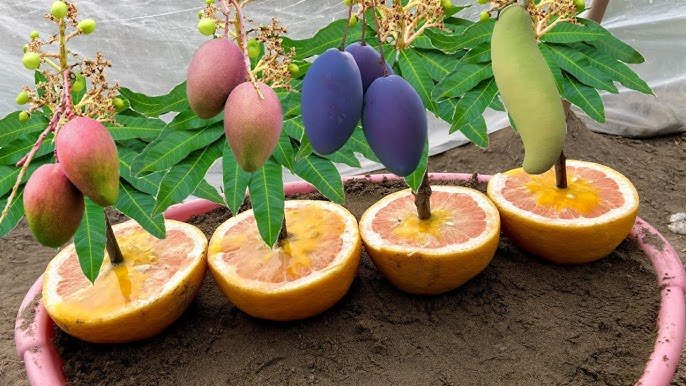
Mango trees are heavy feeders.
Monthly Fertilizer Plan:
Every 30 days:
- 1–2 kg compost
- Vermicompost
- Mustard cake fertilizer
- Banana peel fertilizer
Every 2–3 months:
- Bone meal (roots)
- Potassium sulfate (fruiting)
- Seaweed extract
Balanced nutrients boost:
- Leaf production
- Trunk thickness
- Branching
- Flowering
- Fruit size
8. Pruning — The Secret to Faster Growth & Shape
Pruning helps mango trees grow bushier and stronger.
When to prune:
- After planting
- During dormancy
- After fruiting
How to prune:
- Cut top tip (2–3 inches)
- Remove weak branches
- Remove crossing branches
- Shape into a strong structure
Benefits:
- Faster growth
- More side branches
- Earlier fruits
- Stronger tree
9. Mulching for Healthy Roots & Faster Growth
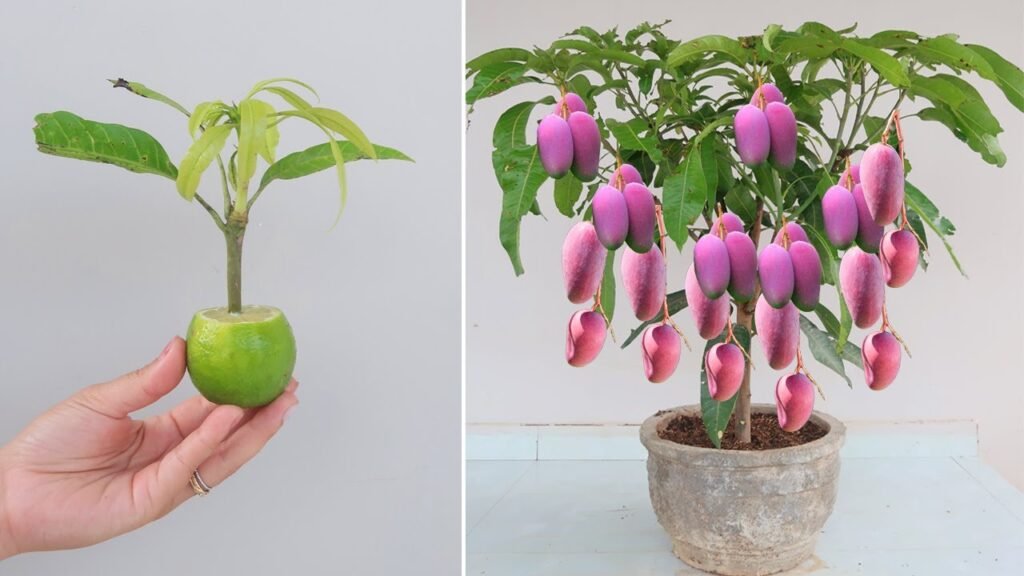
Mulching protects roots and improves soil quality.
Mulch materials:
- Dry leaves
- Wood chips
- Straw
- Coconut husk
- Sugarcane waste
Benefits:
- Maintains moisture
- Reduces heat
- Adds nutrients
- Prevents weeds
Mulch 2–3 inches thick.
10. Protect Mango Trees From Pests Naturally
Common pests:
- Mango hoppers
- Aphids
- Mealybugs
- Scale insects
- Fruit flies
Natural Spray:
- 1 tbsp neem oil
- 1 tsp liquid soap
- 1 litre water
Spray weekly during the growing season.
Healthy leaves = faster growth.
11. Encourage Flowering and Fruiting
Flowering requires:
- Full sunlight
- Good nutrition
- Low nitrogen
- High potassium
- Adequate watering
Tips:
- Avoid over-fertilizing
- Keep tree stress-free
- Protect flowers from pests
Flowers → fruits → success!
12. Protect Your Mango Tree From Weather Stress
Mango trees do not like:
- Frost
- Heavy rain
- Strong frost
- Extreme heat
Protection:
- Mulch
- Shade net
- Wind barrier
- Move pots
- Wrap trunk (winter)
Stress slows growth—protection speeds it.
13. How Long Does a Mango Tree Take to Fruit?
Depends on the method:
- Grafted plant: 2–4 years
- Cutting: 3–5 years
- Seed: 6–10 years
Grafted plants fruit fastest and produce consistent quality.
14. Harvesting Mangoes the Right Way
Signs of ripe mango:
- Color change
- Sweet aroma
- Slight softness
- Stem pulls easily
Cut fruits gently to avoid damaging branches.
Conclusion — Can You Really Grow Mango at Home? Absolutely!
Growing a mango tree at home is not only possible but enjoyable and rewarding.
With:
Good sunlight
Proper soil
Smart watering
Fertilizers
Pruning
Pest control
Protection
Growth boosters
…your mango tree will thrive, grow fast, and eventually reward you with delicious fruits.
Whether you grow it in a pot or ground, a mango tree can become the highlight of your garden.