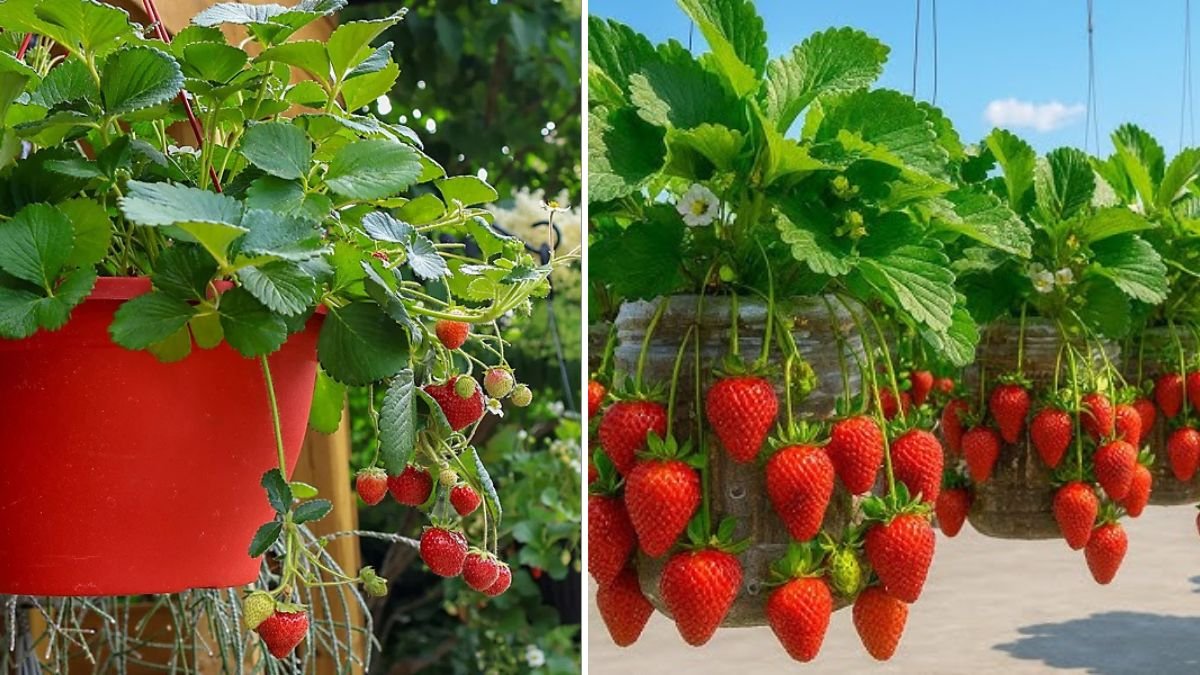
Hanging bottle gardens are one of the smartest ways to grow strawberries at home. Strawberries naturally prefer good airflow, clean soil, and controlled watering. Hanging bottles provide all these benefits in a compact system. This method is perfect for balconies, terraces, and small yards. Fruits stay clean and rot-free because they never touch the ground. Hanging systems also reduce pest problems significantly. Using recycled bottles makes this method affordable and eco-friendly. Even beginners can succeed with minimal effort. With proper setup, yields can be surprisingly high. This guide explains everything step by step.
1. Choosing the Right Strawberry Variety for Hanging Bottles
Not all strawberry varieties perform well in hanging containers. Day-neutral and everbearing varieties are the best choices. These types produce fruits continuously rather than once per season. Alpine strawberries also work well due to their compact roots. Avoid varieties that require deep soil. Disease-resistant plants increase success rates. Local nursery varieties adapt better to climate conditions. Strong crowns indicate healthy plants. Selecting the right variety reduces maintenance issues. This choice directly affects fruit size and sweetness.
2. Selecting Suitable Plastic Bottles
Large plastic bottles provide enough root space for strawberries. Two-liter or five-liter bottles work best. Food-grade plastic is always the safest option. Bottles should be thick enough to resist sunlight damage. Clean bottles thoroughly before use. Cut planting holes carefully to avoid sharp edges. Make drainage holes at the bottom. Transparent bottles help monitor root health. Strong bottles last multiple seasons. Good containers ensure plant safety and stability.
3. Designing a Hanging Layout That Works
Proper layout planning prevents overcrowding and shading. Leave enough vertical space between bottles. Ensure all plants receive sunlight evenly. Hanging systems can be arranged in rows or staggered patterns. Strong hooks, wires, or ropes are essential for safety. Bottles should hang freely for airflow. Accessibility for watering is important. Balanced layouts improve plant health. Good design also enhances visual appeal. Planning saves time later.
4. Preparing the Best Soil Mix for Bottles
Strawberries need light, well-draining soil. A mix of compost, coco peat, and garden soil works well. Avoid heavy clay soil that holds water. Organic matter improves nutrient availability. Good drainage prevents root rot. Soil should stay moist but never soggy. Fresh soil reduces disease risks. Balanced soil supports strong roots. Soil quality directly affects fruit sweetness. Good soil is the foundation of success.
5. Planting Strawberries Correctly in Bottles
Planting depth is critical for strawberries. The crown must remain above soil level. Burying the crown causes rot and poor growth. Spread roots gently before planting. Firm soil lightly around roots. Water immediately after planting. Plant during cooler parts of the day. Avoid compacting the soil too much. Proper planting reduces transplant shock. Strong starts lead to better yields.
6. Sunlight Requirements for Hanging Strawberry Gardens
Strawberries need at least six hours of sunlight daily. Morning sunlight is ideal for healthy growth. South or east-facing areas work best. Hanging bottles can be rotated for even exposure. Excessive heat may require light shading. Inadequate sunlight reduces fruiting. Observe light patterns throughout the day. Balanced exposure improves sweetness. Proper sunlight management boosts productivity. Light consistency is essential.
7. Watering Techniques for Hanging Bottles
Hanging bottles dry faster than ground soil. Water gently but frequently. Avoid soaking the soil completely. Drip watering works very well in hanging systems. Morning watering reduces disease risk. Avoid wetting leaves unnecessarily. Mulching inside bottles helps retain moisture. Inconsistent watering causes small fruits. Regular monitoring is important. Balanced watering keeps plants stress-free.
8. Feeding Strawberries for Juicy Fruits
Strawberries benefit from regular feeding. Use organic liquid fertilizer every two weeks. Compost tea is highly effective. Avoid excess nitrogen, which causes leaf growth over fruiting. Potassium improves fruit size and sweetness. Stop heavy feeding during peak harvest. Observe plant response carefully. Balanced nutrition increases yield. Feeding consistency matters more than quantity. Proper nutrition improves flavor.
9. Managing Runners in Hanging Gardens
Runners drain energy from fruiting plants. Remove runners regularly for better production. Allow runners only if propagation is desired. Trim using clean scissors. Controlled growth improves fruit size. Excess runners cause overcrowding. Hanging systems benefit from compact plants. Runner management improves airflow. Healthy plants produce more berries. Runner control is essential for success.
10. Pollination in Hanging Strawberry Systems
Strawberries rely on pollinators for proper fruit shape. Encourage bees by growing flowering plants nearby. Avoid pesticide use during flowering. Gentle shaking of bottles helps pollen transfer. Hand pollination may be needed indoors. Poor pollination leads to misshapen fruits. Good airflow improves pollination naturally. Monitor flowers regularly. Pollination awareness increases yield. Simple actions make a big difference.
11. Natural Pest Control Methods
Hanging gardens reduce many soil pests. Aphids and mites may still appear. Inspect leaves frequently. Neem oil works effectively and safely. Remove damaged leaves promptly. Keep the surrounding area clean. Healthy plants resist pests better. Early detection prevents outbreaks. Natural solutions protect beneficial insects. Pest control preserves harvest quality.
12. Preventing Common Strawberry Diseases
Good airflow is the best disease prevention. Avoid overcrowding bottles. Water soil, not leaves. Replace soil periodically. Remove diseased plants immediately. Clean bottles between seasons. Vertical systems reduce fungal problems. Prevention saves time and effort. Healthy plants resist infections. Clean gardening habits matter. Disease prevention ensures long-term success.
13. Flowering and Fruit Development Stage
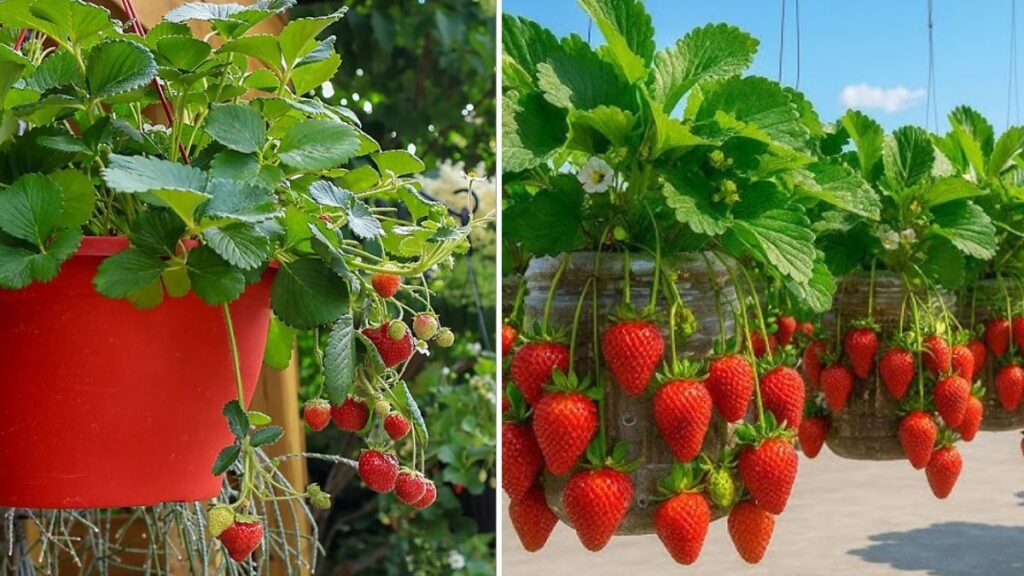
Flowers appear soon after plants establish. Maintain steady watering during flowering. Avoid stress from heat or dryness. Healthy flowers lead to uniform fruits. Do not prune heavily during this stage. Support bottles securely as fruits develop. Observation helps adjust care. Fruit development depends on stability. Consistency ensures better harvests. This stage determines yield quality.
14. Harvesting Strawberries the Right Way
Harvest strawberries when fully red. Use scissors to cut stems cleanly. Avoid pulling fruits forcefully. Harvest in the morning for best flavor. Frequent harvesting encourages more fruiting. Handle berries gently to avoid bruising. Clean harvesting improves shelf life. Regular picking boosts productivity. Proper timing improves sweetness. Harvesting technique matters.
15. Seasonal Care for Hanging Strawberry Gardens
Protect plants during extreme heat. Provide shade if necessary. Reduce watering during cooler months. Winter protection may be required in cold climates. Clean bottles seasonally. Remove old leaves regularly. Seasonal adjustments improve plant survival. Hanging systems respond quickly to climate changes. Flexibility is an advantage. Seasonal care ensures longevity.
16. Common Mistakes to Avoid
Overwatering is a frequent mistake. Crowding bottles reduces airflow. Ignoring runner control lowers yield. Poor sunlight limits fruiting. Skipping feeding weakens plants. Weak hanging supports are dangerous. Learning from mistakes improves results. Small changes bring big improvements. Awareness builds confidence. Avoiding errors ensures success.
17. Cost and Space Benefits of Hanging Bottle Gardens
This method uses recycled materials. Startup costs are very low. Vertical growing saves floor space. Ideal for apartments and small homes. High yield from minimal area. Water usage is efficient. Reusable bottles reduce expenses. Hanging gardens are budget-friendly. Space efficiency is unmatched. Cost-effective gardening is achievable.
18. Sustainability and Environmental Benefits
Reusing plastic bottles reduces waste. Homegrown fruit lowers carbon footprint. Vertical greenery improves urban environments. Efficient water use conserves resources. Sustainable habits inspire others. Small gardens make meaningful impact. Eco-friendly practices matter. Hanging gardens support green living. Sustainability starts at home. Bottle gardening has purpose.
19. Why Hanging Strawberries Taste Better
Hanging strawberries receive better airflow. Reduced disease improves flavor. Balanced nutrition enhances sweetness. Fruits ripen naturally. Fresh harvesting preserves nutrients. Home control ensures quality. Stress-free plants produce better berries. Taste difference is noticeable. Homegrown strawberries are superior. Flavor is unmatched.
20. Final Thoughts on Hanging Bottle Strawberry Gardens
DIY hanging bottle gardens make strawberry growing accessible. Small spaces become productive farms. This method is affordable and beginner-friendly. With proper care, yields are impressive. Visual beauty adds value to homes. Anyone can try this technique. Start small and expand gradually. Success builds confidence quickly. Fresh strawberries are within reach. Home gardening becomes joyful.
Table: Hanging Bottle Strawberry Garden Summary
| Element | Requirement | Benefit |
|---|---|---|
| Bottle size | Large plastic bottle | Healthy roots |
| Soil | Light, organic mix | Better fruiting |
| Sunlight | 6 hours daily | Sweet berries |
| Water | Frequent, gentle | Prevents stress |
| Feeding | Potassium-rich fertilizer | Juicy fruits |