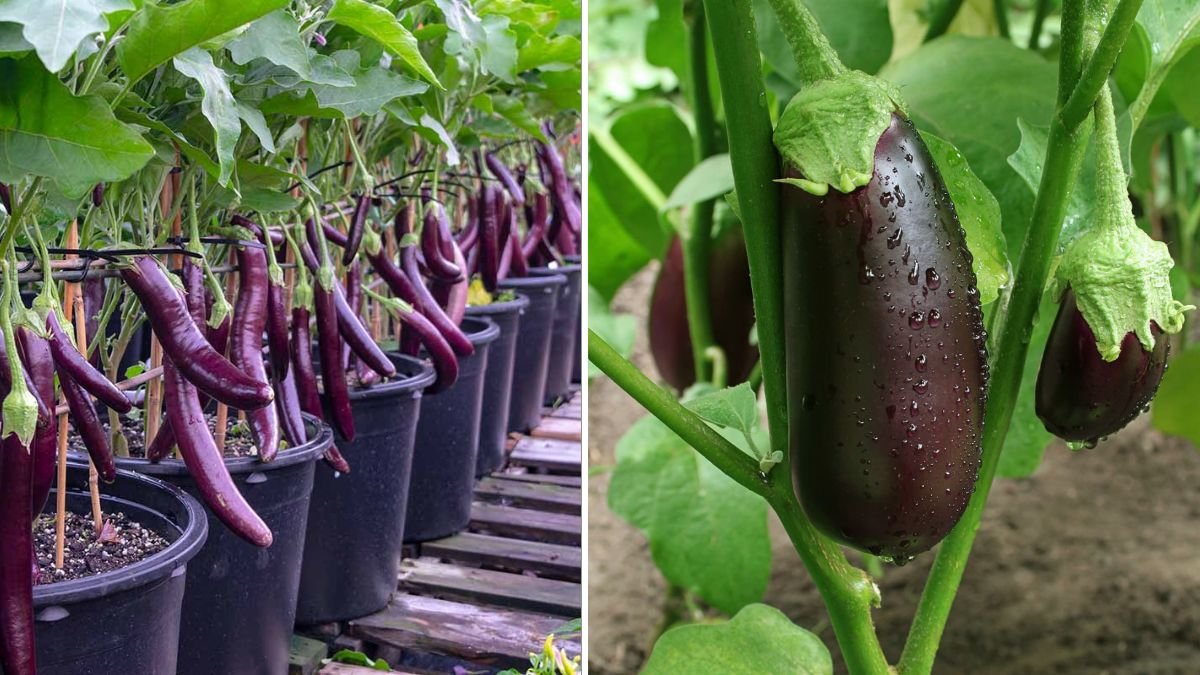
Growing eggplants (brinjals) at home is a favourite hobby for many gardeners because these vegetables are delicious, versatile, and highly nutritious. But did you know that there is a special technique that helps you grow stronger, healthier, and faster eggplants than normal seedlings?
Yes — it’s called air layering, and it is one of the most powerful propagation methods used by professional gardeners. With air layering, you can create a new eggplant plant from an existing one without seeds, without transplant shock, and with much stronger roots.
In this 1200-word guide, you’ll discover everything you need to know about eggplant air layering — from the science behind it to step-by-step instructions, care tips, and common mistakes to avoid.
Let’s explore the secret that many expert gardeners use to grow eggplants faster and more reliably.
1. What Is Eggplant Air Layering and Why Is It So Effective?
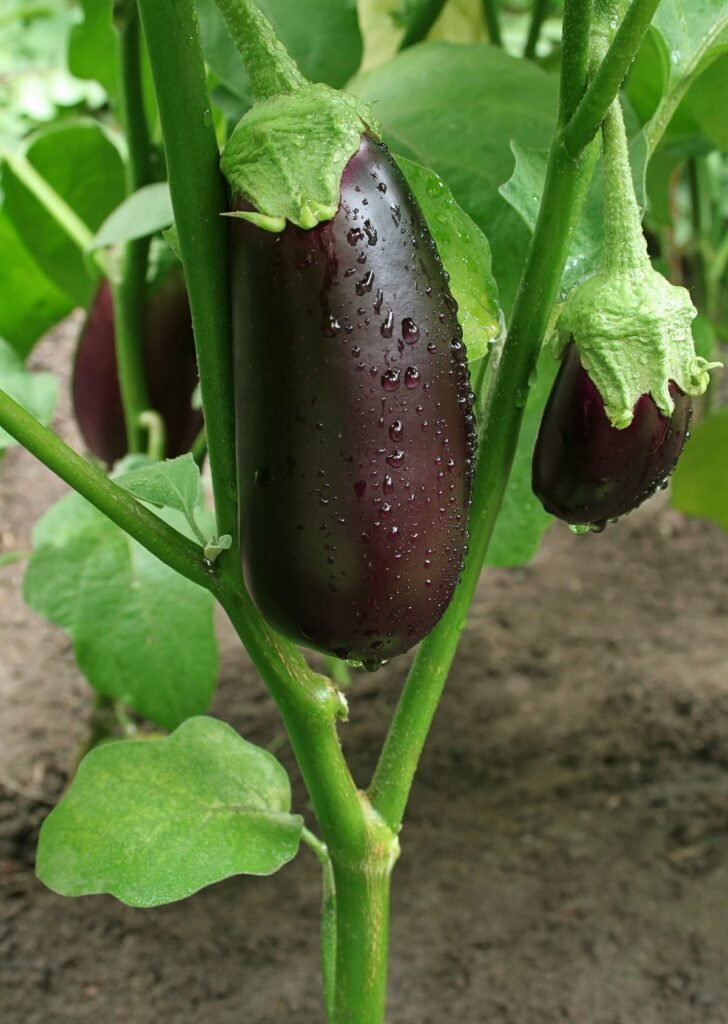
Air layering is a plant propagation technique where roots are encouraged to form on a stem while it is still attached to the parent plant.
Advantages of air layering:
- Faster growth than seeds
- Stronger root system
- No transplant shock
- Plants start producing earlier
- Identical traits to the parent plant
- Works even when seed germination is poor
Because eggplants naturally produce roots easily, this method works exceptionally well.
Unlike seeds, which may take weeks to germinate and develop, an air-layered eggplant begins life with mature roots, giving it a huge growth advantage.
2. Why Air Layering Works So Well for Eggplants
Eggplants have:
- Soft stems
- High moisture levels
- Active cambium layer
- Good rooting potential
When you slightly wound the stem and wrap it with moist material, the plant responds by producing roots to “heal” the injury.
This root formation is very fast, often occurring within 10–20 days.
Because the plant does not need to rely on a newly germinated seedling, it:
- Grows faster
- Survives better
- Develops thicker stems
- Produces fruit earlier
This makes air layering one of the best propagation techniques for high-yield home gardens.
3. What You Need for Eggplant Air Layering
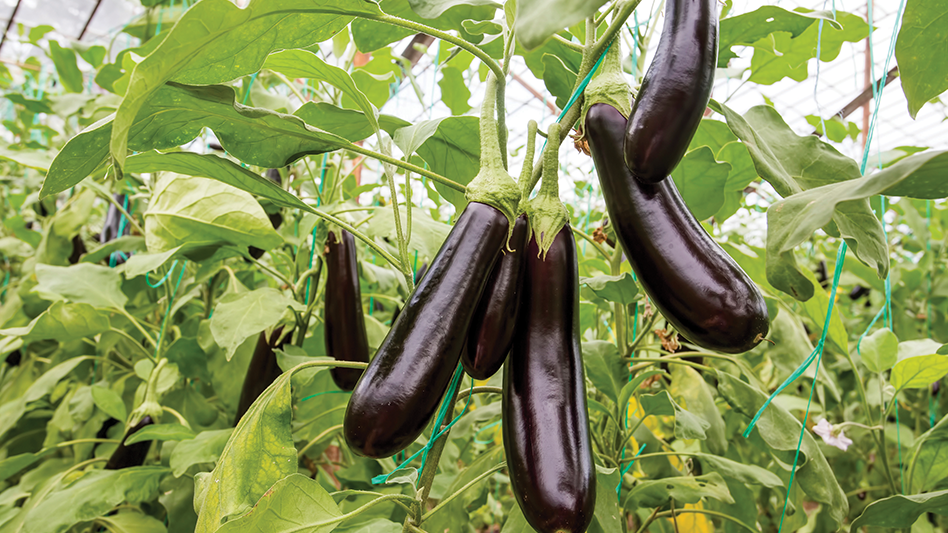
Before you begin, prepare the following materials:
Materials:
- Sharp knife or blade
- Plastic wrap or polythene
- Moist sphagnum moss or cocopeat
- Garden twine or rubber band
- A small piece of aluminium foil (optional)
- Water
- Gloves
These materials are inexpensive and easy to find.
4. Choose the Right Eggplant Stem
Not all stems are suitable for air layering.
Choose a stem that is:
- Healthy
- Thick (½ inch or more)
- Green or slightly woody
- Free from pests
- Not too young or too old
The best stems are semi-mature stems, which root quickly.
Avoid stems with:
- Disease
- Dryness
- Weakness
- Insect damage
Healthy stems ensure success.
5. Step-by-Step Air Layering Method for Eggplant
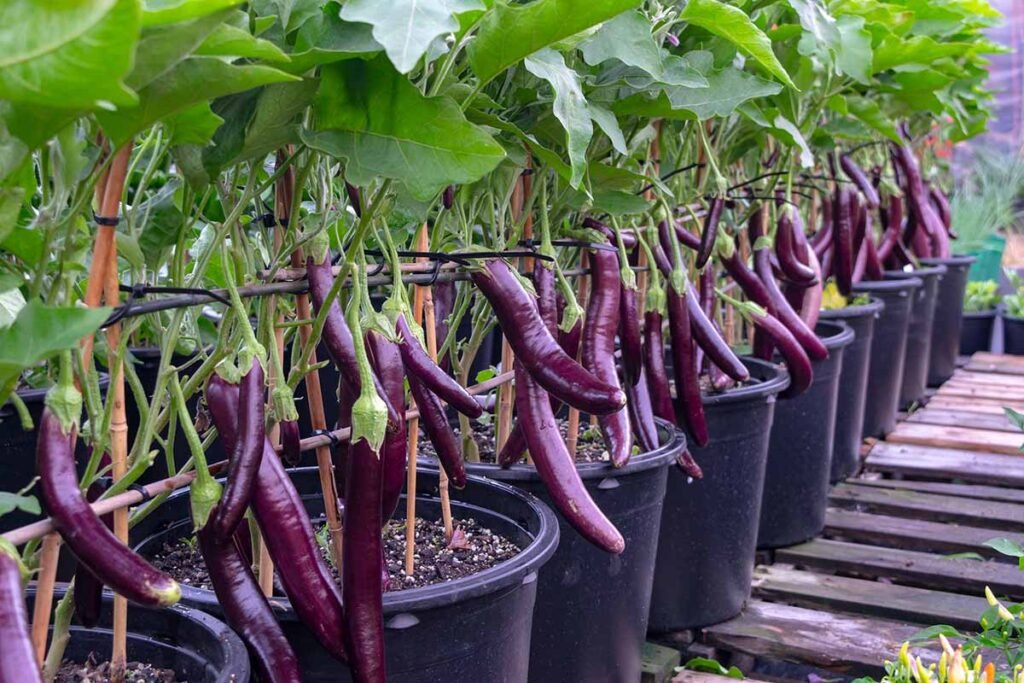
Follow these steps carefully for maximum success.
Step 1: Select a spot 10–15 cm above the soil
Choose a section where the stem is strong but still flexible.
Step 2: Make a shallow cut around the stem
Using a sharp knife:
- Cut a ring around the stem
- Depth: 2–3 mm
- Remove a small ring of bark
Make sure the cut does NOT sever the stem completely.
This exposes the cambium layer — the part responsible for root growth.
Step 3: Apply rooting hormone (optional)
You may apply:
- Aloe vera gel
- Rooting hormone powder
- Cinnamon (natural alternative)
These speed up root formation.
Step 4: Wrap moist cocopeat or sphagnum moss
Moisten the moss until it is damp, not dripping.
Then:
- Wrap the moss around the cut
- Cover evenly
- Press gently
The moisture encourages quick rooting.
Step 5: Cover with plastic
Wrap a plastic sheet over the moss to:
- Retain moisture
- Protect from insects
- Keep roots warm
Tie both ends securely.
Step 6: Optional — wrap with foil
Foil reduces sunlight and keeps the moss moist and dark.
Step 7: Wait for roots to form
Roots will appear in:
- 10–20 days (warm climates)
- 20–30 days (cool climates)
Check the plastic gently — roots should appear white and healthy.
6. When to Cut the New Plant
Once roots fill the moss:
Cut below the rooted section
Use a clean, sharp knife.
Pot the new plant immediately
Use:
- Well-draining soil
- A small pot
- Light watering
7. Caring for the New Eggplant Plant
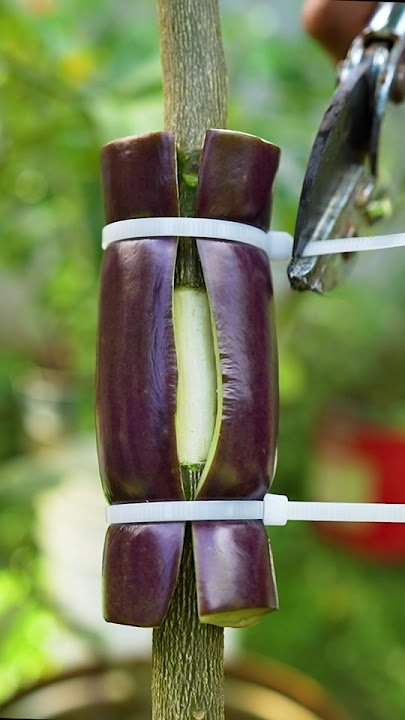
After cutting:
Keep soil slightly moist
Do NOT overwater.
Place in bright shade
Avoid direct sun for 2–3 days.
Provide gentle support
Use a stick if the stem is weak.
Fertilize lightly
Use:
- Compost
- Vermicompost
- Diluted organic fertilizer
Within a week, the plant will stabilize and begin growing quickly.
8. How Air-Layered Eggplants Grow Faster Than Seedlings
Seedlings:
- Have tiny roots
- Require transplanting
- Suffer transplant shock
- Grow slowly
Air-layered plants:
- Have full root systems
- Do not shock
- Start immediately
- Grow faster
- Produce earlier
Studies show air-layered eggplants can grow 2× faster than seed-grown plants.
9. Protecting Your Air-Layered Eggplants From Pests
Common pests:
- Aphids
- Whiteflies
- Spider mites
- Caterpillars
Natural spray:
- 1 tablespoon neem oil
- 1 teaspoon liquid soap
- 1 litre water
Spray weekly.
Healthy plants resist pests better.
10. Encouraging Early Flowering and Fruit Set
Once your eggplant grows:
Provide full sun
Eggplants need 6–8 hours.
Add potassium
Helps bloom and fruit.
Prune weak branches
Promotes airflow.
Keep soil fertile
Use compost regularly.
11. Harvesting Eggplants Successfully
Harvest when:
- Fruit is shiny
- Firm
- Color is deep
- Size is ideal
Cut with a sharp knife to prevent damage.
Harvesting regularly boosts production.
12. Why Air Layering Is the Best Method for Home Gardeners
Air layering gives:
- Higher success rate
- Stronger plants
- Faster growth
- No seed germination issues
- Identical plant traits
- Greater fruit yield
It is especially useful when:
- Seeds fail
- Plants are weak
- You want clones
- You need quick production
Conclusion — Eggplant Air Layering Is a Game Changer
Air layering is one of the easiest and most reliable ways to propagate eggplants.
With minimal effort and cheap materials, you can produce:
- Strong plants
- Faster growth
- Earlier fruits
- Healthy roots
- Disease-resistant clones
Whether you’re a beginner or a seasoned gardener, this technique will significantly improve your eggplant garden.