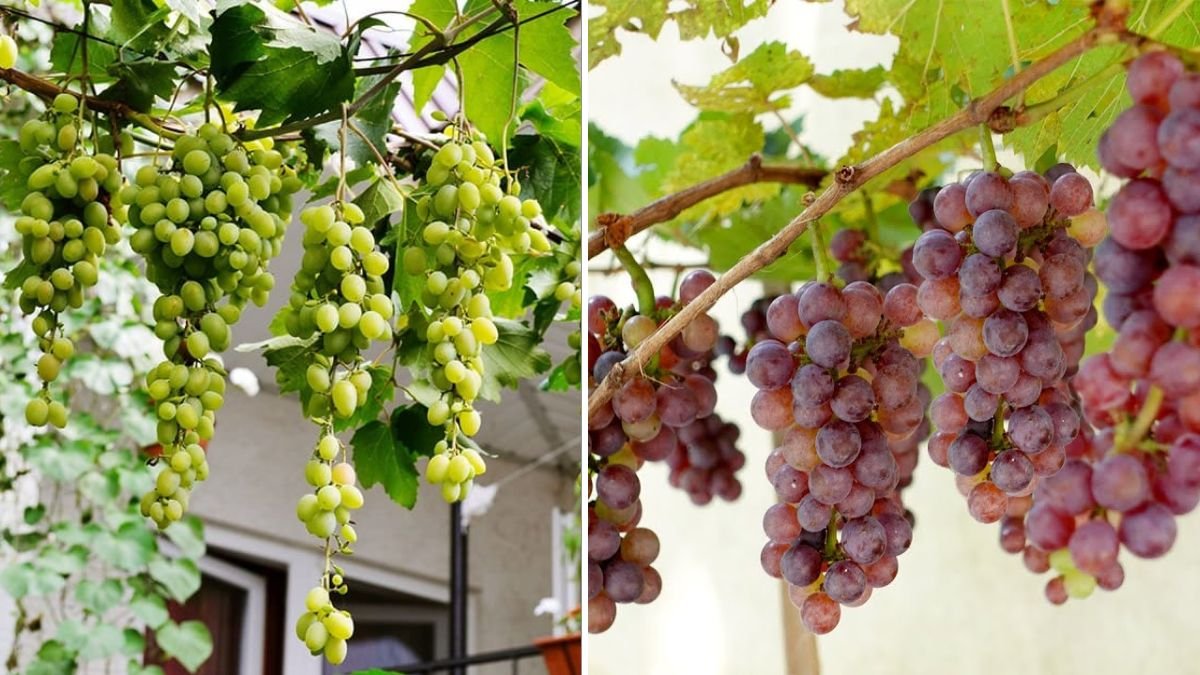
Grapes are one of the most rewarding fruits you can grow at home. Whether you want to enjoy fresh, sweet grapes straight from the vine or dream of making your own juice, raisins, or even wine, growing grapes is easier than most people think. With the right technique, even beginners can cultivate strong vines and harvest heavy bunches.
This complete guide will show you exactly how to grow grapes—from choosing the right variety to planting, training, pruning, and harvesting. Whether you live in a warm climate or temperate zone, these practical steps will help you grow healthy and productive grapevines at home.
1. Choose the Right Grape Variety
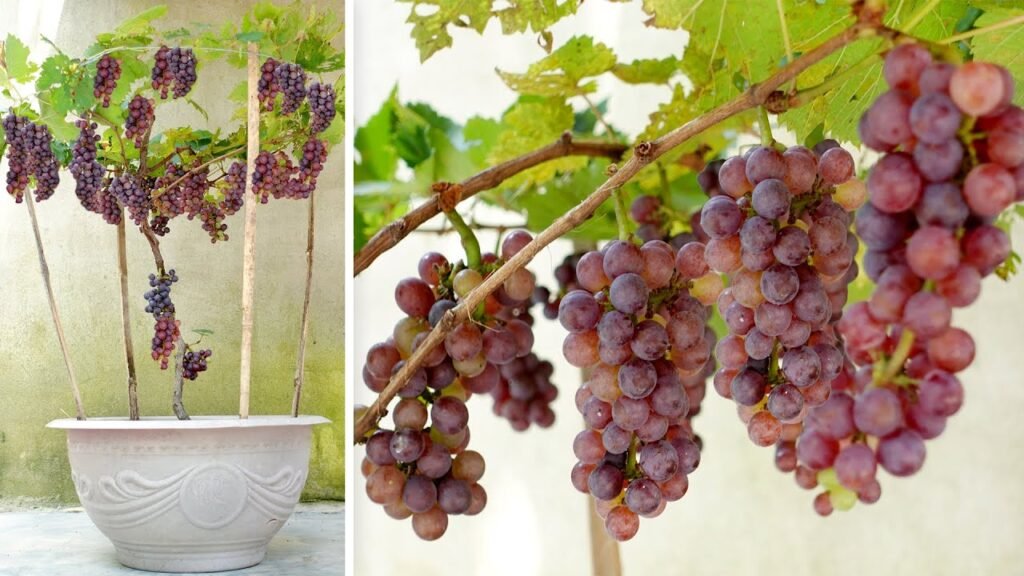
The first and most important step is selecting a suitable grape variety based on your climate and purpose.
Types of Grapes
- Table grapes – Sweet, juicy, seedless (e.g., Thompson Seedless)
- Wine grapes – High flavor intensity, smaller berries
- Raisin grapes – Dried into raisins
- Juice grapes – Concord and similar varieties
Climate Preference
- Warm climates: Flame Seedless, Pusa varieties, Bangalore Blue
- Cool climates: Concord, Niagara
- Humid areas: Disease-resistant hybrids
Choose a plant from a nursery that is one year old; these establish faster and grow strongly.
2. Select the Perfect Planting Location
Grapes need the right environment to grow vigorously.
Sunlight
Grapevines need 6–8 hours of direct sunlight every day to produce sweet and tasty fruits.
Soil
- Well-drained soil
- Slightly sandy or loamy
- pH between 5.5 and 7
- Rich in organic matter
Spacing
Grapevines spread widely, so give them enough room.
- Minimum 6 to 8 feet between plants
- 10 to 12 feet between rows
If planting near a wall or fence, ensure good air circulation.
3. How to Plant Grapes the Right Way
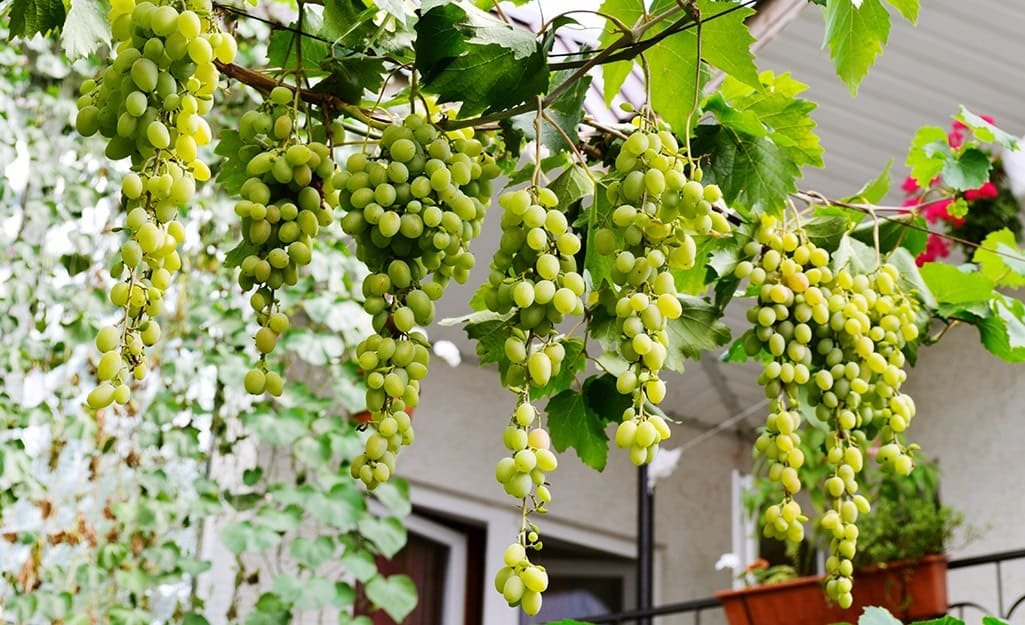
Planting grapes properly ensures strong roots and healthy vines.
Dig a generous planting hole
- Width: 2 feet
- Depth: 2 feet
- Fill the bottom with compost, leaf mold, or aged manure.
Planting Steps
- Gently remove the grape plant from the pot.
- Loosen the roots slightly.
- Place the plant in the hole at the same depth as it was in the nursery pot.
- Fill with soil mixed with compost.
- Water thoroughly.
- Add mulch around the base.
Best Time to Plant
- Early spring or late winter
- Avoid planting in extreme heat or heavy rains
🪜 4. Provide Strong Support for the Vine
Grapes are climbing plants and need sturdy support to grow properly. Without support, the plant becomes weak and fruits get fewer.
Popular Support Structures
- T-shaped trellis
- Wire trellis
- Pergola
- Arch
- Fence support
Tip:
Train the main stem upward and allow side branches (laterals) to grow horizontally on wires or beams.
A well-supported grapevine grows faster and produces larger, sweeter clusters.
5. Watering: The Right Way to Hydrate Grapes
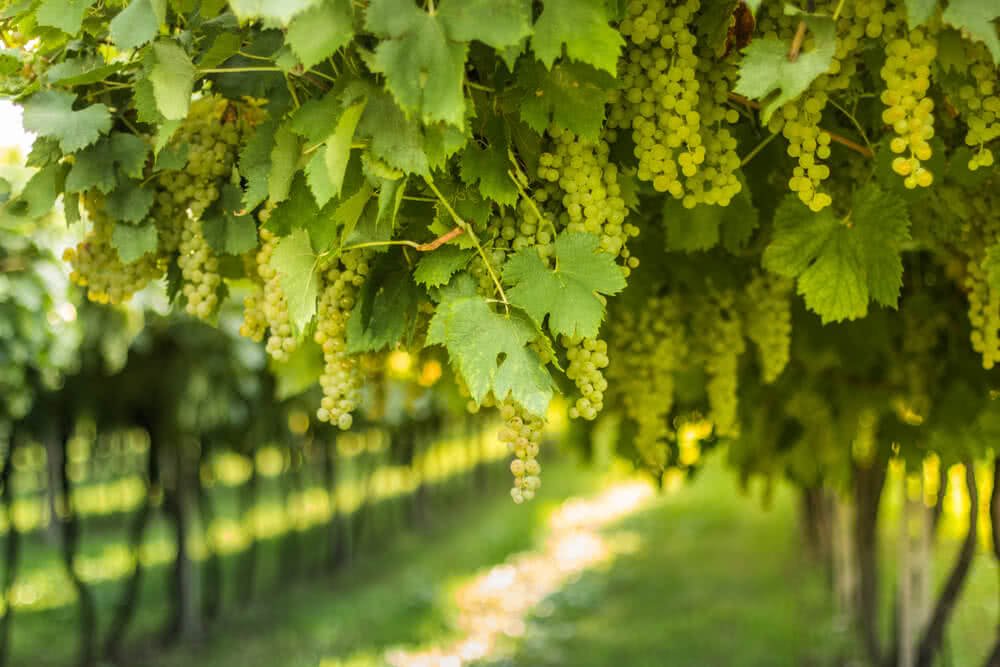
Grapes don’t like soggy soil, but they need moisture during key growth stages.
Watering Schedule
- Weekly deep watering during the first year
- Reduce watering once the vine matures
- Increase watering during flowering and fruit formation
- Avoid heavy watering close to harvest—this can reduce sweetness
Mulching Helps
Use dry leaves, straw, or wood chips to maintain moisture and prevent weeds.
6. Fertilizing Grapes for Faster Growth
Grapes are moderate feeders. Too much fertilizer causes leafy growth but fewer fruits.
Best Natural Fertilizers
- Compost or cow dung manure
- Wood ash (provides potassium)
- Bone meal (supports root growth)
- Banana peel tea
- Vermicompost
Feeding Schedule
- At planting time
- Early spring (before growth starts)
- After flowering
Avoid nitrogen-heavy fertilizers—they promote foliage instead of fruits.
7. Pruning: The Secret to Heavy Fruit Production
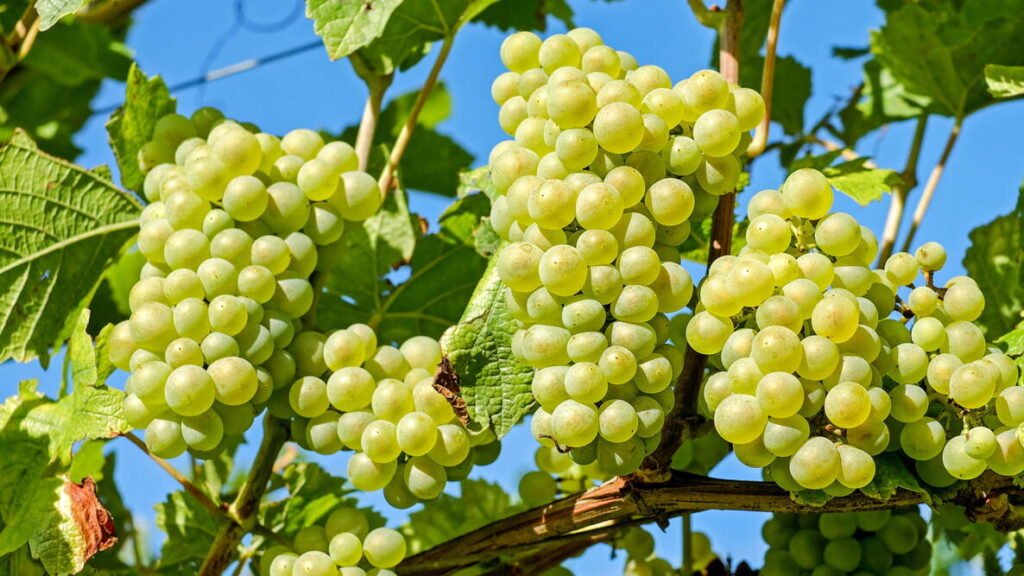
Pruning is the most important technique for growing grapes successfully. Without proper pruning, grapevines become overgrown and produce small, sour fruits.
Why Prune?
- Increases fruit size
- Promotes new productive shoots
- Prevents fungal diseases
- Improves air circulation
When to Prune
- Late winter (before spring growth begins)
This is the best time to shape the vine.
How to Prune
- Keep one main stem (trunk).
- Allow 2–4 arms (cordons) on the trellis.
- Each arm should have fruiting spurs (short branches).
- Cut last year’s growth, leaving 2–4 buds on each spur.
This keeps the vine manageable and ensures heavy fruiting.
8. Pest and Disease Management
Grapevines can attract pests, but with organic care, you can keep them under control.
Common Pests
- Aphids
- Mealybugs
- Thrips
- Leafhopper
Organic Controls
- Neem oil spray
- Soap water spray
- Garlic-chili spray
- Sticky traps
Common Diseases
- Powdery mildew
- Downy mildew
- Anthracnose
Prevention
- Proper pruning
- Good air circulation
- Watering at the base only
- Avoiding overhead watering
A healthy vine naturally resists most problems.
9. Flowering and Fruit Development
After the first year, grapevines begin flowering. Proper care during this stage ensures sweet and heavy bunches.
Boost Flowering
- Apply a potassium-rich fertilizer like banana peel tea
- Ensure full sunlight
- Avoid overwatering
- Keep plant stress-free
Flowers soon turn into tiny berries, which gradually increase in size.
10. Ripening and Harvesting
Depending on variety, grapes take 90–120 days from flowering to ripen.
Signs of Ripening
- Color develops fully (green, red, purple, black)
- Berries become soft and juicy
- Sweet taste increases
- Stems turn slightly brown
Once ripe, cut the clusters with scissors—don’t pull!
11. Growing Grapes in Pots: Is It Possible?
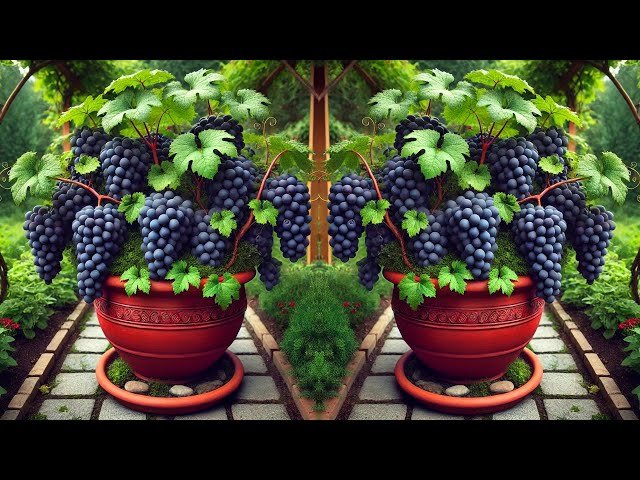
Absolutely yes! You can grow grapes successfully in containers if you choose the right setup.
Container Requirements
- 25–40 liter pot
- Minimum 18 inches depth
- Strong support or trellis
Potting Mix
- 40% garden soil
- 40% compost
- 20% sand or cocopeat
Water regularly and prune yearly to keep the plant compact.
Conclusion
Growing grapes may look complex, but once you understand the basics—sunlight, pruning, support systems, and moderate watering—it becomes an enjoyable and rewarding experience. Within a couple of years, your grapevine will turn into a beautiful climbing plant filled with sweet, juicy bunches.
Whether you grow them on your terrace, backyard, balcony, or garden, grapes add elegance and productivity to any space. Follow the steps in this guide, and soon you’ll be enjoying homegrown grapes bursting with flavor.