Guava trees are among the most popular fruit trees grown in home gardens, balconies, and small farms. With their sweet aroma, delicious fruits, and ability to tolerate warm climates, guavas offer gardeners a rewarding experience with minimal effort.
However, many beginners believe that propagating guava trees is difficult—especially because the plant grows quickly and has a woody stem. In reality, propagating guava trees is one of the easiest tasks in fruit gardening, and you can do it successfully using natural, safe, and beginner-friendly techniques.
Whether you want to multiply your guava plants, share saplings with friends, or grow a stronger tree that fruits earlier, this guide will teach you the best methods. By the end, you will understand which technique suits you best and how to achieve fast, healthy growth every time.
Why Guava Is So Easy to Propagate
Guava plants naturally grow fast and produce new shoots quickly. This makes them highly responsive to propagation. Unlike some fruit trees that require complex grafting, guavas respond beautifully to simple methods such as:
- Seed propagation
- Stem cuttings
- Air-layering
- Root suckers
Because guavas have soft, flexible stems and a strong natural rooting ability, even beginners can succeed with minimal tools.
The Three Easiest Methods to Propagate Guava Trees
Guava propagation mainly relies on three reliable techniques:
1. Propagation from Seeds (Easiest for Beginners)
2. Propagation from Cuttings (Fastest growth)
3. Air-Layering (Best for early fruiting & true-to-type plants)
Let’s explore each method step-by-step.
1. Propagating Guava Trees from Seeds
(Simple, natural, and perfect for beginners)
Seed propagation is the most common way gardeners grow guava trees. It requires no special skill and produces healthy saplings.
What You Need:
- Fresh ripe guava
- Knife
- Water
- Potting soil
- Small pots
- A warm sunny spot
Step-by-Step Seed Propagation
Step 1: Choose a Ripe Guava
Only ripe fruits have seeds with high germination potential.
Step 2: Extract the Seeds
Scoop the pulp and wash the seeds in water until the sticky coating is removed.
Step 3: Dry the Seeds
Spread seeds on a clean cloth for 1–2 hours.
Step 4: Prepare the Soil
Use a light mix:
- 50% garden soil
- 30% compost
- 20% sand
This ensures good drainage and oxygen flow.
Step 5: Sow Seeds
Plant seeds ½ inch deep.
Step 6: Water Lightly
Keep the soil moist—not soggy.
Step 7: Provide Warmth & Sunlight
Seeds germinate best at temperatures between 25–32°C.
Germination Time
Guava seeds usually sprout in 10–20 days.
Advantages of Seed Propagation
- Very easy
- No tools needed
- Works for beginners
- Produces many saplings
Disadvantages
- Seedlings may not produce fruits similar to the parent
- Fruiting takes longer (3–4 years)
- Some plants may be weak
Seed propagation is best when you want many plants or enjoy growing from scratch.
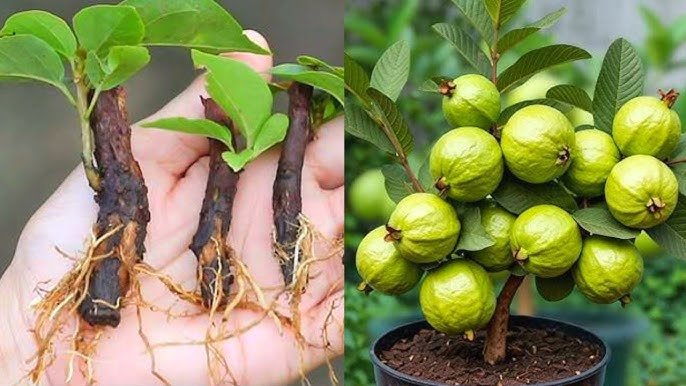
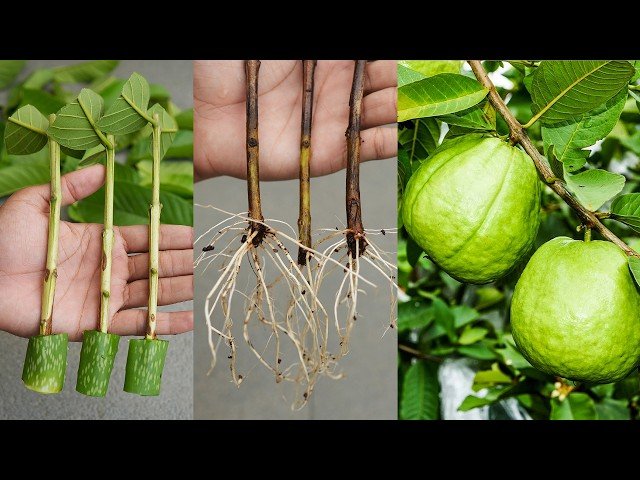
2. Propagating Guava Trees from Cuttings
(Fastest method for stronger plants and earlier fruiting)
Stem cuttings allow you to clone a healthy guava tree.
Because the cutting comes from adult wood, the new plant fruits much earlier.
Advantages
- True-to-type (same fruits as parent)
- Stronger root system
- Fruits in 1–2 years
- Higher success rate than seeds
What You Need:
- A healthy guava branch
- Sharp knife
- Rooting medium
- Pot
- Water
- Natural rooting booster (optional)
Step-by-Step Cutting Propagatio
Step 1: Select the Right Branch
Choose a semi-hardwood branch (not too soft, not too woody).
Length: 6–8 inches
Step 2: Make a Clean Cut
Cut just below a node.
Step 3: Remove Lower Leaves
Leave only 1–2 leaves at the top.
Step 4: Natural Root Boosters (Optional)
Dip the base in:
- Aloe vera gel
- Honey
- Cinnamon powder
These prevent infection and stimulate roots.
Step 5: Prepare the Soil Mix
Use:
- Cocopeat
- Compost
- Sand
Mix ratio: 40:40:20
Step 6: Plant the Cutting
Insert the base 2–3 inches deep.
Step 7: Keep in Shade & Humidity
Cover with a plastic bag or transparent bottle.
Rooting Time
Roots develop in 3–5 weeks.
Advantages
- Faster fruiting
- Strong clones
- Works even with older trees
- Highly successful
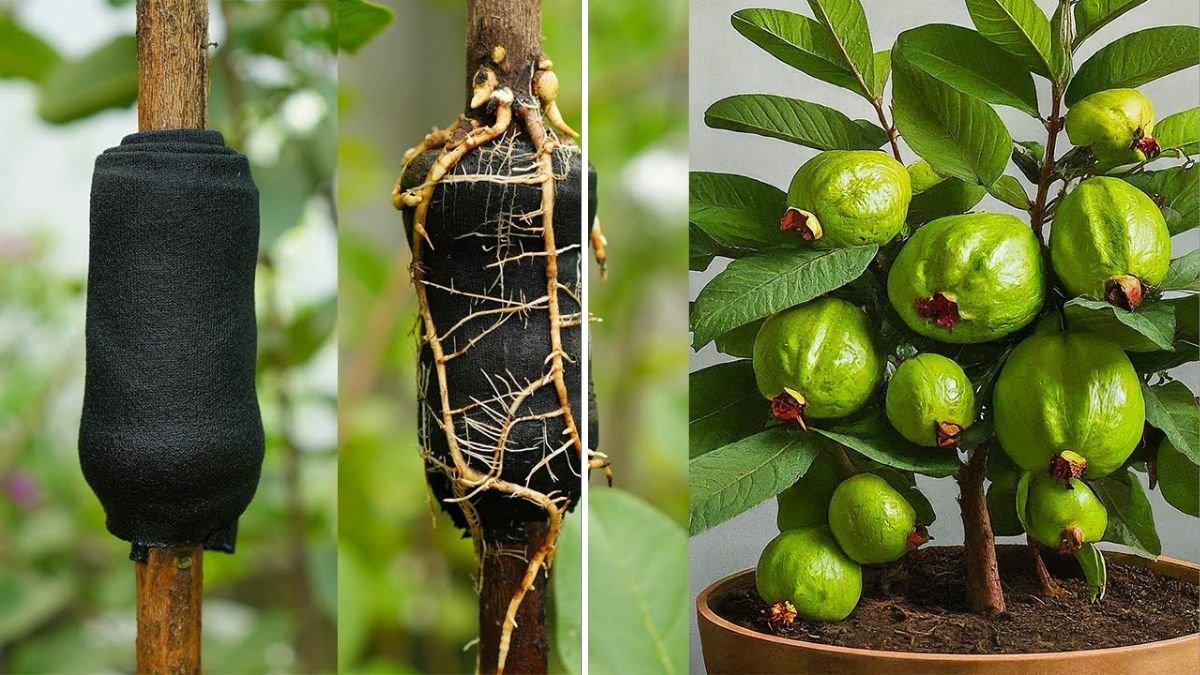
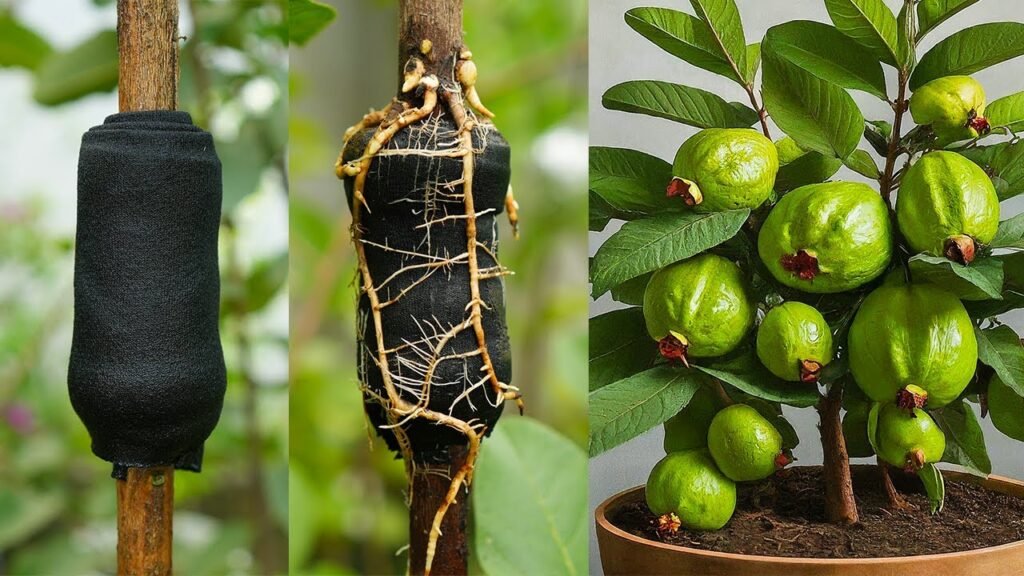
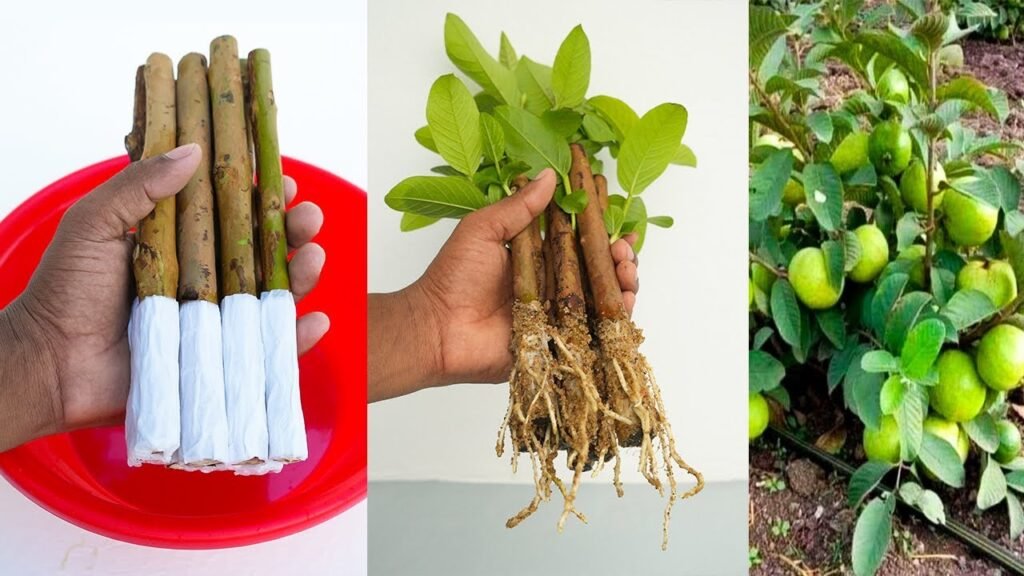
3. Air-Layering (Best Method for Early Fruiting)
(Professional-level technique with beginner-friendly steps)
Air-layering produces a fully rooted branch while still attached to the parent tree.
This gives the new plant tremendous strength and a head start.
Advantages
- Very high success rate
- New plant fruits earlier
- Plant is stronger and healthier
- Best for valuable varieties
What You Need:
- Sharp knife
- Cocopeat or moss
- Plastic wrap
- Thread
- Rooting stimulant (optional)
Step-by-Step Air-Layering
Step 1: Choose a Healthy Branch
Prefer branches that are:
- Finger thick
- Green
- 1–2 years old
Step 2: Remove a Ring of Bark
Remove a 1-inch bark ring around the branch.
Scrape lightly until white wood appears.
This interrupts nutrient flow → triggers root hormones.
Step 3: Apply Natural Boosters
Use aloe vera or honey.
Step 4: Wrap with Moist Cocopeat
Pack the cocopeat around the cut.
Step 5: Cover With Plastic
Seal tightly so moisture cannot escape.
Step 6: Wait for Roots
Roots appear in 4–8 weeks.
Step 7: Cut & Plant
Cut below the roots and plant in a pot.
How to Grow Propagated Guava Trees Faster After Planting
Propagation is only the beginning.
Fast growth depends on proper care.
1. Provide Full Sunlight
Guava requires 6–8 hours of sunlight daily.
More sun = faster growth and more branches.
2. Water Properly
Keep soil moist but not muddy.
Overwatering causes root rot.
3. Use Organic Fertilizers
Feed every 30–45 days with:
- Vermicompost
- Cow dung
- Banana peel solution
- Seaweed extract
These boost growth naturally.
4. Prune Early
Pruning encourages strong branching.
Cut the main stem at 2–3 feet to stimulate multiple side branches.
5. Protect From Pests
Common pests:
- Fruit flies
- Aphids
- Leaf miners
Use:
- Neem oil
- Soap water
- Turmeric spray
When Will Your Propagated Guava Tree Bear Fruit?
| Method | Time to Fruit |
|---|---|
| Seeds | 3–4 years |
| Cuttings | 1–2 years |
| Air-layering | 8–12 months |
Air-layering and cuttings give the quickest fruiting.
Tips for Maximum Success
Choose healthy parent plants
Diseased plants produce weak offspring.
Keep humidity high for cuttings
Dry air kills cuttings.
Avoid direct sun for the first 2 weeks
Shade helps survival.
Remove flowers from young plants
Flowers drain energy → slow growth.
Final Thoughts: Propagating Guava Trees Is Truly Easy
Guava propagation does not require advanced skills, expensive tools, or complicated procedures. With simple natural techniques such as seeds, cuttings, and air-layering, you can multiply your guava plants effortlessly.
Among all methods, air-layering produces the strongest plants and earliest fruits, while cuttings offer convenience and quick growth, and seeds offer fun and simplicity.
Once your new guava tree is planted and cared for properly, it will grow vigorously, branch beautifully, and reward you with sweet, aromatic fruits.