
Orange trees (Citrus sinensis) are one of the most popular fruit trees worldwide, loved for their juicy, sweet fruits rich in vitamin C, antioxidants, and fiber. Growing your own orange trees can be extremely rewarding, whether you want fresh fruits for your kitchen or to start a small orchard.
However, successful propagation of orange trees is key to ensuring healthy growth, disease resistance, and early fruiting. While many gardeners plant oranges from seeds, there are several advanced techniques, including cuttings and grafting, that produce faster and more reliable results.
In this complete guide, we will explore how to propagate orange trees from seeds, cuttings, and grafting, step by step, including expert tips to maximize success and yield.
Why Propagation Matters for Orange Trees
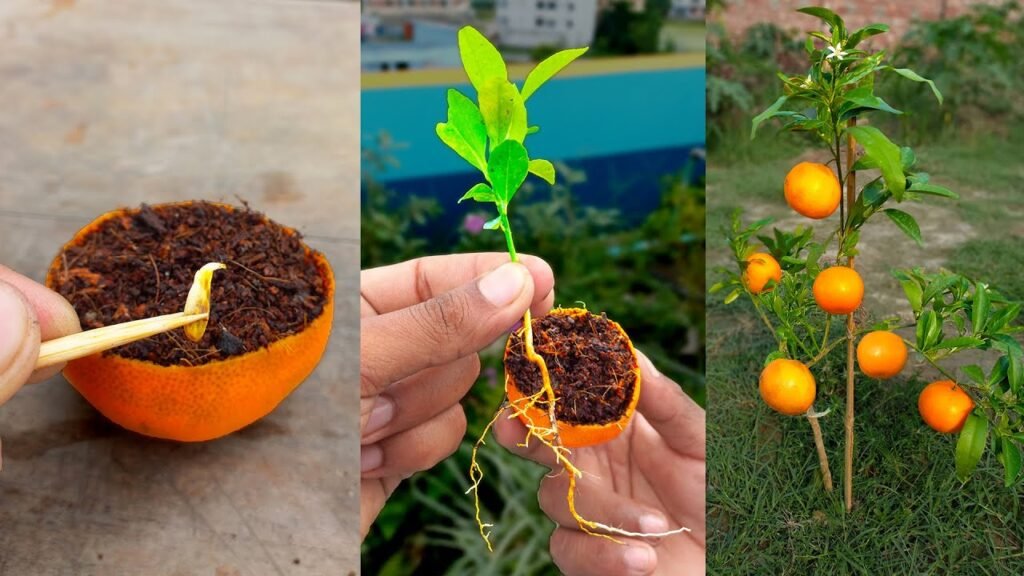
Understanding propagation is crucial for several reasons:
- Faster Fruit Production: Seed-grown trees can take 6–8 years to bear fruit, while grafted or cutting-propagated trees may fruit in 2–3 years.
- Quality Assurance: Seeds may produce trees with varying fruit quality. Cuttings and grafts ensure true-to-type plants.
- Stronger Growth: Proper propagation promotes strong roots, better branching, and improved resistance to pests and diseases.
- Orchard Planning: Controlled propagation allows uniform spacing, growth, and management in orchards.
Choosing the right method depends on your goals: seed propagation is ideal for beginners, while grafting and cuttings are preferred for commercial growers or gardeners who want reliable fruit quality.
Method 1: Propagating Orange Trees from Seeds
Growing orange trees from seeds is the simplest and most accessible method.
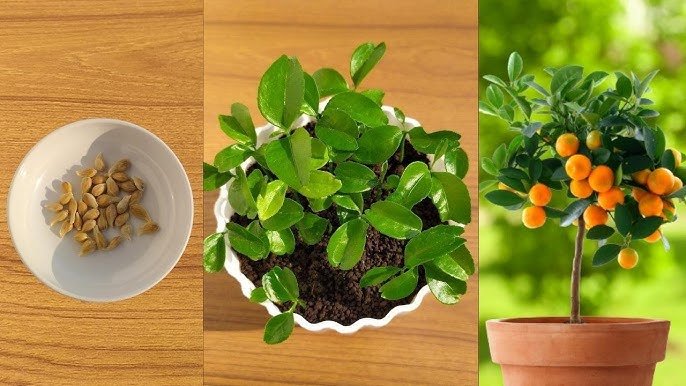
Step 1: Select High-Quality Seeds
- Choose seeds from fully ripened, healthy oranges.
- Wash seeds thoroughly to remove pulp.
- Optional: Soak seeds in water for 12–24 hours to improve germination.
Step 2: Prepare the Planting Medium
- Use a well-draining mix of garden soil, compost, and sand (2:1:1).
- Ensure the soil is loose and aerated for easy root growth.
Step 3: Planting Seeds
- Plant seeds 1–2 cm deep.
- Space seeds 5–10 cm apart if using seed trays.
- Water lightly immediately after planting.
Step 4: Care During Germination
- Keep soil consistently moist but not waterlogged.
- Provide indirect sunlight for the first 2–3 weeks.
- Seeds usually germinate in 2–3 weeks, depending on variety and climate.
Step 5: Transplanting Seedlings
- Once seedlings reach 15–20 cm, transplant them to larger pots or directly to the field.
- Maintain a spacing of 3–5 meters between trees for proper growth.
Pros:
- Simple and inexpensive
- Produces multiple seedlings from one fruit
Cons:
- Longer time to fruit (6–8 years)
- Fruit quality may vary from parent tree
Method 2: Propagating Orange Trees from Cuttings
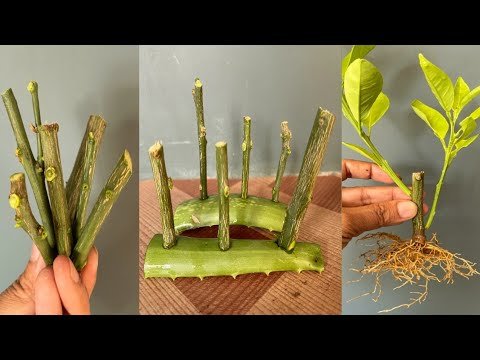
Cutting propagation ensures faster fruiting and true-to-type trees.
Step 1: Select Healthy Branches
- Choose semi-hardwood branches from healthy, disease-free trees.
- Cut 15–20 cm long sections with 3–4 nodes.
Step 2: Prepare Cuttings
- Trim the bottom end at a 45-degree angle.
- Remove lower leaves, keeping 2–3 leaves at the top.
- Optional: Dip the base in rooting hormone to stimulate root growth.
Step 3: Planting Medium
- Use a mixture of coco peat, sand, and compost (1:1:1).
- Insert cuttings 3–4 cm deep.
Step 4: Care
- Keep the medium moist but not waterlogged.
- Cover with transparent plastic to maintain humidity.
- Place in bright, indirect sunlight.
Step 5: Root Development
- Roots usually develop in 4–6 weeks.
- Once roots are well-established, transplant cuttings into pots or the field.
Pros:
- True-to-type plants
- Faster fruiting (2–3 years)
Cons:
- Careful handling required
- Success depends on humidity and temperature
Method 3: Grafting Orange Trees
Grafting is the most reliable method for commercial growers and home gardeners who want consistent fruit quality and early production.
Step 1: Select Rootstock and Scion
- Rootstock: Healthy, 1-year-old seedling or established rootstock.
- Scion: Disease-free branch from a mature orange tree with desirable fruit.
Step 2: Grafting Methods
1. T-Budding:
- Make a T-shaped cut in the rootstock bark.
- Insert the scion bud into the cut.
- Wrap with grafting tape to secure.
2. Cleft Grafting:
- Cut the rootstock stem straight.
- Make a vertical split in the center.
- Insert wedge-shaped scion so cambium layers touch.
- Wrap tightly with tape.
Step 3: Care After Grafting
- Keep the graft in bright, indirect light.
- Water the plant regularly.
- Remove any shoots from the rootstock to focus growth on the scion.
- Grafts usually heal within 3–5 weeks, after which new growth appears.
Advantages of Grafting:
- Early fruiting (2–3 years)
- Uniform fruit quality
- Strong, resilient trees
- Ideal for rare or high-value varieties
Post-Propagation Care for Orange Trees
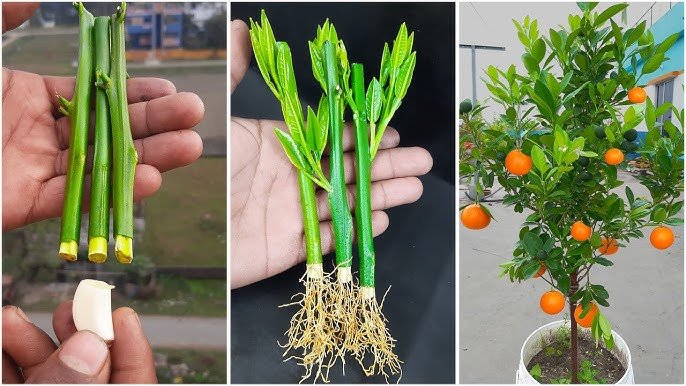
Proper care ensures young trees establish quickly and produce fruit successfully.
1. Watering
- Water seedlings, cuttings, or grafts regularly.
- Avoid waterlogging, which causes root rot.
2. Fertilization
- Use compost or organic manure for young trees.
- Apply NPK fertilizer (10:10:10) as the tree matures.
- Fertilize every 2–3 months for optimal growth.
3. Sunlight
- Orange trees require 6–8 hours of sunlight daily for healthy growth and fruiting.
4. Pest and Disease Control
- Common pests: aphids, mites, mealybugs.
- Common diseases: citrus canker, root rot, leaf spot.
- Use neem oil, biopesticides, or copper-based fungicides as preventive measures.
5. Pruning
- Remove dead or weak branches.
- Shape the tree to allow sunlight penetration and airflow.
When Will Orange Trees Start Fruiting?
| Propagation Method | Time to First Fruit |
|---|---|
| Seeds | 6–8 years |
| Cuttings | 2–3 years |
| Grafting | 2–3 years |
Grafted and cutting-propagated trees not only fruit faster but also ensure consistent quality and size, making them ideal for home gardens and orchards.
Expert Tips for Maximum Success
- Use fresh, disease-free seeds or cuttings.
- Choose semi-hardwood branches for cuttings.
- Always maintain clean tools to prevent infection.
- Ensure cambium contact in grafting for higher success.
- Mulch around young plants to conserve moisture.
- Monitor plants daily during early establishment for pests or fungal growth.
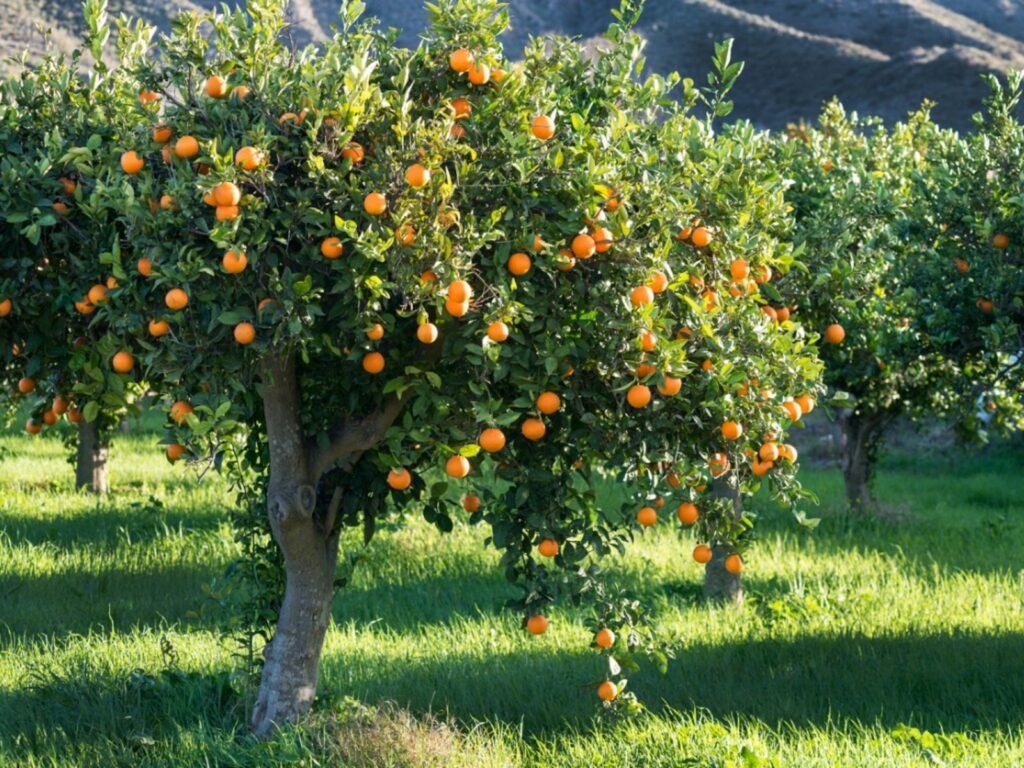
- Keep proper spacing (3–5 meters between trees) for strong growth.
Conclusion
Propagating orange trees successfully depends on choosing the right method for your needs:
- Seed propagation: Ideal for beginners, inexpensive, produces multiple seedlings.
- Cuttings: True-to-type, faster fruiting, great for home gardeners.
- Grafting: Ensures early fruiting, uniform fruit quality, and disease resistance.
By following the step-by-step techniques outlined in this guide, you can grow strong, healthy orange trees that will reward you with juicy, sweet fruits for years to come. Whether in a backyard garden or a commercial orchard, proper propagation is the key to success.