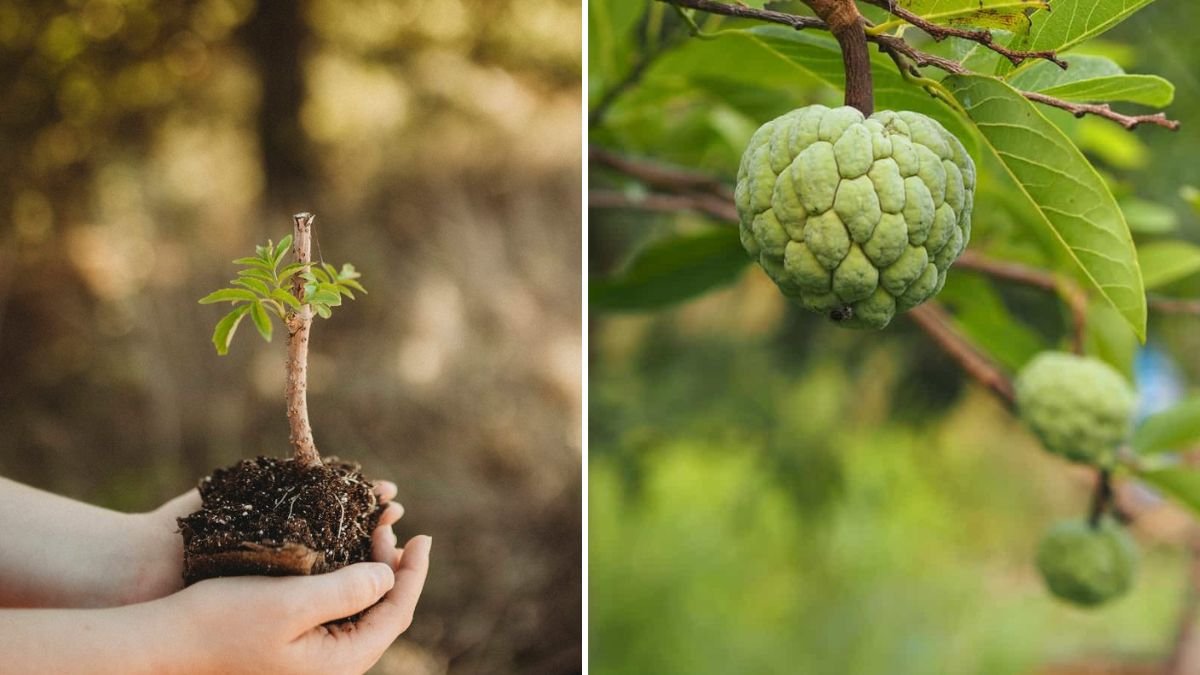
Sweetsop (Annona squamosa), also known as sugar-apple, is a tropical fruit tree cherished for its creamy, sweet pulp and unique flavor. Grown widely in tropical and subtropical regions, sweetsop is not only delicious but also packed with nutrients like vitamin C, fiber, and antioxidants.
For gardeners and farmers, propagating sweetsop trees successfully is key to enjoying high-quality fruits and establishing productive orchards. While sweetsop can be grown from seeds, cuttings, or grafting, each method has its benefits and challenges. In this guide, we’ll cover how to propagate sweetsop trees from seeds, cuttings, and other effective techniques, step by step, to ensure healthy, fast-growing, and fruiting trees.
Why Propagation Matters

Propagating sweetsop trees correctly ensures:
- Faster fruiting: Some methods allow fruiting in 2–3 years.
- True-to-type plants: Grafting or cuttings maintain parent tree quality.
- Stronger, healthy plants: Proper techniques reduce susceptibility to pests and diseases.
- High yield: Well-established trees produce abundant, high-quality fruits.
Choosing the right propagation method depends on your goal, climate, and resources.
Method 1: Propagating Sweetsop Trees from Seeds
Seed propagation is the simplest and most common method, suitable for home gardeners.
Step 1: Select Quality Seeds
- Use fresh, mature seeds from ripe, healthy fruits.
- Wash seeds to remove pulp and prevent fungal growth.
- Dry seeds in shade for 1–2 days.
Step 2: Pre-Treatment
- Soak seeds in water for 24 hours before planting to improve germination.
- Optional: Treat seeds with fungicide or neem solution to prevent early infections.
Step 3: Prepare Seedling Bed or Pots
- Use well-draining soil mixed with compost (50:50).
- Plant seeds about 2 cm deep.
- Space seeds 5–10 cm apart if planting in beds.
Step 4: Watering and Care
- Keep the soil moist but not waterlogged.
- Provide shade during the first 2–3 weeks to protect delicate seedlings.
- Germination usually occurs in 3–5 weeks, depending on seed freshness and climate.
Step 5: Transplanting
- Once seedlings reach 15–20 cm in height, transplant them to larger pots or the field.
- Maintain spacing of 3–5 meters between trees for proper growth.
Pros of Seed Propagation:
- Simple and inexpensive.
- Produces multiple seedlings from a single fruit.
Cons:
- Trees may take 4–5 years to fruit.
- Fruit quality can vary from the parent tree.
Method 2: Propagating Sweetsop Trees from Cuttings
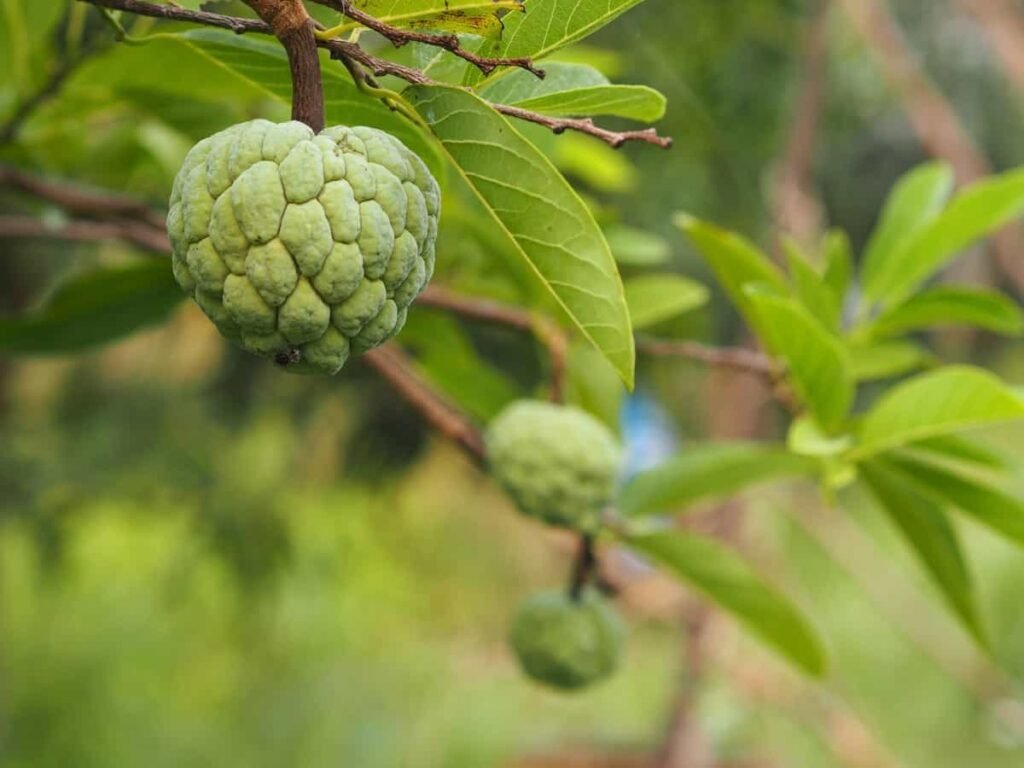
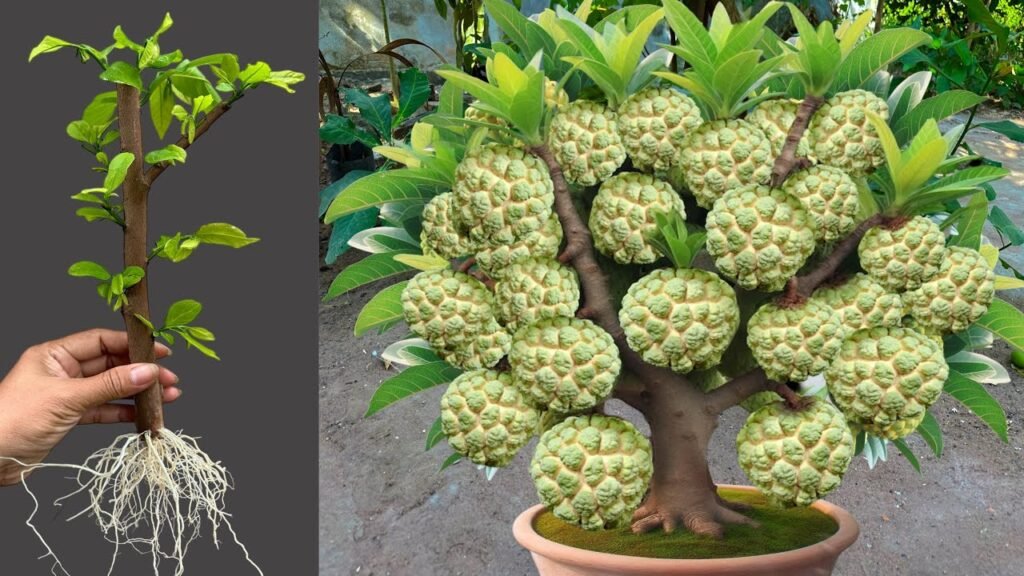
Cuttings produce true-to-type trees and fruit faster than seeds. This method is highly effective for gardeners seeking consistent fruit quality.
Step 1: Choose Healthy Branches
- Select 6–12 inch semi-hardwood branches.
- Ensure the branch is disease-free and has 3–4 nodes.
Step 2: Prepare the Cuttings
- Cut at a 45-degree angle just below a node.
- Remove lower leaves, keeping 2–3 leaves at the top.
- Optional: Dip the cut end in rooting hormone to promote faster rooting.
Step 3: Planting Medium
- Use a mixture of sand, coco peat, and compost (40:40:20).
- Insert the cuttings 2–3 cm deep into the medium.
Step 4: Care
- Keep the medium moist, not soggy.
- Place cuttings in bright but indirect sunlight.
- Cover with a transparent plastic bag to maintain humidity.
Step 5: Root Development
- Roots typically form within 4–6 weeks.
- Once roots are well-established, transplant cuttings into pots or the field.
Pros of Cuttings:
- Produces true-to-type plants.
- Faster fruiting (2–3 years).
Cons:
- Requires careful handling.
- Success rate can be lower if conditions are not optimal.
Method 3: Air-Layering Sweetsop Trees
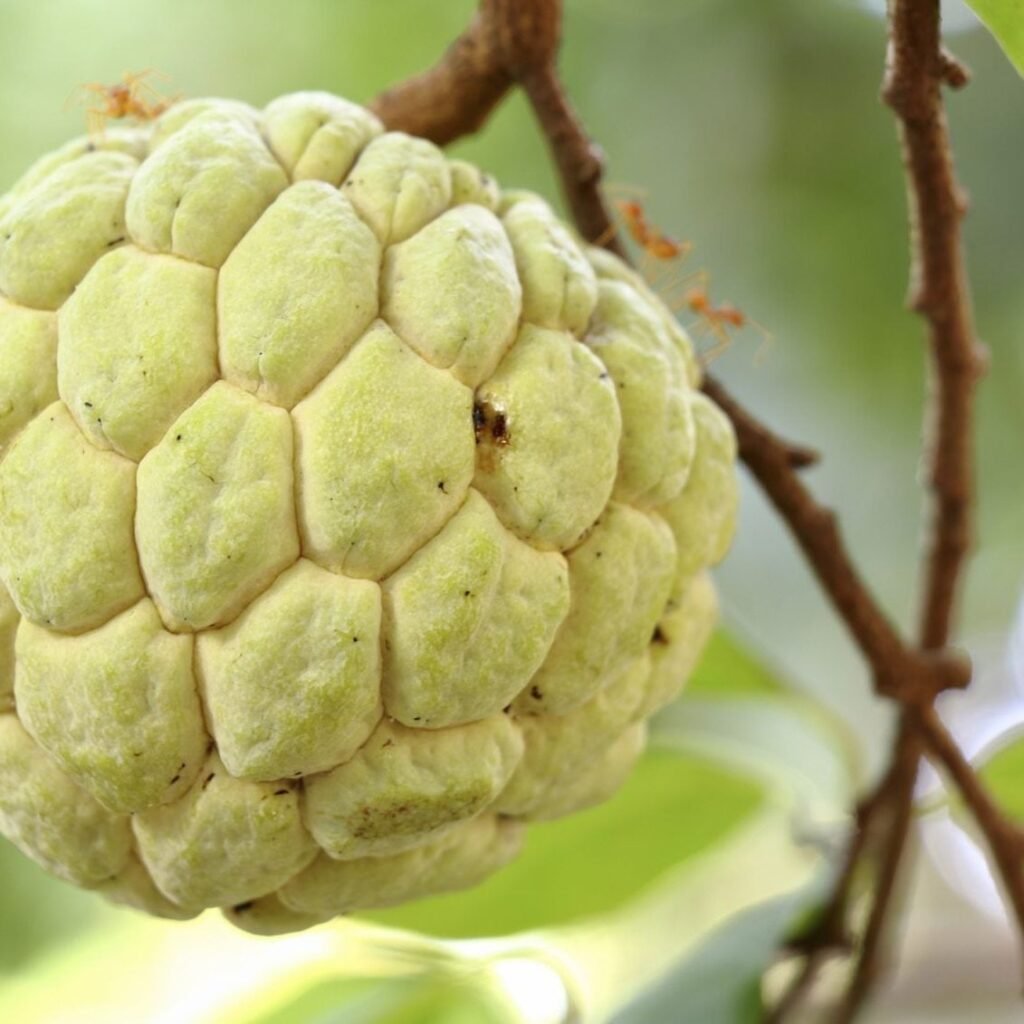
Air-layering is ideal for propagating mature trees and reviving older trees that produce poor seedlings.
Step 1: Select Branch
- Choose a healthy, mature branch at least pencil-thick.
Step 2: Node Preparation
- Remove a ring of bark 2–3 cm wide around the branch.
- Apply rooting hormone to the exposed area.
Step 3: Wrap with Medium
- Surround the wounded section with moist coco peat or a sand-compost mix.
- Cover with plastic wrap and tie both ends tightly to retain moisture.
Step 4: Monitor Root Formation
- Roots appear within 4–8 weeks, depending on climate.
- Once roots are dense, cut the branch below the rooted section and plant in soil.
Advantages:
- Produces mature, fast-fruiting trees.
- Works well for older trees and rare varieties.
Key Tips for Successful Sweetsop Propagation
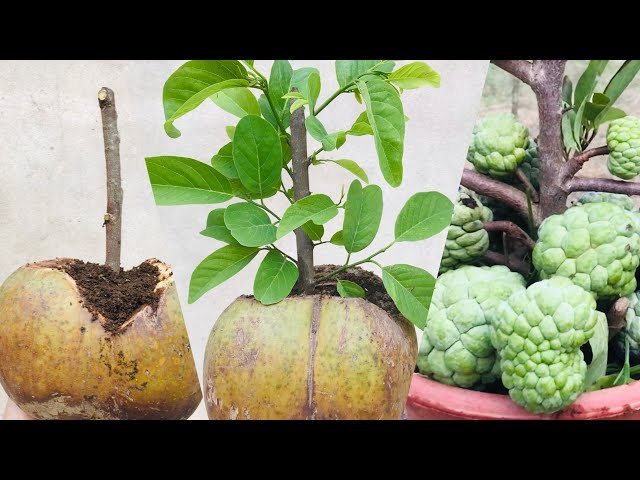
- Choose the right season:
- Seed and cutting propagation is best during early spring or the rainy season.
- Soil:
- Well-draining soil with compost improves survival rates.
- Watering:
- Young plants need frequent, gentle watering. Avoid waterlogging.
- Sunlight:
- Sweetsop grows best under full sun (6–8 hours daily).
- Pest control:
- Keep an eye out for mealybugs, aphids, and fungal infections.
- Use neem oil or organic biopesticides for prevention.
- Spacing:
- Maintain 3–5 meters between trees for proper growth and fruiting.
- Mulching:
- Mulch around young plants to retain moisture and suppress weeds.
Fertilization for Young Trees
- Organic fertilizers: Compost, vermicompost, and cow dung improve soil fertility.
- Chemical fertilizers: Use NPK (10:10:10) at a young stage to promote growth.
- Apply every 2–3 months for best results.
- Avoid over-fertilization, which can burn roots.
When Will Sweetsop Trees Fruit?
- Seed-grown trees: 4–5 years to first harvest.
- Cuttings or air-layered trees: 2–3 years to fruiting.
- Regular care, sunlight, and proper fertilization can accelerate fruit development.
Common Challenges and Solutions
| Challenge | Solution |
|---|---|
| Seedlings wilt or die | Ensure proper watering, avoid waterlogging, and use healthy seeds |
| Poor rooting in cuttings | Use rooting hormone and maintain high humidity |
| Pest infestation | Use neem oil, monitor regularly, remove affected leaves |
| Fungal infections | Ensure good airflow, avoid overhead watering, and use fungicides if needed |
Conclusion
Propagating sweetsop trees is both rewarding and highly beneficial. Whether you choose seed propagation, cuttings, or air-layering, each method has its advantages:
- Seeds: Easy, cost-effective, multiple seedlings.
- Cuttings: True-to-type plants, faster fruiting.
- Air-layering: Ideal for mature trees, fast fruiting, and preserving rare varieties.
By following the step-by-step methods and expert tips in this guide, you can grow strong, healthy sweetsop trees that bear sweet, delicious fruits in just a few years. Start today, and enjoy a lush sweetsop orchard or home garden that produces high-quality fruits season after season.