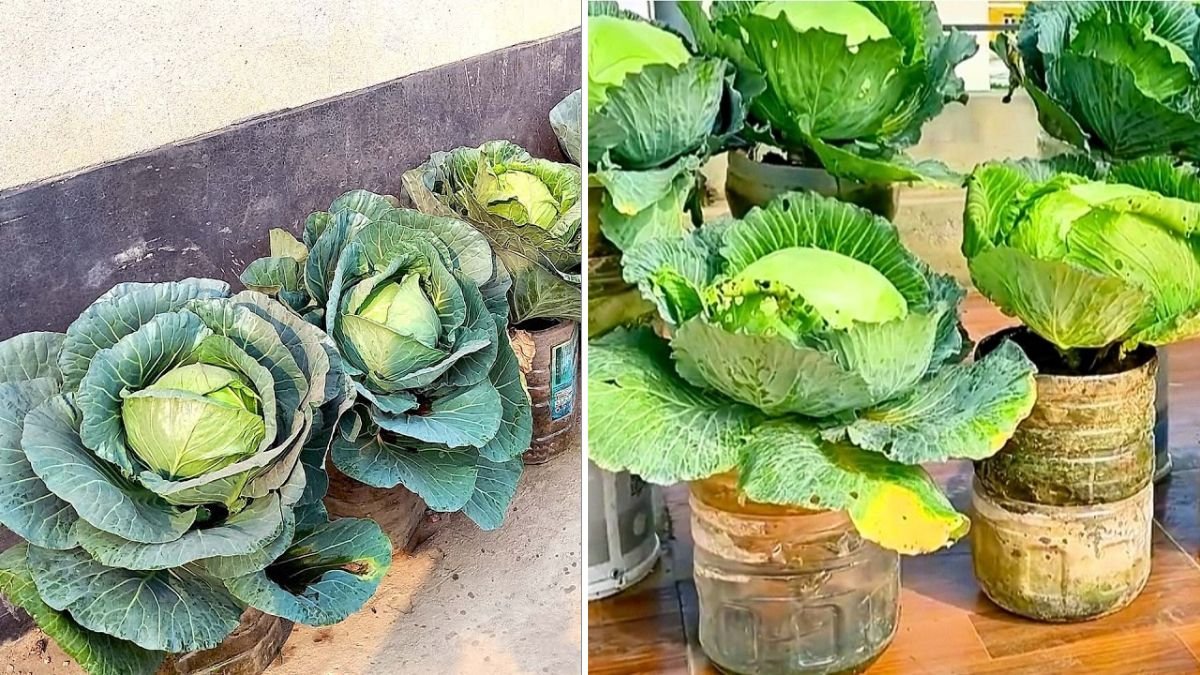
Cabbage is often considered a space-hungry vegetable, but bottle gardening proves otherwise. With proper depth and nutrition, cabbage grows well in containers. Bottle gardening allows better root control and drainage. It also reduces soil-borne pests and diseases. This method is ideal for balconies and small yards. Recycled bottles make it affordable. Controlled conditions improve head formation. Many gardeners are surprised by the size of container-grown cabbage. This guide explains how to achieve big, firm heads. Simple steps lead to impressive results.
1. Choosing the Right Cabbage Variety
Compact cabbage varieties work best in bottles. Early-maturing varieties are ideal. Avoid oversized field cabbages. Hybrid varieties often form tighter heads. Disease-resistant seeds increase success. Local varieties adapt better to climate. Seed quality affects head size. Choose varieties suited for containers. Proper selection reduces failure risk. Variety choice determines final results.
2. Selecting Large Bottles for Cabbage Growth
Cabbage needs more root space than leafy greens. Five-liter or larger bottles are recommended. Thick plastic bottles provide stability. Clean bottles thoroughly before use. Cut the top wide enough for planting. Make several drainage holes at the bottom. Strong containers prevent tipping. Dark bottles retain warmth. Proper container size supports head development. Container choice is critical.
3. Preparing Drainage and Airflow
Good drainage prevents root rot. Multiple holes allow excess water to escape. Elevate bottles slightly for airflow. Poor drainage causes loose heads. Gravel at the bottom improves drainage. Airflow supports root health. Proper preparation prevents common issues. Healthy roots support compact heads. Drainage mistakes reduce yield. This step cannot be skipped.
4. Creating the Perfect Soil Mix
Cabbage prefers rich, firm soil. Mix compost, garden soil, and coco peat. Avoid overly loose soil. Organic matter supports nutrient availability. Soil should retain moisture well. Balanced soil prevents nutrient deficiency. Fresh soil reduces disease risks. Soil structure affects head firmness. Quality soil produces bigger cabbages. Soil preparation determines success.
5. Transplanting Cabbage Seedlings Correctly
Transplant seedlings when they have four true leaves. Handle roots carefully to avoid shock. Plant slightly deeper for stability. Firm soil gently around the stem. Water immediately after transplanting. Avoid planting during extreme heat. Proper spacing improves airflow. Good planting technique strengthens plants. Strong starts lead to bigger heads. Transplanting care matters.
6. Sunlight Needs for Big Cabbage Heads
Cabbage requires at least five to six hours of sunlight. Morning sun is ideal. Avoid excessive afternoon heat. Rotate bottles for even exposure. Insufficient light causes loose heads. Balanced light improves growth rate. Observe sunlight patterns carefully. Proper placement boosts results. Light management influences head size. Sunlight consistency is essential.
7. Watering Strategy for Firm Heads
Cabbage needs consistent moisture. Irregular watering causes splitting or loose heads. Water deeply when topsoil dries. Avoid waterlogging roots. Morning watering is best. Mulching helps retain moisture. Monitor soil daily in warm weather. Balanced watering supports compact growth. Water stress reduces head quality. Proper hydration is key.
8. Feeding Cabbage for Maximum Head Size
Cabbage is a heavy feeder. Use compost or vermicompost regularly. Nitrogen supports leaf growth early. Potassium improves head firmness later. Avoid overfeeding nitrogen near maturity. Feed every two weeks. Observe plant response carefully. Balanced nutrition increases head weight. Feeding timing matters. Proper nutrition drives size.
9. Managing Outer Leaves Properly
Outer leaves feed the developing head. Avoid removing healthy outer leaves. Remove only damaged or yellow leaves. Healthy leaves support photosynthesis. Excessive pruning reduces head size. Leaf health reflects plant condition. Protect leaves from pests. Strong foliage supports compact heads. Leaf management improves yield. Leaves are essential.
10. Temperature Control for Better Growth
Cabbage prefers cool conditions. Extreme heat slows head formation. Provide shade during hot afternoons. Move bottles if necessary. Cold tolerance is good, but frost protection may be needed. Temperature stress affects quality. Monitor seasonal changes closely. Bottle mobility is an advantage. Temperature awareness improves results. Climate control matters.
11. Pest Control in Bottle-Grown Cabbage
Cabbage pests include aphids and caterpillars. Inspect leaves regularly. Neem oil works well. Handpick caterpillars early. Keep surrounding areas clean. Healthy plants resist pests better. Container gardening reduces soil pests. Early detection prevents damage. Natural control is effective. Pest management protects heads.
12. Preventing Common Cabbage Diseases
Avoid wetting leaves excessively. Ensure good airflow. Use fresh soil each season. Remove diseased plants promptly. Clean containers after harvest. Disease prevention saves effort. Healthy practices reduce infections. Bottle gardening lowers disease risk. Prevention ensures quality heads. Clean gardening habits matter.
13. Head Formation Stage Explained
Head formation begins after strong leaf growth. Maintain consistent care during this stage. Avoid stress from drought or heat. Do not disturb roots. Steady nutrition supports compaction. Observe head firmness regularly. Patience is important. Head development takes time. Stability ensures success. This stage defines yield.
14. When and How to Harvest Cabbage
Harvest when heads feel firm. Use a sharp knife. Cut at the base cleanly. Avoid harvesting too early. Morning harvest preserves freshness. Handle heads gently. Proper timing improves storage life. Clean harvesting protects plants. Harvesting technique affects quality. Timing is crucial.
15. Yield Results from Bottle Gardening
Bottle-grown cabbage can be surprisingly large. Heads are often firm and clean. Space efficiency is impressive. Reduced pest pressure improves quality. Controlled care boosts results. Small spaces become productive. Yield depends on care consistency. Results often surprise gardeners. Bottle gardening proves effective. Success is repeatable.
16. Common Mistakes to Avoid
Using small bottles limits growth. Inconsistent watering causes loose heads. Overfeeding nitrogen delays maturity. Removing healthy leaves reduces size. Poor sunlight affects formation. Ignoring pests causes damage. Learning prevents repeat mistakes. Small corrections bring big improvements. Awareness ensures success. Experience builds confidence.
17. Cost Benefits of Bottle Cabbage Gardening
Recycled bottles reduce costs. Minimal tools are required. High yield per container. Less water waste. Affordable for beginners. Efficient use of resources. Budget-friendly gardening method. Easy to scale up. Cost-effective food production. Bottle gardening saves money.
18. Sustainability Advantages
Reusing plastic reduces waste. Homegrown vegetables lower carbon footprint. Efficient water use conserves resources. Small-scale gardening promotes sustainability. Urban food production matters. Bottle gardening supports green habits. Sustainable practices start at home. Environmental impact is positive. Gardening becomes responsible. Sustainability benefits everyone.
19. Why Bottle-Grown Cabbage Is Often Better
Controlled soil improves nutrition. Reduced disease enhances quality. Fresh harvest preserves nutrients. No chemical residues. Better flavor and texture. Stress-free growth improves firmness. Home control ensures quality. Bottle-grown cabbage often outperforms store-bought. Taste difference is noticeable. Quality is superior.
20. Final Thoughts on Bottle Gardening for Cabbage
Simple bottle gardening makes cabbage growing accessible. Big heads are possible in small spaces. With proper care, results are impressive. This method suits beginners and urban gardeners. Affordable materials make it practical. Consistency ensures success. Start with one bottle and expand. Homegrown cabbage is rewarding. Gardening becomes enjoyable and productive. Big results come from simple hacks.
Table: Bottle-Grown Cabbage Care Overview
| Factor | Requirement | Benefit |
|---|---|---|
| Container | Large plastic bottle | Bigger heads |
| Soil | Rich, firm mix | Compact growth |
| Water | Consistent moisture | Prevents splitting |
| Sunlight | 5–6 hours daily | Strong development |
| Feeding | Balanced nutrition | Heavy heads |