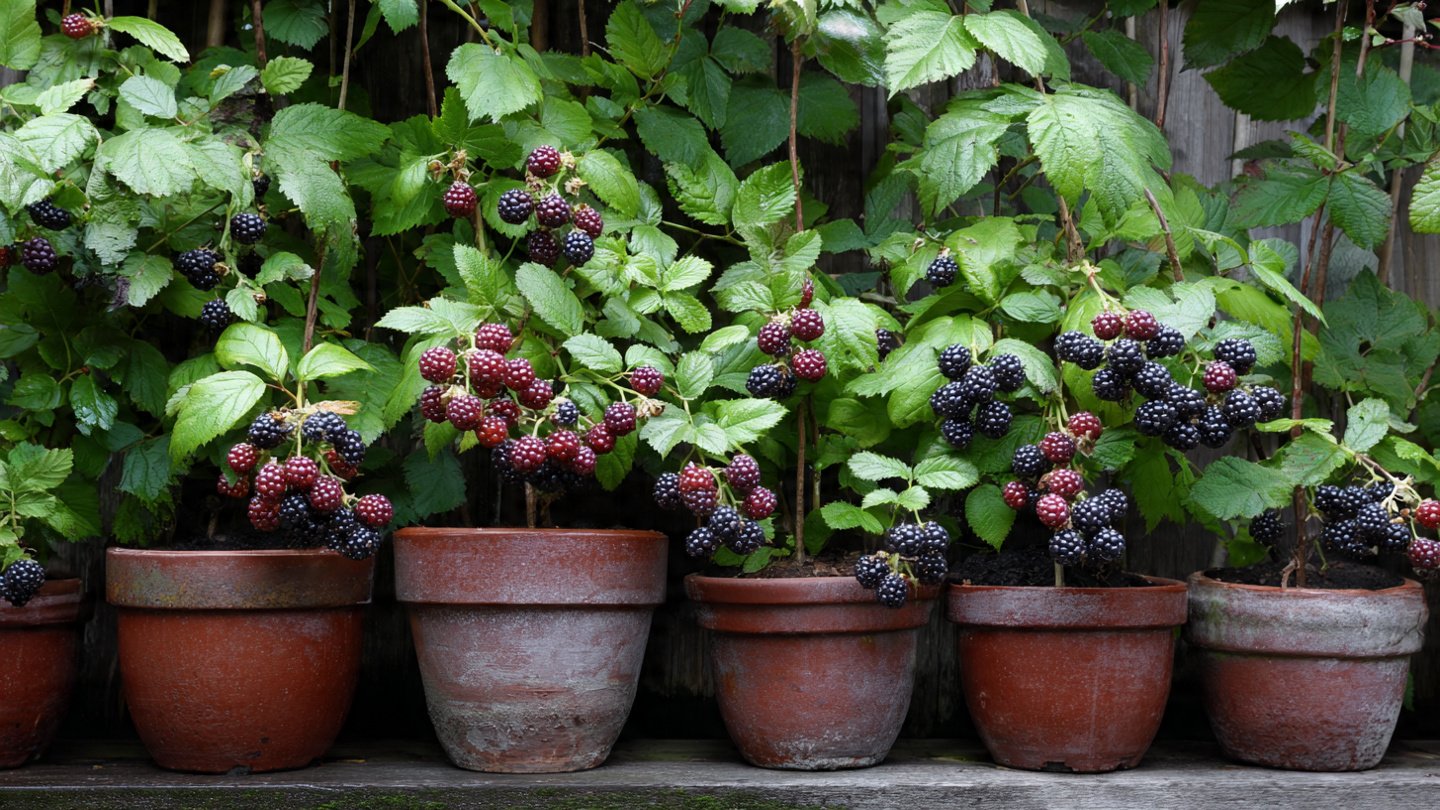
Growing blackberries in containers is an excellent way for gardeners with limited space to enjoy the sweet, juicy fruit. With the right knowledge and care, you can produce a bountiful harvest, even in small areas like balconies or patios. This comprehensive guide will provide you with everything you need to know to maximize yield and flavor when growing blackberries in containers.
1. Choosing the Right Blackberry Varieties
Erect vs. Trailing Varieties
Blackberries come in different varieties, primarily categorized into erect, semi-erect, and trailing types:
- Erect Varieties: These plants grow upright and generally require less support. Examples include ‘Navaho’ and ‘Boysenberry,’ ideal for container growth.
- Trailing Varieties: These tend to spread out and may require trellising. Varieties such as ‘Marionberry’ thrive when given some form of support, but they can still be cultivated in containers with proper care.
Recommended Container Varieties
Some of the best blackberry varieties for container gardening are:
- ‘Dorman Red’: Known for its hardiness and disease resistance.
- ‘Black Satin’: Offers large, sweet berries and is compact in size.
- ‘Thornless Blackberry’- varieties: These are easier to handle and maintain.
2. Selecting the Right Container
Container Size
Choose a container that’s at least 5 gallons in size to provide sufficient space for root development. Larger containers can support multiple plants, but remember that each plant will require ample room to spread.
Material
Containers can be made of various materials, including:
- Plastic: Lightweight and inexpensive but may not be as durable.
- Clay: Attractive and porous, allowing for better air circulation but can dry out quickly.
- Wood: Provides insulation and aesthetics but should be lined to prevent soil from escaping.
Drainage
Ensure your container has drainage holes to prevent root rot. If the container doesn’t have holes, consider drilling some or using a container with a built-in drainage system.
3. Soil Requirements
Choosing the Right Soil
A good-quality potting mix is essential for growing blackberries in containers. Look for:
- Well-draining Mix: Blackberries prefer loamy, slightly acidic soil. A mix formulated for fruits or vegetables is often ideal.
- Organic Additives: Incorpor integrating compost or aged manure to enrich the soil.
pH Levels
Aim for a soil pH of 5.5 to 6.5. You can test the pH using a soil testing kit, readily available at gardening stores. If your soil is too acidic, lime can help raise the pH, while sulfur can lower it.
4. Planting Blackberries
Timing
The best time to plant blackberries is in early spring after the threat of frost has passed, or in late fall for certain regions.
Planting Steps
- Prepare the Container: Fill the container with your chosen potting mix, leaving about 2 inches of space at the top.
- Planting Depth: Place your blackberry plant in the container, ensuring the root ball sits level with the top of the soil.
- Watering: Water the plant thoroughly after planting, ensuring the soil is moist but not waterlogged.
5. Care and Maintenance
Watering
Blackberries require consistent moisture, especially during fruit development. Water deeply once or twice a week, depending on weather conditions. The soil should remain moist but not saturated.
Fertilizing
Feed your plants every 4-6 weeks with a balanced fertilizer designed for fruiting plants. Granular slow-release fertilizers are a great option but ensure you follow package guidance to prevent nutrient buildup.
Pruning
Pruning is vital for encouraging growth and maximizing yield:
- Summer-prune: Remove spent canes after fruiting to allow new shoots to develop.
- Winter-prune: Remove weak or diseased canes and thin out crowded areas.
Pest and Disease Management
Blackberries can attract pests such as aphids, spider mites, and beetles. Use organic pesticides or neem oil as needed. Keep an eye out for diseases like powdery mildew and root rot and ensure proper airflow between plants to prevent these issues.
6. Sunlight and Location
Blackberries thrive in full sun, requiring at least 6-8 hours of sunlight each day. Position your containers in a sunny spot, ensuring they get adequate light.
Temperature Considerations
Most blackberry varieties prefer temperate climates but can adapt to a range of conditions. If you live in an area with extreme temperatures, consider using shade cloth during hot summer months or moving containers indoors during severe cold.
7. Harvesting Blackberries
Knowing When to Harvest
Blackberries generally ripen from mid-summer to early fall. Harvest when the berries turn a deep black color and are slightly soft to the touch. If they are still firm or red, wait a few days.
Harvesting Technique
Gently twist the berries to detach them from the stem. Avoid pulling too hard, as this can damage the plant or nearby berries.
8. Extending the Growing Season
Container Mobility
One of the advantages of growing blackberries in containers is portability. If you anticipate extreme weather conditions, you can move your containers to protect them.
Covering Plants
For colder climates, consider covering your plants with frost cloth or burlap during unexpected frosts.
Overwintering
In colder regions, you may need to insulate your container to protect the roots. Surround the container with mulch or place it in a sheltered spot.
9. Enjoying Your Blackberry Harvest
Fresh blackberries can be enjoyed in numerous ways:
- Fresh Eating: Perfect for snacking or enjoyed in desserts.
- Jams and Jellies: Homemade blackberry jam captures the summer flavor for year-round enjoyment.
- Baking: Whether in pies or muffins, blackberries add a delightful burst of flavor.
FAQ Section
1. Can I grow blackberries in any container?
Yes, as long as the container is at least 5 gallons, has good drainage, and provides adequate soil conditions.
2. How often should I water my blackberry plants?
Water deeply once or twice a week, ensuring the soil remains consistently moist during growing seasons.
3. What is the best fertilizer for blackberries?
A balanced fertilizer formulated for fruiting plants is ideal. Use it every 4-6 weeks during the growing season.
4. Can I grow blackberries indoors?
It’s possible but may require supplemental light to ensure they get enough sunlight. Look for compact or dwarf varieties to maximize space.
5. How do I know if my blackberries are ripe?
Ripe blackberries will be a deep black color and slightly soft to the touch. If they’re firm, allow them to ripen for a few more days.
6. What pests should I watch out for?
Common pests include aphids, spider mites, and beetles. Treat infestations with organic methods such as neem oil.
7. Do I need to prune my blackberry plants?
Yes, regular pruning helps promote healthier growth and maximizes fruit yield.
8. Are there thornless options available?
Yes, many growers prefer thornless varieties for ease of handling and harvesting.
Conclusion
Growing blackberries in containers is a rewarding experience that allows you to enjoy this delicious fruit regardless of space limitations. With the right variety, container, soil, and care, you can achieve maximum yield and flavor. Follow the tips outlined in this guide, and soon you’ll be reaping the sweet rewards of your labor. Happy gardening!