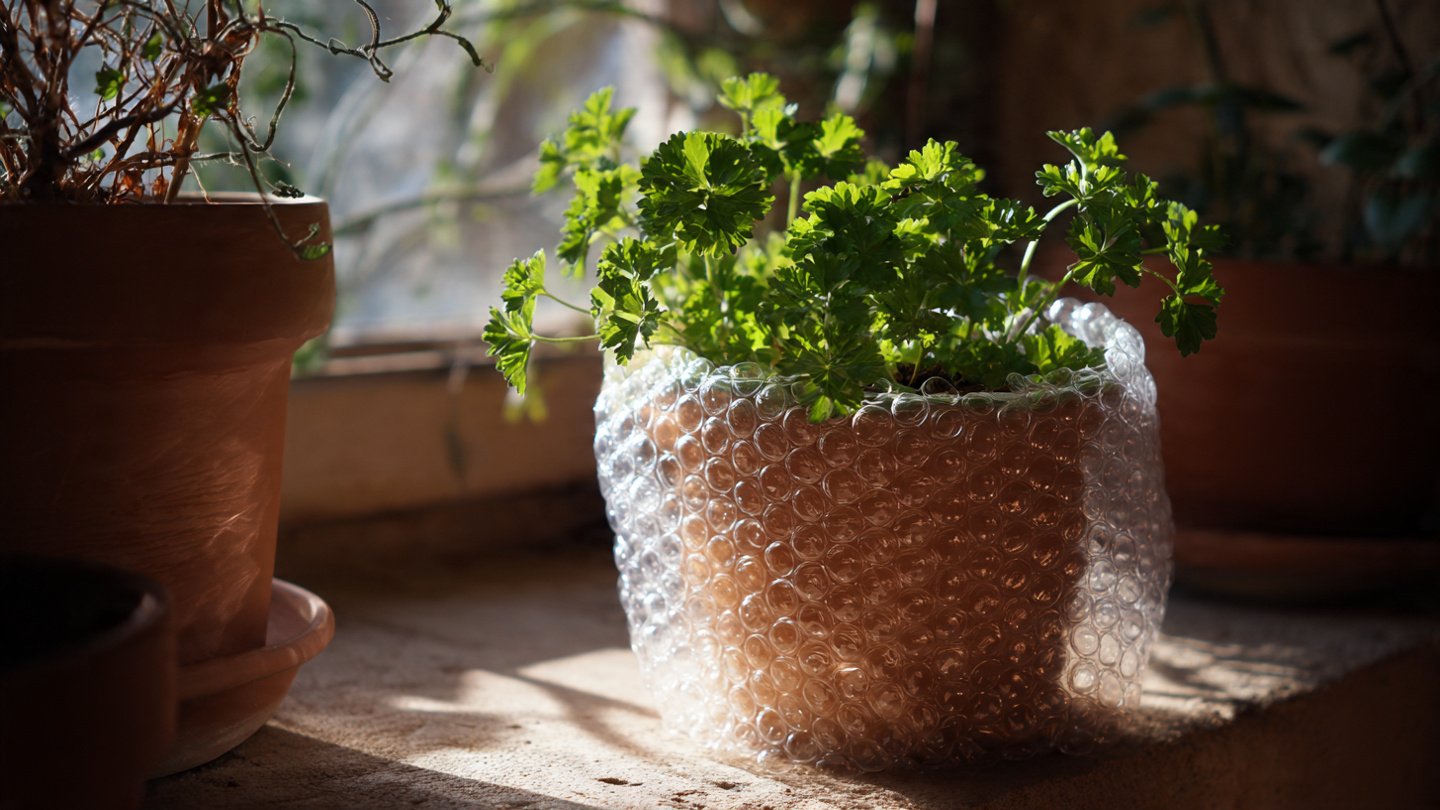
The Importance of Insulating Pots in Winter
As the cold weather settles in, many gardeners face the challenge of protecting their potted plants from freezing temperatures. While hardy varieties can withstand the chill, those in pots are often more vulnerable, mainly due to their root systems being exposed to the elements. Insulating your winter pots is crucial in providing a buffer against harsh conditions, minimizing root damage and ensuring your plants have the best chance of surviving until spring.
Why Bubble Wrap?
Bubble wrap is an innovative solution for pot insulation, offering several benefits that make it a viable option for gardeners:
- Excellent Insulation Properties: The air trapped in bubble wrap acts as an insulator, helping to maintain a consistent temperature around the plant’s roots.
- Lightweight: Compared to other insulating materials, bubble wrap is relatively lightweight, making it easy to work with and maneuver around your pots.
- Recyclable: Bubble wrap can often be reused or recycled, appealing to eco-conscious gardeners looking to minimize waste.
- Cost-Effective: Typically inexpensive, bubble wrap is readily available and can provide an affordable solution for insulating a large number of pots.
How to Use Bubble Wrap for Insulating Pots
Using bubble wrap for insulation is straightforward. Here’s a step-by-step guide to ensure you do it effectively:
- Gather Your Materials: You will need bubble wrap, scissors, and possibly some duct tape or string for securing the wrap around your pots.
- Measure the Pot: Measure the height and circumference of the pot you want to insulate. This will help you cut the right amount of bubble wrap.
- Cut the Bubble Wrap: Cut a piece of bubble wrap that is tall enough to cover the pot and long enough to wrap around it completely.
- Wrap the Pot: Start wrapping the bubble wrap around the pot from the bottom to the top, ensuring that there are no gaps for cold air to penetrate. Secure the bubble wrap in place with duct tape or string.
- Cover the Base: For additional protection, you may want to place the pot on insulating material, such as a wooden board or Styrofoam sheet. This will prevent the cold ground from affecting the roots.
- Check Regularly: Throughout the winter, check on your wrapped pots periodically to ensure that everything is secure and that no moisture is trapped, which could lead to mold or rot.
Add Extra Protection
While bubble wrap is an excellent insulator, combining it with other materials can enhance its effectiveness. Here are some suggestions:
- Mulch: Adding a layer of mulch on top of the soil can further insulate roots and retain moisture.
- Blankets or Towels: In extremely cold climates, consider draping a blanket or old towel over the wrapped pot for added warmth.
- Placement: Position pots in a sheltered area, such as against a wall or under a tree, to provide natural protection from wind and frost.
The Environmental Aspect of Bubble Wrap
As sustainable practices cultivate a stronger following in gardening, using bubble wrap can align with eco-friendly initiatives. Here are some key points to consider:
- Reusability: Many gardeners have bubble wrap from previous purchases that can be repurposed instead of discarded.
- Recycling Options: Bubble wrap can often be taken to recycling centers, minimizing its impact on landfills.
- Reduced Waste: By choosing bubble wrap as insulation, you can forego purchasing new materials, further reducing waste.
Conclusion
Incorporating bubble wrap into your winter gardening strategy is a smart and effective way to protect your potted plants from the unforgiving cold. Its insulating properties, combined with its cost-effectiveness and environmental benefits, make it an ideal choice for many gardeners. By properly insulating your winter pots, you give your plants a fighting chance against harsh weather conditions, ensuring that they emerge healthy and vibrant come spring. Whether you are an experienced gardener or a newcomer, bubble wrap is a simple, accessible solution to nurture your plants during the chilly months ahead.
FAQs
1. Can bubble wrap be used for all types of pots?
Yes, bubble wrap can be used for most types of pots, including plastic, clay, and ceramic. Ensure that the wrap completely covers the pot and provides adequate insulation for the type of plant.
2. How long should I leave the bubble wrap on my pots?
It’s best to keep the bubble wrap on your pots for the entire winter season. However, be sure to check periodically for moisture build-up and remove if necessary to prevent rot.
3. Will bubble wrap harm my plants?
No, bubble wrap is safe for plants as long as it is applied correctly. Avoid trapping moisture inside the wrap, as this can lead to mold and rot.
4. Is there a risk of pests when using bubble wrap?
While bubble wrap itself does not attract pests, it’s essential to monitor your plants regularly and ensure there are no hidden areas accumulating moisture that could invite pests.
5. How do I properly dispose of bubble wrap?
Check local recycling guidelines, as many areas accept bubble wrap. Alternatively, consider reusing it for storage or other purposes before disposing of it.