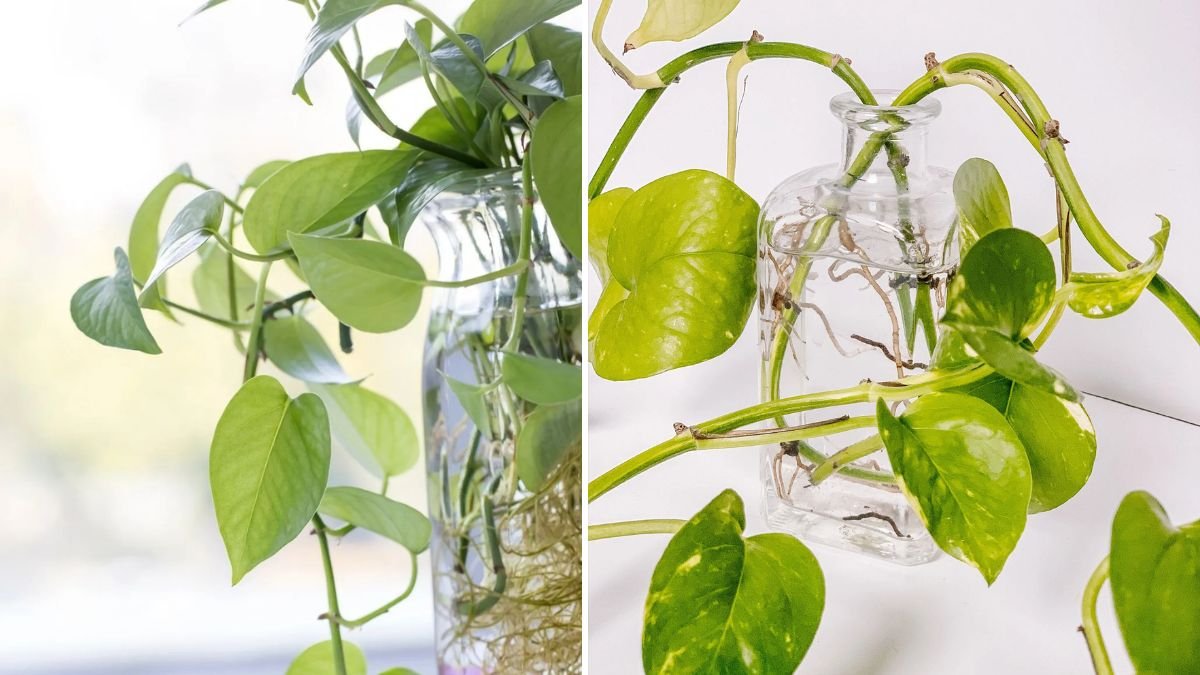
Propagation is the heart of gardening. Whether you grow fruit trees, ornamental plants, or herbs, the ability to produce new plants from existing ones saves money, preserves varieties, and helps gardens flourish. Traditional methods like cuttings and seeds have been used for centuries, but modern gardeners are now discovering new and innovative propagation techniques that are faster, more reliable, and more efficient.
In this detailed 1200-word guide, we explore the latest and most effective ways to propagate plants, why these methods work better, and how you can apply them at home. From advanced layering methods to hormone-assisted rooting and eco-friendly techniques, this article will open your eyes to the future of plant propagation.
Introduction: Why New Propagation Methods Are Needed
Propagation used to rely on:
- Seeds
- Simple cuttings
- Old layering techniques
- Natural rooting
While these methods still work, they often:
- Take too long
- Have low success rates
- Produce weak plants
- Fail in dry or hot climates
- Require high skill
Modern gardeners demand faster growth, higher success percentages, and stronger plants.
That is why new propagation methods have emerged—methods that combine science, technology, and nature.
These innovations help gardeners:
- Save time
- Improve plant survival
- Grow plants year-round
- Reduce diseases
- Achieve uniform growth
- Multiply rare varieties
Let’s explore these new ways in detail.
1. Hormone-Assisted Propagation (Rooting Boost Technology)
Traditionally, gardeners used natural materials like honey or ash to stimulate rooting. Modern methods use synthetic or organic rooting hormones, which boost root formation dramatically.
How it works
Rooting hormones contain compounds such as:
- Auxins
- Indole-3-butyric acid (IBA)
- Naphthalene acetic acid (NAA)
These chemicals activate root cells and speed up development.
Advantages
- Roots form 2× faster
- Higher success rate
- Stronger root system
- Works for difficult plants
- Reduces infection
Plants like roses, citrus, hibiscus, and guava root far more reliably using these hormones.
2. Air Layering 2.0 (Advanced Air Layering Technique)
Air layering is not new, but the improved version uses:
- Moisture-retaining gel
- Sterile sphagnum moss
- Transparent root-viewing films
- Antifungal coatings
This method allows gardeners to:
- Monitor root growth
- Prevent contamination
- Maintain ideal humidity
- Achieve roots in 2–4 weeks
Advanced air layering produces strong, mature-looking plants with a very high success rate.
3. Plastic Bottle Mini Greenhouses (Low-Cost Modern Method)
A simple but powerful innovation:
Using plastic bottles to create micro greenhouses around cuttings.
Why it works
- Retains humidity
- Reduces water loss
- Mimics natural greenhouse
- Keeps temperature stable
- Prevents wilting
This method is extremely useful for tropical regions where cuttings dry quickly.
It increases success rates from 40% to nearly 90%.
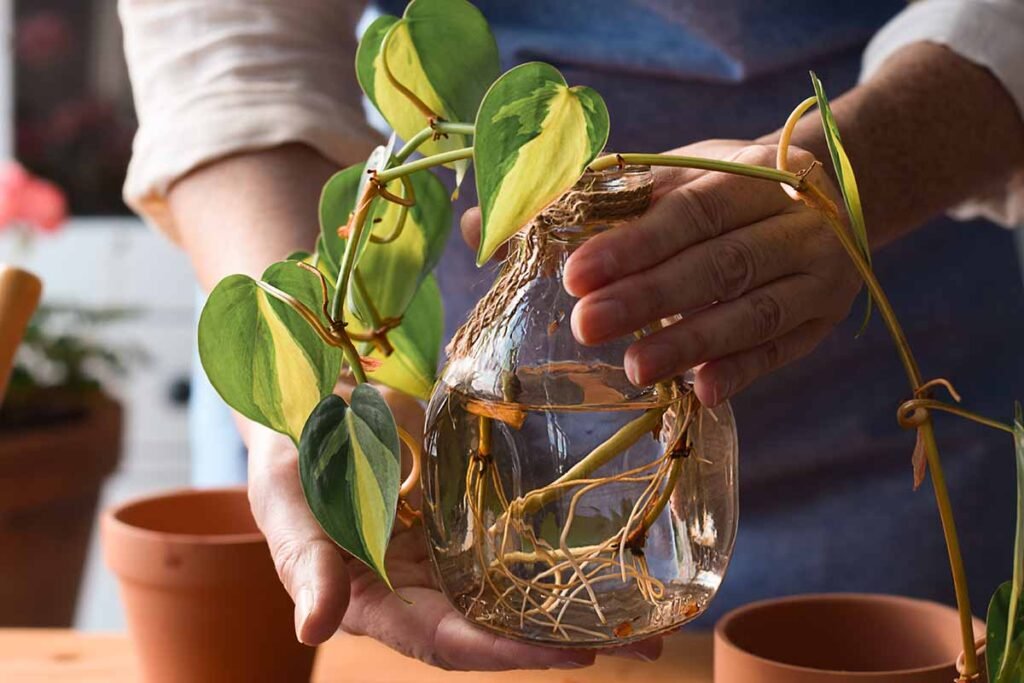
4. Hydroponic Propagation (Soilless Rooting)
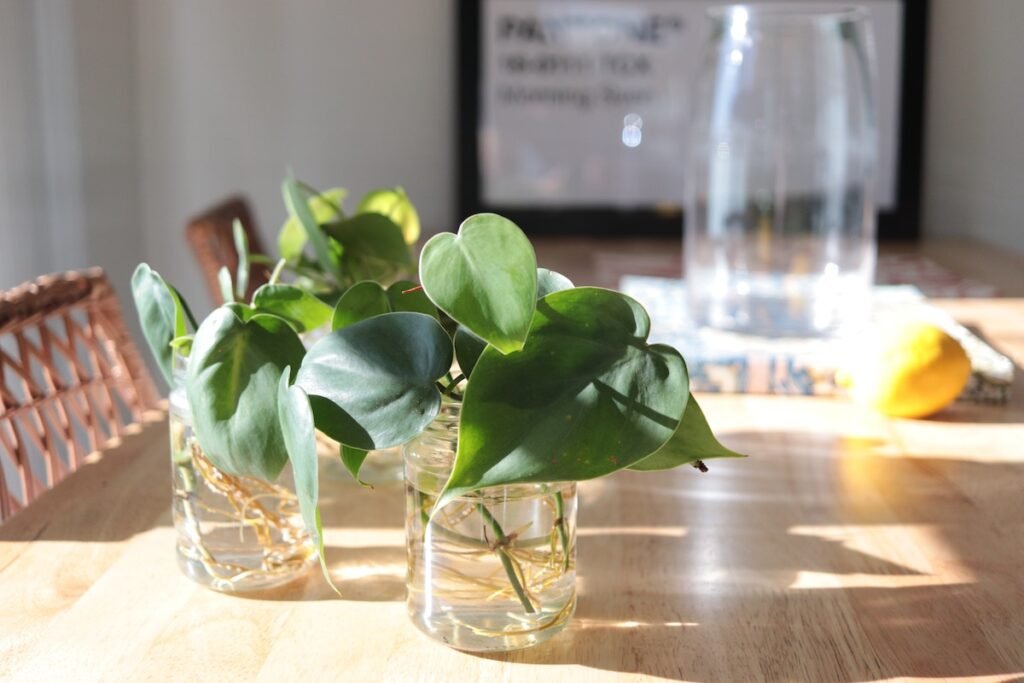
Hydroponics is no longer limited to lettuce and herbs—gardeners now use it for propagation.
Cuttings are placed in:
- Nutrient solutions
- Aerated water
- Rooting foam
- Net cups
Benefits
- No soil-borne diseases
- Clean environment
- Faster root growth
- Clear visibility
- Precise nutrient control
Many nurseries use hydroponic propagation for:
- Roses
- Anthurium
- Orchids
- Citrus
- Herbs
Roots form in 1–2 weeks, much faster than soil methods.
5. Micropropagation (Tissue Culture – The Future of Gardening)
Micropropagation uses plant tissue grown in sterile laboratories.
Small pieces of plant cells are placed in:
- Sterile jars
- Nutrient media
- Controlled light
- Controlled temperature
Advantages
- Thousands of plants from one sample
- Disease-free
- Uniform growth
- Faster multiplication
- Works for rare plants
This method is used commercially for:
- Bananas
- Orchids
- Roses
- Medicinal plants
- Fruit trees
Though expensive, it represents the most advanced propagation technique.
6. Organic Propagation Using Natural Boosters
Many gardeners prefer chemical-free approaches.
New organic boosters include:
- Aloe vera gel
- Coconut water
- Fermented plant extract
- Banana peel solution
- Honey + cinnamon
These natural substances:
- Prevent infection
- Promote rooting
- Provide nutrients
- Keep cuttings hydrated
They are eco-friendly and effective for home gardeners.
7. Stem Cutting With Humidity Chamber (Modern DIY Method)
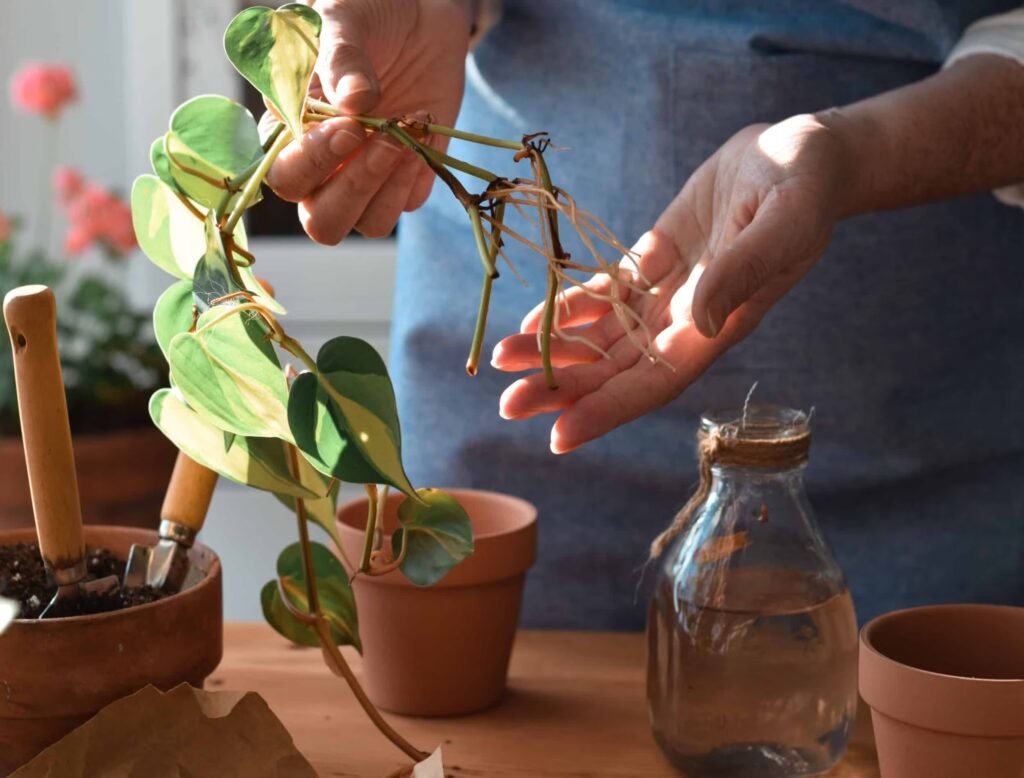
A humidity chamber uses:
- Clear plastic container
- Moist paper towels
- Vent holes
- Temperature control
This creates a perfectly controlled environment.
Results
- Higher rooting success
- No wilting
- Faster growth
- Strong stems
Ideal for:
- Roses
- Hibiscus
- Bougainvillea
- Lemon trees
- Guava
- Mint
8. Rooting With Gel-Based Media
Modern gels retain:
- Moisture
- Nutrients
- Oxygen
Examples:
- Agar gel
- Hydrogel
- Polymer gel
Cuttings placed in gels:
- Root faster
- Stay clean
- Avoid fungal infections
- Maintain constant moisture
This is increasingly used in professional nurseries.
9. Layering With Biodegradable Wraps
Traditional plastic wraps harm the environment.
New biodegradable materials like:
- Banana fiber
- Coconut fiber
- Biodegradable films
Reduce pollution while maintaining humidity and temperature.
This method supports sustainable gardening.
10. Smart Propagation With Sensors
Modern gardeners use cheap sensors to monitor:
- Humidity
- Soil moisture
- Temperature
- Light
Sensors connect to phones and alert you when:
- Soil dries
- Humidity drops
- Temperature rises
This reduces human error and improves success rate.
Advantages of New Propagation Methods
Compared to old techniques, modern methods offer:
- Faster rooting
- Higher success rate
- Less disease
- Stronger plants
- Less water usage
- Less labour
- Year-round propagation
- Eco-friendly solutions
How to Choose the Best New Propagation Method
Consider:
- Plant species
- Climate
- Budget
- Tools available
- Skill level
- Time
- Desired success rate
For beginners → bottle greenhouse or organic boosters
For intermediates → air layering or hormone-assisted
For professionals → hydroponic or tissue culture
Practical Example: New Way to Propagate Lemon Trees
Using a plastic bottle humidity chamber + rooting hormone:
- Take semi-hardwood cutting
- Dip in rooting hormone
- Plant in sand + cocopeat
- Cover with bottle
- Keep in indirect sun
- Maintain humidity
Roots appear in 3–5 weeks.
Success rate exceeds 80–90%, much higher than traditional cuttings.
Conclusion: Propagation Is Evolving — And So Are Gardeners
Propagation has come a long way from simple seed planting and basic cuttings. Modern techniques blend science, sustainability, and creativity to produce healthier plants faster than ever.
Whether you choose:
- Hormone-assisted rooting
- Hydroponics
- Air layering 2.0
- Organic boosters
- Smart sensors
- Tissue culture
You are participating in the new era of gardening.
These innovations make plant multiplication:
- More efficient
- More reliable
- More sustainable
- More enjoyable
With these new ways, gardeners everywhere can grow stronger plants, preserve rare varieties, and expand their gardens with confidence.