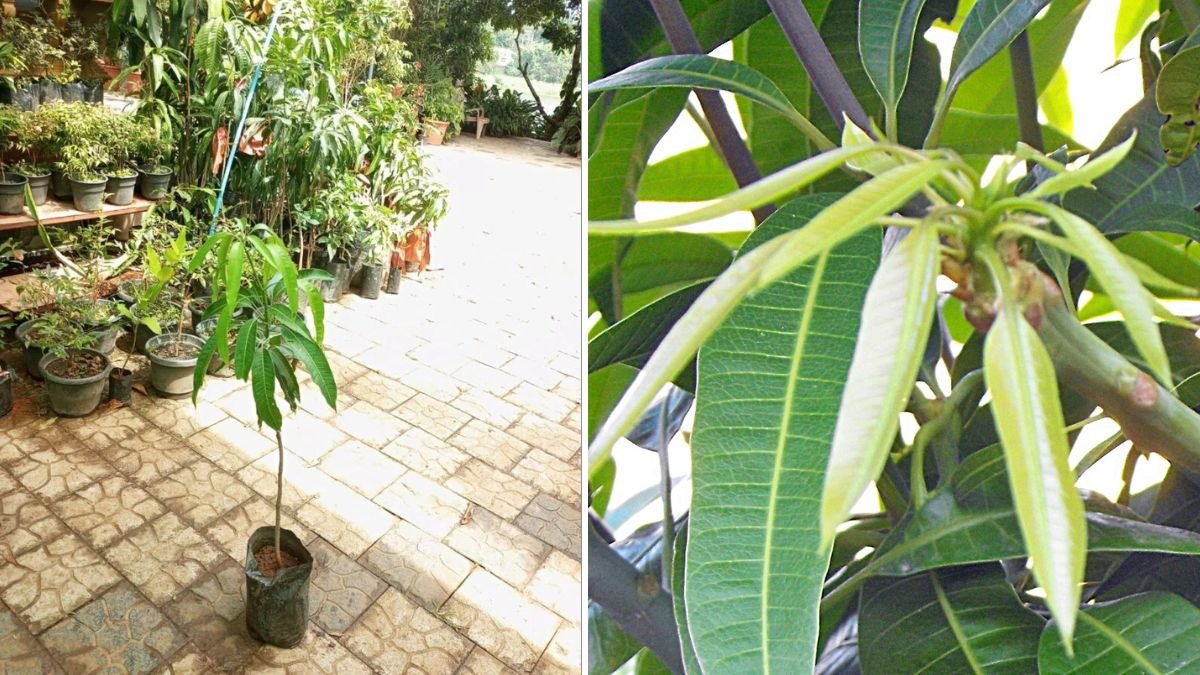
Mangoes, often called the “king of fruits,” are cherished worldwide for their sweet, succulent taste and nutritional benefits. Growing mango trees from seeds can take several years before they bear fruit, and the quality of fruit from seed-grown trees is often unpredictable. Grafting, on the other hand, is a time-tested method that ensures the offspring produce high-quality fruits while reducing the time to harvest. Recently, a new technique for grafting mango trees has emerged, promising higher success rates, faster growth, and stronger, more productive trees. This guide will walk you through the details of this innovative method and how it can transform your mango cultivation efforts.
1. Understanding Mango Grafting and Its Importance
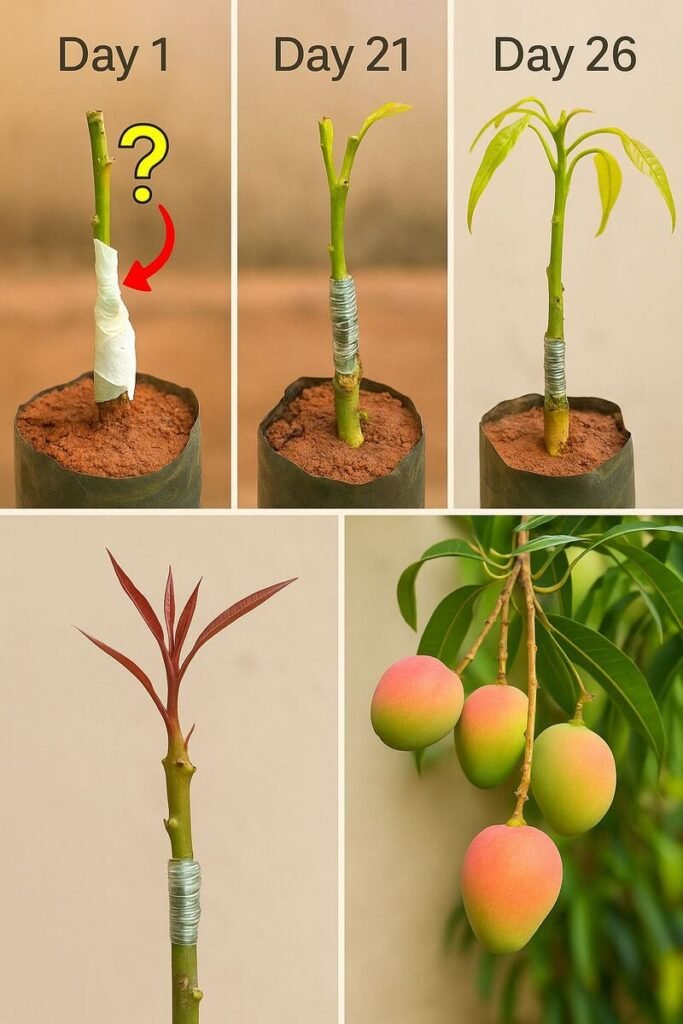
Grafting is the process of joining two plant parts—the rootstock (the lower portion including the roots) and the scion (the upper portion that bears the desired fruit)—so that they grow as a single tree. The technique allows gardeners to:
- Produce trees that bear high-quality fruits sooner than seed-grown trees.
- Maintain the genetic characteristics of the parent mango variety.
- Improve resistance to diseases and environmental stress.
- Maximize productivity and tree longevity.
Traditional grafting methods, such as veneer grafting and cleft grafting, have been widely used, but they sometimes face challenges like low success rates and delayed growth. The new technique addresses these issues, making mango propagation more efficient and reliable.
2. The New Mango Grafting Technique Explained
The innovative technique combines the principles of approach grafting and improved scion preparation, which significantly increases the survival rate of grafted trees. This method can be performed during the active growth phase of the rootstock and ensures rapid union between the scion and rootstock.
Key advantages of the new technique include:
- Higher graft success rate (up to 95% under optimal conditions).
- Faster establishment of young mango plants.
- Reduced susceptibility to infections and fungal attacks.
- Ability to graft multiple varieties on a single rootstock for experimental or commercial purposes.
3. Choosing the Right Rootstock and Scion
The success of any grafting technique starts with selecting healthy plant material.
Rootstock Selection:
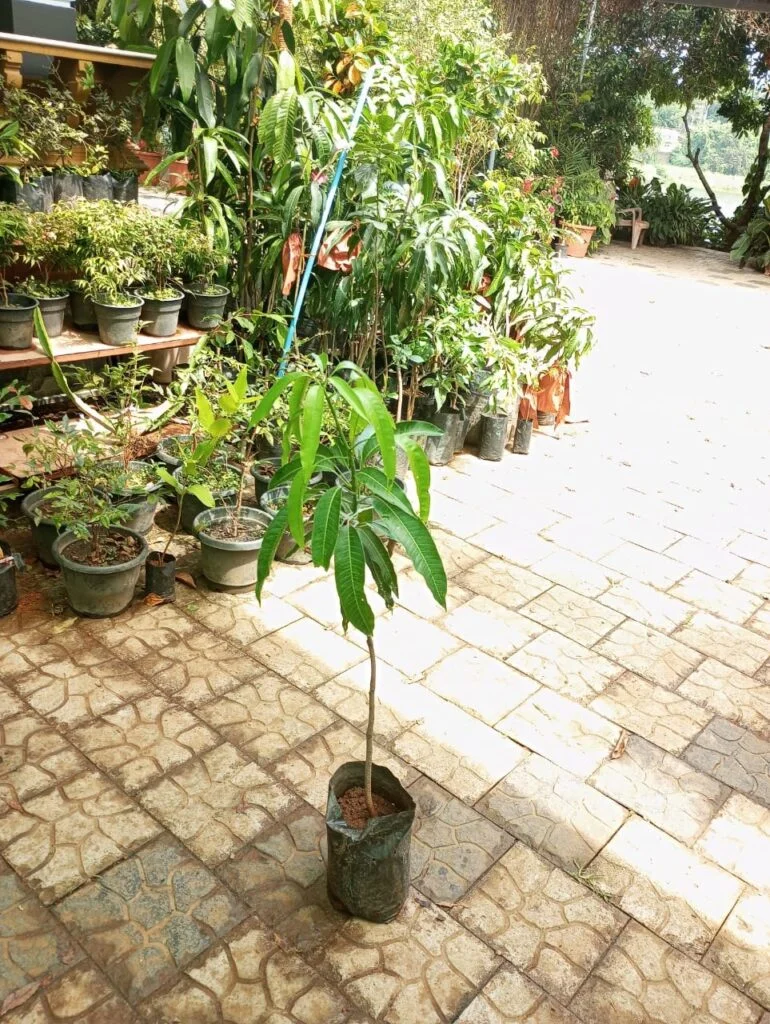
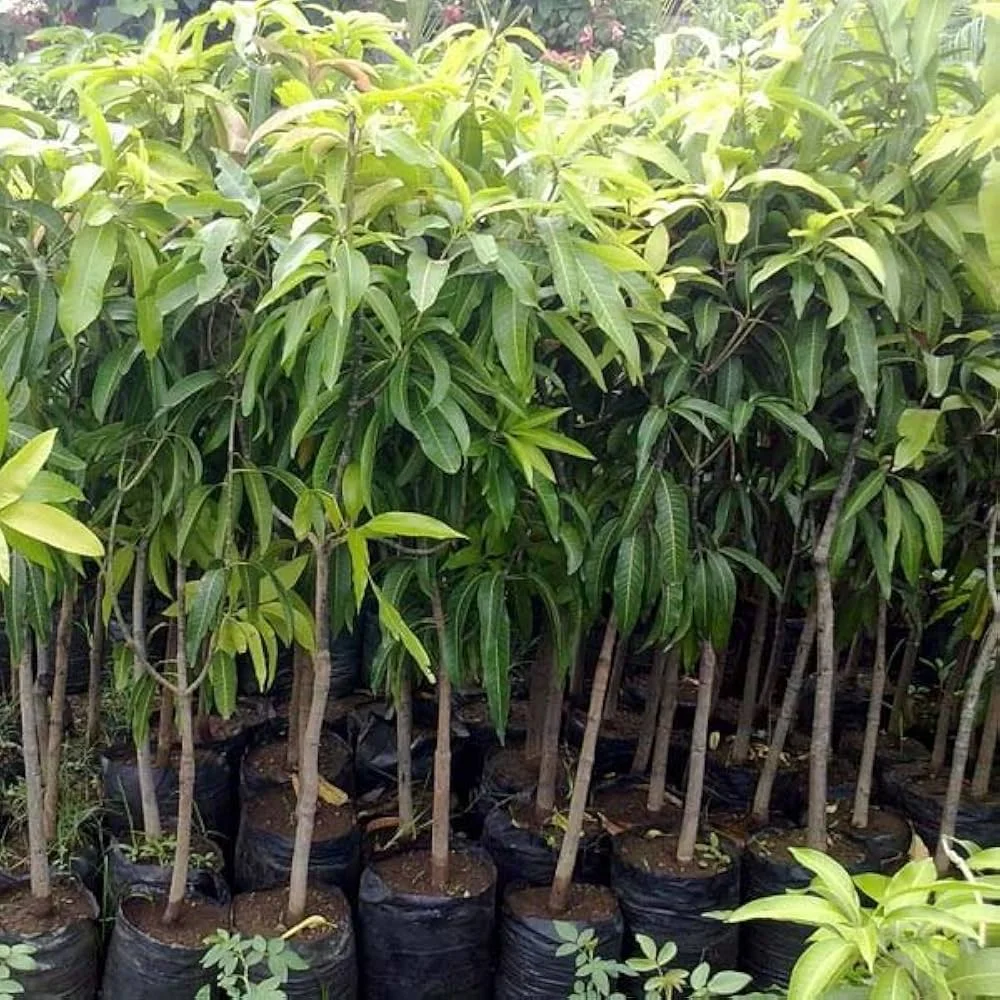
- Choose vigorous, disease-free seedlings.
- Prefer rootstocks with strong roots and good adaptability to local soil conditions.
- Ensure uniformity in growth to facilitate smooth grafting.
Scion Selection:
- Use 1–2-year-old branches from healthy, high-yielding mango trees.
- Select branches that have fully matured, with well-formed buds.
- Avoid scions with signs of disease, pest damage, or weakness.
4. Preparing the Scion and Rootstock
Scion Preparation:
- Cut the scion into a length of 10–15 cm, ensuring at least 2–3 buds per segment.
- Trim the lower end into a wedge or tapered shape for better contact with the rootstock.
- Keep the scion moist to prevent dehydration, preferably wrapping it in damp cloth or storing in a cool environment until grafting.
Rootstock Preparation:
- Select a healthy, upright seedling and make a clean cut on the main stem.
- Remove any leaves or side shoots near the grafting site to reduce moisture loss.
- Ensure the cut surface is smooth to maximize contact with the scion.
5. Step-by-Step Grafting Process
- Align the Scion and Rootstock:
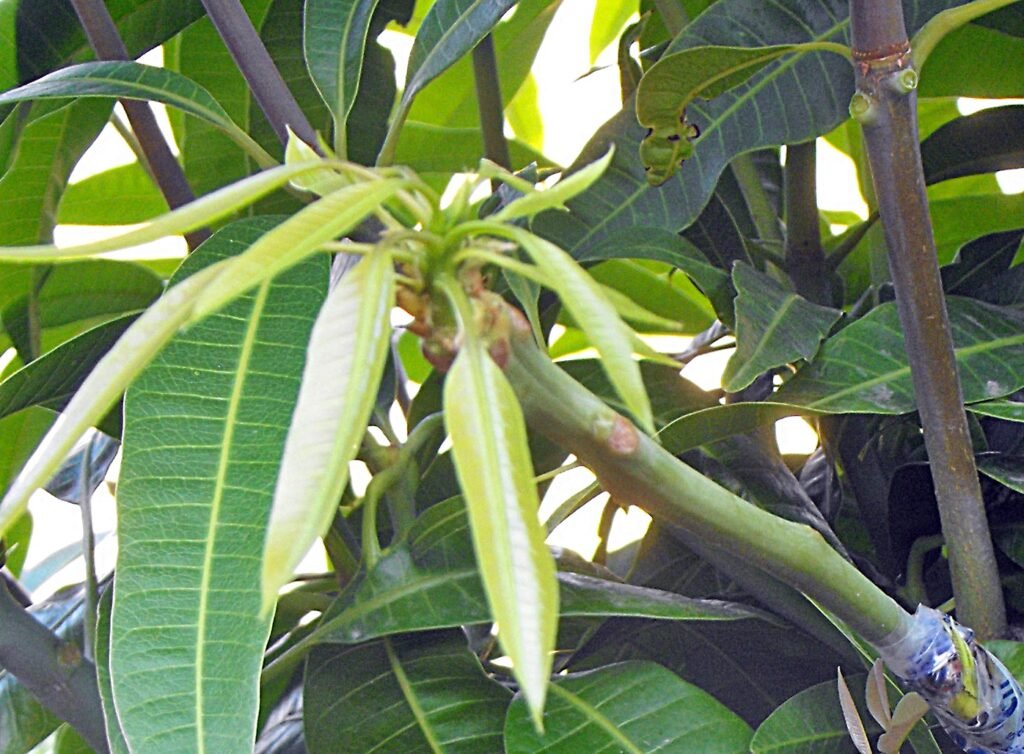
Place the scion on the prepared rootstock, ensuring that the cambium layers (the green layer beneath the bark) of both parts are in contact. Proper alignment is critical for the graft to take. - Secure the Graft:
Use grafting tape, rubber bands, or a biodegradable strip to firmly hold the scion in place. Avoid wrapping too tightly, as this may damage the tissue or restrict growth. - Protect the Graft:
Apply a thin layer of grafting wax or sealant to prevent moisture loss and protect against fungal infections. - Provide Optimal Conditions:
- Keep the grafted plant in a shaded, humid environment for the first 2–3 weeks.
- Avoid direct sunlight and strong winds that can desiccate the scion.
- Water the rootstock regularly, but do not overwater.
- Monitor Growth:
After 3–4 weeks, check for signs of union between the scion and rootstock. Successful grafts will start to show new leaf growth, indicating that the vascular tissues have fused properly.
6. Caring for the Grafted Mango Tree
Once the graft has taken, ongoing care is essential for healthy development:
- Gradually acclimatize the tree to sunlight.
- Remove the grafting tape carefully once the scion has stabilized.
- Fertilize with balanced nutrients to encourage strong root and shoot growth.
- Prune competing shoots that may divert energy away from the scion.
7. Common Challenges and How to Overcome Them
Even with the new technique, growers may encounter challenges:
- Scion Desiccation: Keep the scion wrapped and maintain high humidity during the early stages.
- Poor Union: Ensure perfect alignment of cambium layers and use sharp, clean tools for cuts.
- Pests and Diseases: Inspect plants regularly and use organic or chemical controls if necessary.
8. Advantages of the New Grafting Technique Over Traditional Methods
Compared to traditional grafting methods, this new technique offers several advantages:
- Faster establishment of the grafted plant, reducing time to fruiting.
- Higher success rate due to better cambium alignment and scion preparation.
- Lower risk of graft failure caused by environmental stress.
- Possibility to experiment with multiple mango varieties on a single rootstock, which can be useful for breeding programs or maximizing garden space.
9. Harvesting Benefits
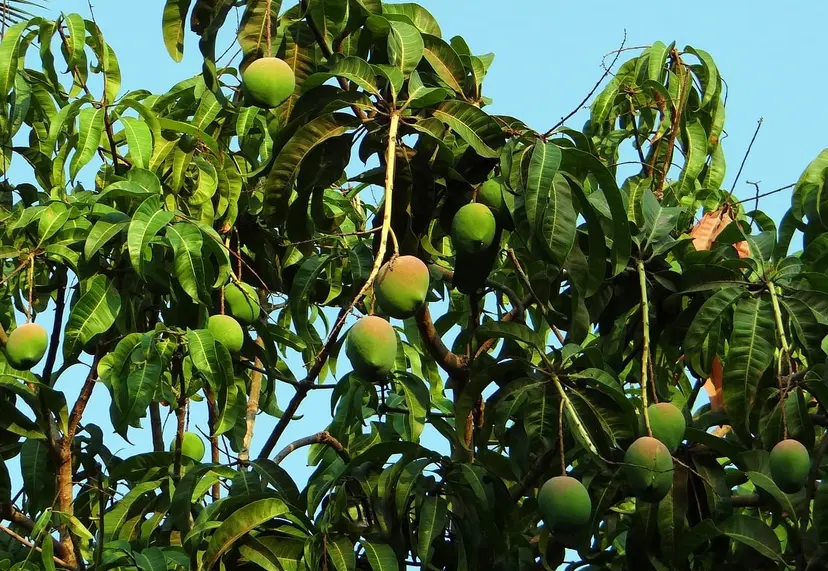
Grafted mango trees generally bear fruit within 3–4 years, much earlier than seed-grown trees, which can take 6–10 years. Moreover, since the scion retains the characteristics of the parent tree, fruit quality, size, and flavor are predictable and consistent, which is a significant advantage for both home gardeners and commercial growers.
10. Final Tips for Successful Mango Grafting
- Choose the right season: late winter to early spring is usually best.
- Always use clean, sharp tools to prevent infections.
- Maintain proper humidity and shading for young grafts.
- Be patient and attentive: a small mistake at the start can affect the entire growth.
- Experiment with different rootstocks and scions to find combinations that thrive in your region.
The new grafting technique for mango trees represents a significant step forward in fruit cultivation, combining efficiency, reliability, and superior results. By adopting this method, gardeners and farmers can enjoy faster-growing trees, higher yields, and consistent fruit quality. Whether you are a hobbyist looking to grow a few mango trees in your backyard or a commercial grower aiming to maximize productivity, this innovative approach offers a pathway to success.
With careful attention to preparation, alignment, and aftercare, anyone can master this grafting technique and enjoy the sweet rewards of homegrown, high-quality mangoes. Start implementing this method today and witness a revolution in your mango cultivation journey.