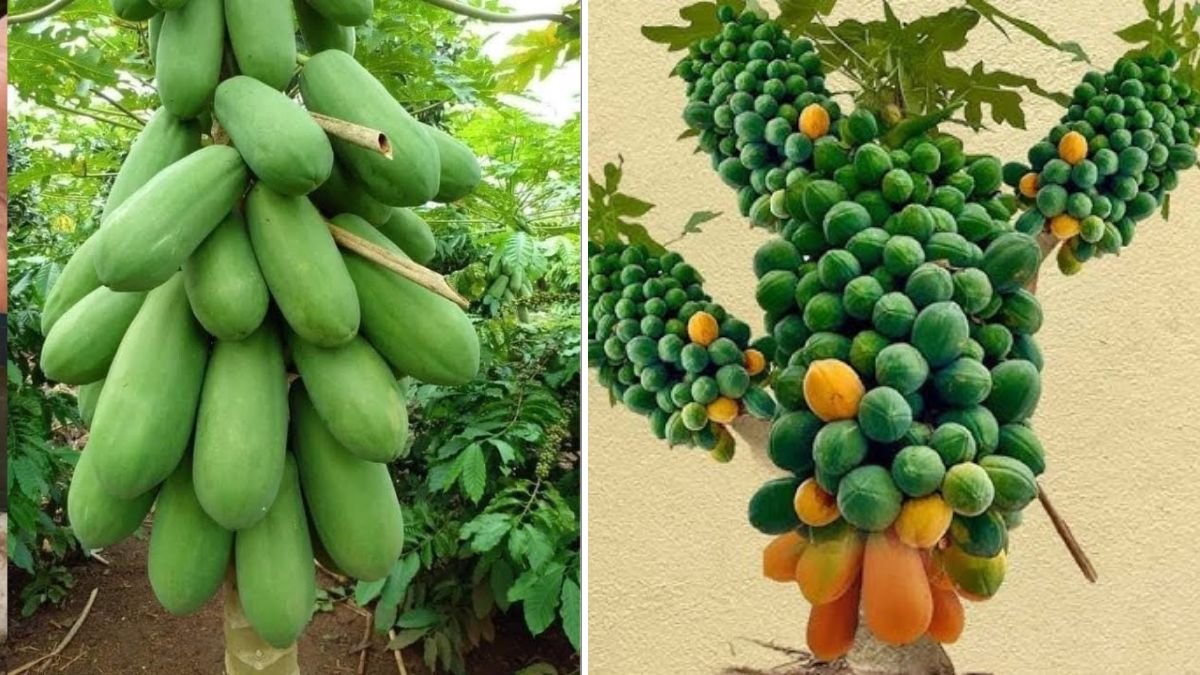
Papaya is one of the most popular tropical fruits worldwide, loved for its sweet, juicy taste and rich nutritional benefits. While papaya trees can grow from seeds, seed-grown plants often take longer to bear fruit, and their quality can be unpredictable. Grafting has emerged as a game-changing technique for producing superior papaya trees that grow faster, yield better fruits, and resist diseases. In this guide, we explore a great new idea for grafting papaya trees, offering step-by-step instructions, expert tips, and insights to maximize your papaya cultivation success.
1. Understanding Papaya Grafting and Its Benefits
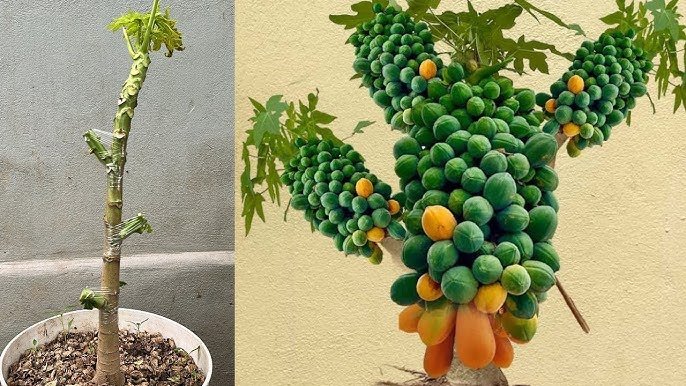
Grafting is the process of joining two plants—a rootstock and a scion—so that they grow as a single, unified tree. The rootstock provides a strong, healthy root system, while the scion carries the desirable traits of the parent tree, such as fruit quality and disease resistance.
Benefits of papaya grafting include:
- Faster fruiting: Grafted papaya trees can bear fruits 6–8 months earlier than seed-grown trees.
- High-quality fruits: The scion preserves the desirable traits of the parent tree.
- Disease resistance: Using resistant rootstocks can protect the tree against soil-borne diseases and root rot.
- Uniform growth: Grafted trees have more predictable height, structure, and yield.
The new technique we describe further improves success rates and ensures stronger graft unions, even for novice gardeners.
2. Choosing the Right Rootstock and Scion
Success starts with selecting the right materials.
Rootstock Selection:
- Choose healthy, vigorous seedlings free from diseases or pests.
- Rootstocks with strong taproots and good adaptability to local soil and climate conditions are ideal.
- Dwarf or semi-dwarf rootstocks can control tree height and facilitate harvesting.
Scion Selection:
- Select branches from high-yielding, disease-free papaya plants.
- Branches should be mature but not woody, usually 4–6 months old.
- Ensure the scion has 2–3 healthy leaves for optimal growth.
3. Preparing the Papaya Tree for Grafting
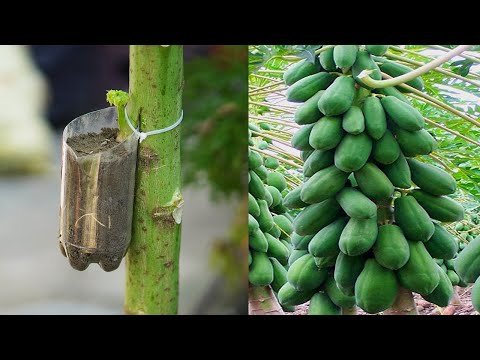
Rootstock Preparation:
- Choose a healthy seedling 2–3 months old.
- Trim the top of the rootstock to create a clean, flat surface for grafting.
- Remove lower leaves and shoots to reduce moisture loss and focus energy on the graft.
Scion Preparation:
- Cut a scion about 10–15 cm long, ensuring it has 2–3 nodes.
- Trim the base into a wedge or slant to maximize contact with the rootstock.
- Keep the scion hydrated until grafting to prevent wilting.
4. Step-by-Step Grafting Process
The new technique combines splice grafting with an improved securing method to enhance the union and survival of the graft.
- Align the Scion and Rootstock:
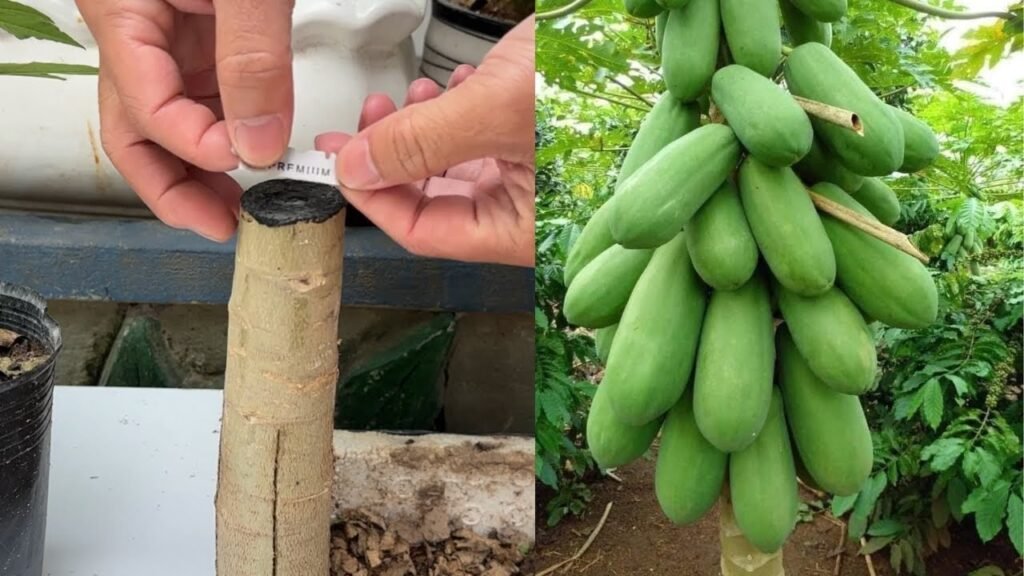
Place the scion on the trimmed rootstock, ensuring cambium layers (the green tissue beneath the bark) are in full contact. Perfect alignment is essential for successful grafting. - Secure the Graft:
Wrap the graft union with grafting tape, parafilm, or a soft rubber strip. The wrap should be firm enough to hold the scion in place but not so tight that it damages the tissue. - Seal and Protect:
Apply grafting wax or a natural sealant to the exposed areas to prevent moisture loss and infection. - Provide Optimal Conditions:
- Place the grafted plant in a shaded, humid environment for the first 2–3 weeks.
- Avoid strong sunlight and wind, which can dry the scion.
- Water carefully to keep the rootstock hydrated without overwatering.
- Monitor Growth:
Within 2–4 weeks, new leaf growth indicates a successful graft. Remove the wrapping once the scion is firmly attached and growing.
5. Post-Grafting Care
After successful grafting, proper care ensures strong growth and early fruiting:
- Gradually expose the plant to sunlight to strengthen the scion.
- Fertilize with balanced nutrients, including nitrogen, phosphorus, and potassium, to promote healthy roots and shoots.
- Prune competing shoots from the rootstock that may divert energy from the scion.
- Watch for signs of pests or diseases and take preventive measures.
6. Common Challenges and Solutions
Even with the new technique, gardeners may encounter challenges:
- Scion wilting: Keep the scion hydrated and maintain high humidity during early growth.
- Poor cambium contact: Ensure clean cuts and perfect alignment during grafting.
- Pests and diseases: Use neem oil or organic pesticides to protect young grafts.
7. Advantages of the New Grafting Technique
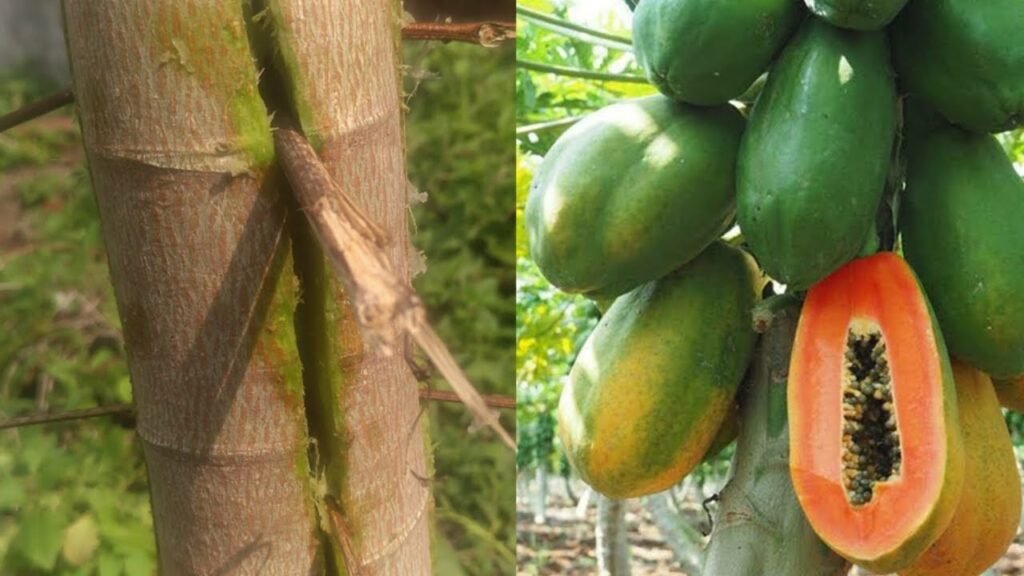
Compared to traditional methods, this innovative approach offers several advantages:
- Higher success rate: Improved alignment and securing methods ensure more grafts survive.
- Faster establishment: Grafted papayas grow quickly and bear fruits earlier.
- Stronger plants: The new method promotes stronger unions and healthier trees.
- Uniform quality: Fruits from grafted papayas maintain consistent size, taste, and texture.
8. Harvesting Benefits
Grafted papaya trees generally start producing fruits in 6–12 months, much faster than seed-grown trees, which can take 12–18 months or longer. Fruits from grafted trees are predictable in size and quality, ensuring better returns for home growers and commercial farmers.
9. Tips for Successful Papaya Grafting
- Choose the right season, typically at the beginning of the rainy season for optimal humidity.
- Use sharp, sterilized tools to prevent infections.
- Maintain consistent moisture without waterlogging the soil.
- Remove the wrapping gradually after the scion has grown strong.
- Experiment with different scion varieties for diversified fruit quality.
10. Conclusion: Transform Your Papaya Cultivation
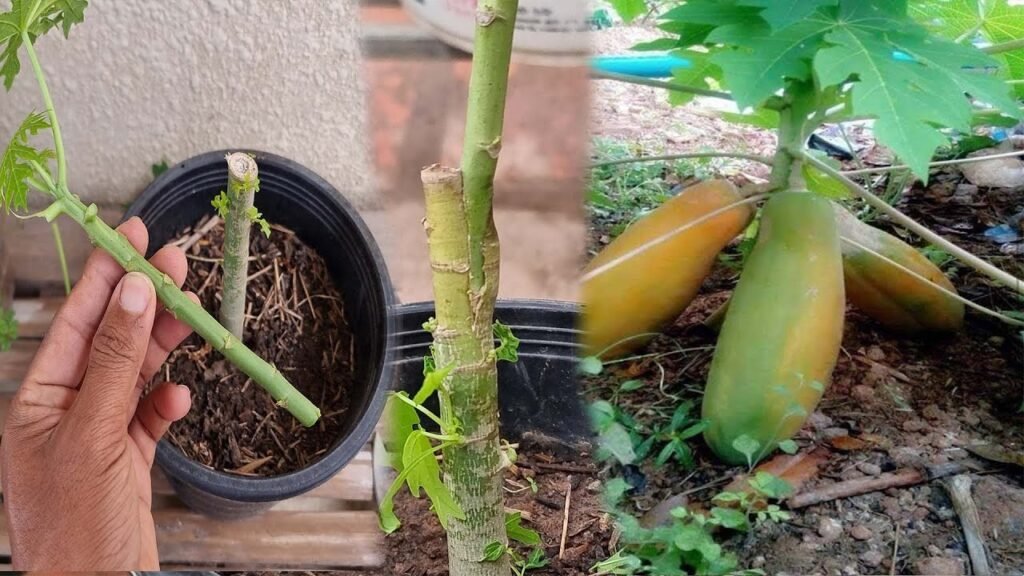
The new papaya grafting technique offers a transformative approach to cultivating this beloved tropical fruit. By combining proper rootstock and scion selection, precise grafting steps, and attentive post-grafting care, gardeners can achieve faster growth, higher yields, and superior fruit quality.
Whether you are a small-scale gardener looking to enjoy fresh papayas or a commercial grower aiming to increase productivity, this revolutionary grafting method provides a reliable, effective, and easy-to-follow solution. With patience, attention, and the right technique, anyone can master papaya grafting and enjoy the sweet rewards of a bountiful harvest.
By adopting this new idea, you not only improve the efficiency of your papaya cultivation but also contribute to sustainable and high-quality fruit production, ensuring that every tree reaches its full potential.