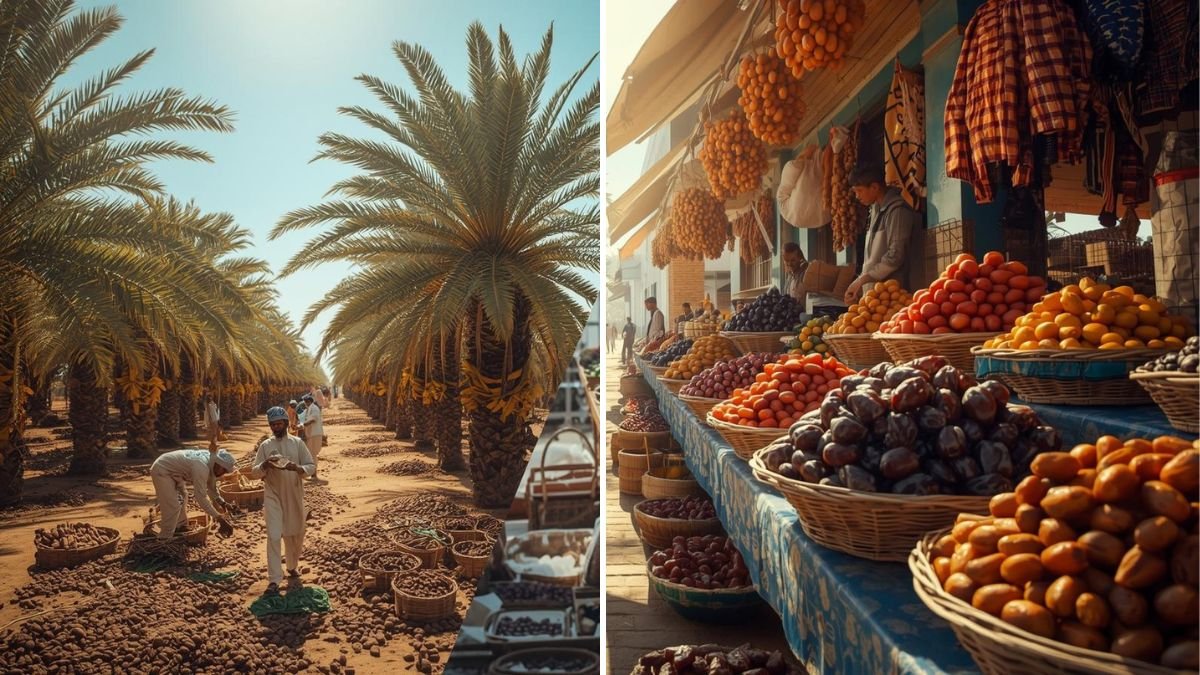
Dates are one of the oldest cultivated fruits, prized for their sweetness, nutrition, and long shelf life. Globally, date production supports millions of farmers and contributes significantly to economies in arid regions. The demand for dates has been increasing due to their health benefits, high energy content, and use in traditional dishes. Knowing which country grows the most dates each year helps researchers, traders, and policymakers understand global agriculture trends. Climate, soil, irrigation, and modern farming techniques influence production levels. This article explores the world’s leading date-producing country, examines contributing factors, and presents data-driven insights for enthusiasts and growers alike.
Paragraph 1: Understanding the Origin of Date Palm Cultivation
Date palms originated in the Middle East, where they thrived in desert climates. Ancient civilizations cultivated them for food, shade, and trade. The plant’s adaptation to hot, arid conditions allowed it to flourish in regions with minimal rainfall. Root systems extend deep into the soil, tapping underground water. Traditionally, date palms were propagated from offshoots. Modern techniques now include tissue culture for higher yield. Historical cultivation patterns explain today’s major production areas. Knowledge of origin aids in understanding climate preferences.
Paragraph 2: Key Factors Influencing Date Production
Several factors determine successful date cultivation, including temperature, sunlight, soil quality, and irrigation. Optimal temperature ranges between 30 and 40 degrees Celsius for proper fruit development. Full sun exposure ensures sugar concentration in dates. Soil must be sandy or loamy with good drainage. Water management is crucial; both deficit and excess can reduce yield. Fertilization and pest control also play essential roles. Economic infrastructure supports production through harvest, storage, and export. Together, these factors determine which countries dominate production.
Paragraph 3: According to Recent Data, Egypt Leads Global Date Production
Recent agricultural statistics reveal that Egypt is the largest producer of dates in the world. It produces millions of tons annually, surpassing other leading countries. Egyptian date production benefits from both traditional and modern farming practices. Extensive irrigation from the Nile River ensures sufficient water for orchards. Local demand is high, with many dates consumed domestically. Export markets, particularly in Europe and the Middle East, increase production incentives. Egypt’s variety of dates, including Siwa and Barhi, contributes to its global leadership. Stable climate and government support help maintain output consistently.
Paragraph 4: Why Egypt Excels in Date Production
Egypt’s dominance arises from a combination of climatic, geographic, and infrastructural advantages. Warm temperatures and arid conditions favor high-quality dates. The Nile Delta provides fertile soil and accessible irrigation. Large-scale farms allow mechanization and modern management. The government supports research on pest resistance and yield optimization. Local farmers use a mix of traditional knowledge and modern techniques. Domestic consumption encourages consistent planting. Investment in storage and export facilities enhances global competitiveness. Egypt’s integrated approach ensures maximum efficiency.
Paragraph 5: Major Date-Producing Regions Within Egypt
Egypt’s top date-growing regions include the Nile Delta, Siwa Oasis, and Luxor. The Siwa Oasis is famous for sweet, soft Barhi dates. Upper Egypt and Nile Valley regions focus on long dates and dry varieties. These areas offer sandy soil and low humidity, ideal for date palms. Irrigation methods vary from traditional basin flooding to modern drip systems. Regional specialization boosts overall production. Each region harvests at different times to maintain continuous supply. Regional knowledge ensures high-quality fruit.
Paragraph 6: Other Leading Date-Producing Countries
Following Egypt, countries like Iran, Saudi Arabia, and Iraq are significant global producers. Iran’s date palms produce high-quality Mazafati and Zahidi varieties. Saudi Arabia grows large quantities in the Al-Qassim and Al-Ahsa regions. Iraq’s Mesopotamian climate favors soft and dry dates. Other notable producers include Pakistan, Algeria, and the United Arab Emirates. These countries benefit from arid conditions but lag behind Egypt in volume. Production techniques and infrastructure affect global rankings. Export capabilities influence international market share.
Paragraph 7: Role of Climate in Global Date Production
Date palms thrive in hot, dry climates with minimal rainfall. Excess humidity increases fungal diseases and reduces fruit quality. Temperature fluctuations influence sugar concentration. Day-night temperature differences enhance sweetness. Extreme cold can damage flowers and young fruits. Global warming impacts water availability and growth cycles. Countries with controlled irrigation mitigate climate stress. Understanding climate needs explains production concentration in desert regions.
Paragraph 8: Irrigation Practices for High Yield
Efficient irrigation is critical for date production. Drip irrigation conserves water and provides consistent moisture to roots. Traditional flooding remains common in Egypt due to the Nile. Controlled water application improves fruit size and sugar content. Overwatering can cause root rot or reduce sweetness. Regular monitoring ensures optimal hydration. Technological integration like automated timers boosts efficiency. Proper irrigation balances growth and fruit quality. Water management is central to Egypt’s production success.
Paragraph 9: Date Varieties Contributing to Production Volume
Egypt grows numerous date varieties, including Siwa, Barhi, Zaghloul, and Hayany. Each variety has unique water, temperature, and soil requirements. Some varieties produce soft, high-moisture dates; others are dry and suitable for long-term storage. Variety selection impacts both yield and market price. Export-focused varieties receive special attention. Hybridization and selective breeding improve disease resistance. Production strategies consider variety compatibility. Variety diversity strengthens Egypt’s global position.
Paragraph 10: Economic Impact of Date Production in Egypt
Date farming contributes significantly to Egypt’s agricultural GDP. Millions of people rely on date cultivation for livelihood. Export revenue supports national income. Local markets ensure consistent consumption. Value-added products like date syrup and pastes increase profits. Seasonal employment benefits rural communities. Government subsidies and infrastructure improve production efficiency. Date cultivation strengthens regional economies and global trade.
Paragraph 11: Table – Top 5 Global Date-Producing Countries
| Country | Production Rank | Key Strength |
|---|---|---|
| Egypt | First | Nile irrigation, diverse varieties |
| Iran | Second | Mazafati dates, established orchards |
| Saudi Arabia | Third | Al-Qassim & Al-Ahsa regions |
| Iraq | Fourth | Mesopotamian soil and climate |
| Pakistan | Fifth | Hot climate, growing demand |
Paragraph 12: Table – Factors Supporting High Date Production
| Factor | Impact | Example |
|---|---|---|
| Climate | High yield | Egypt, Saudi Arabia |
| Irrigation | Consistent fruit size | Nile Delta |
| Variety | Marketable quality | Barhi, Siwa |
| Infrastructure | Storage & export | Egypt & Iran |
Paragraph 13: Challenges Faced by Date Producers
Date farmers face drought, pests, and extreme weather events. Water scarcity threatens yield in arid regions. Insect infestations reduce fruit quality. Soil salinity in desert regions is a growing problem. Labor shortages during harvest season affect output. Climate change alters growth patterns. Price volatility impacts profitability. Addressing these challenges requires sustainable practices and government support.
Paragraph 14: Sustainability in Date Farming
Sustainable practices protect soil and water resources. Drip irrigation reduces water consumption. Organic fertilization enhances soil health. Integrated pest management minimizes chemical use. Crop rotation maintains soil structure. Proper pruning ensures efficient sunlight exposure. Sustainability secures long-term production. Responsible farming benefits future generations.
Paragraph 15: Innovations Boosting Date Production
Modern technology has increased yield and quality. Automated irrigation systems improve consistency. Tissue culture produces disease-resistant offshoots. Fertilizer management enhances growth efficiency. Harvesting machinery speeds up labor-intensive processes. Genetic research develops high-sugar, high-yield varieties. Technology bridges tradition and efficiency. Innovation ensures global competitiveness.
Paragraph 16: Domestic Consumption vs Export
Egypt consumes most of its dates domestically, but exports are growing. Europe and the Middle East are major importers. Export standards require sorting, drying, and packaging. Domestic consumption maintains market stability. Export demands influence production planning. Both domestic and global markets drive cultivation decisions. Balancing local and international needs strengthens economic benefits.
Paragraph 17: Table – Date Production Trends Over 5 Years
| Year | Egypt Production (tons) | Global Production (tons) |
|---|---|---|
| 2019 | 1,700,000 | 7,500,000 |
| 2020 | 1,800,000 | 7,700,000 |
| 2021 | 1,850,000 | 7,900,000 |
| 2022 | 1,900,000 | 8,100,000 |
| 2023 | 1,950,000 | 8,300,000 |
Paragraph 18: Role of Export Policies in Production
Government export policies affect production scale. Incentives encourage farmers to grow high-demand varieties. Export regulations ensure quality standards. Subsidies for irrigation and fertilizers boost productivity. Trade agreements open international markets. Policies influence planting schedules and variety selection. Regulatory stability attracts investment. Strong governance supports global leadership.
Paragraph 19: Future Outlook of Global Date Production
Global demand is projected to rise due to health trends and increased awareness. Emerging producers may expand acreage. Egypt is expected to maintain its lead with improved techniques. Climate-smart agriculture will be vital. Genetic improvements may increase resilience. Efficient irrigation will ensure sustainable growth. Exports will continue to expand. Global date production remains promising.
Paragraph 20: Final Thoughts
Egypt currently grows the most dates globally, combining climate, irrigation, and modern techniques. Its dominance ensures consistent supply and high-quality fruit. Other countries follow but are far behind in volume. Date production supports economies and rural livelihoods worldwide. Sustainable practices and innovation secure long-term output. Understanding production trends helps traders and researchers. Dates remain one of the most important fruits globally. Egypt continues to shape the global date market.