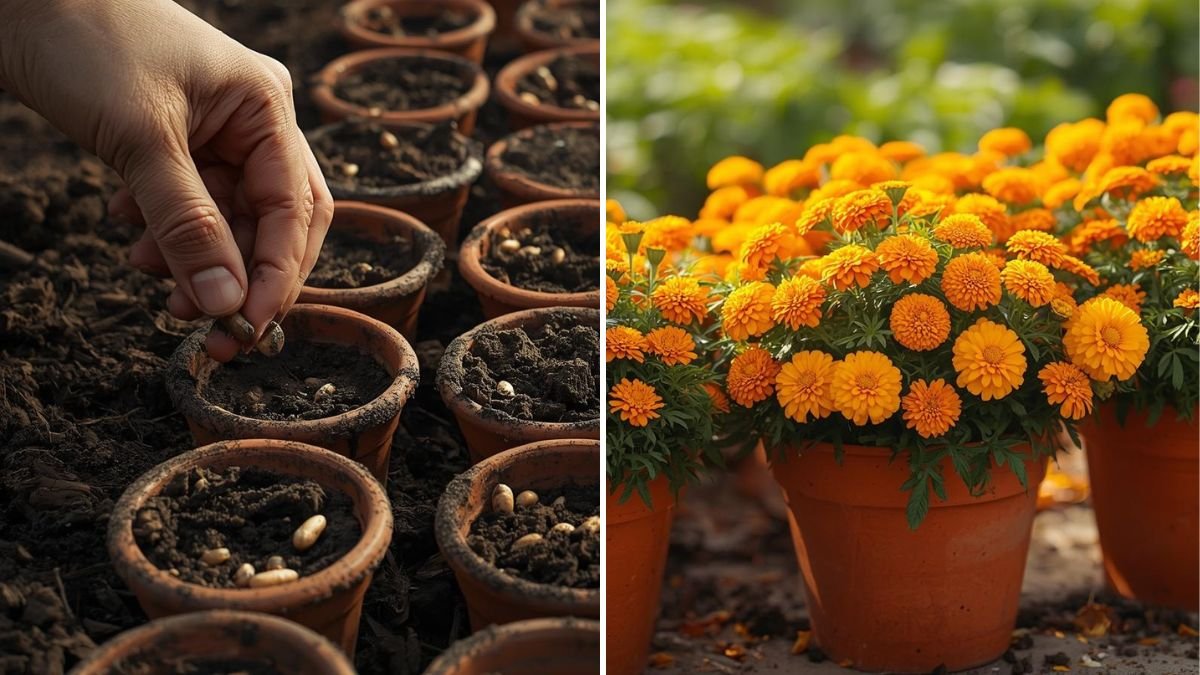
Marigolds are popular garden flowers known for their pest-repelling properties. They naturally deter insects while adding bright color. Growing marigolds in pots offers flexibility and control. Potted marigolds fit balconies, patios, and gardens. They are easy to grow and low maintenance. Their strong scent repels harmful pests. Marigolds improve garden health naturally. They combine beauty and protection effortlessly.
Understanding How Marigolds Repel Pests
Marigolds release natural chemicals through roots and leaves. These chemicals repel nematodes and insects. Their scent confuses pests. Beneficial insects remain unaffected. Marigolds reduce pest populations gradually. They protect nearby plants effectively. Natural pest control is eco-friendly. Marigolds act as living repellents.
Choosing the Right Marigold Varieties for Pots
Not all marigolds suit containers equally. French marigolds stay compact. African marigolds grow taller. Signet marigolds have edible flowers. Dwarf varieties work best in pots. Choose disease-resistant varieties. Compact growth prevents overcrowding. Right variety ensures success.
Selecting the Best Pots for Marigolds
Pots should have drainage holes. Medium-sized pots support root growth. Clay pots improve airflow. Plastic pots retain moisture longer. Avoid very small containers. Proper drainage prevents root rot. Pot size affects blooming. Good containers support healthy plants.
Preparing the Ideal Soil Mix
Marigolds prefer well-draining soil. Use garden soil mixed with compost. Add sand for drainage. Avoid heavy clay soil. Soil should be loose and fertile. Proper soil encourages root development. Healthy soil supports abundant blooms. Preparation improves growth.
Planting Marigolds in Pots Step by Step
Fill pots with prepared soil. Sow seeds or transplant seedlings. Space plants properly. Cover seeds lightly with soil. Water gently after planting. Place pots in sunlight. Avoid deep planting. Proper technique ensures establishment.
Sunlight Requirements for Healthy Blooms
Marigolds thrive in full sunlight. Six hours of sunlight is ideal. Insufficient light reduces flowering. Place pots in sunny spots. Rotate pots for even exposure. Morning sunlight works best. Bright light improves pest control. Sunlight is essential.
Watering Marigolds in Containers
Marigolds prefer moderate watering. Overwatering causes root rot. Water when topsoil feels dry. Avoid waterlogging. Ensure excess water drains. Consistent moisture supports growth. Drought stress reduces blooms. Balanced watering is key.
Fertilizing Marigolds for Continuous Flowers
Marigolds need minimal fertilization. Use balanced fertilizer sparingly. Excess nitrogen reduces flowers. Compost works well. Feed during active growth. Avoid frequent feeding. Nutrient balance matters. Proper feeding enhances blooms.
How Marigolds Protect Other Plants from Pests
Place marigolds near vegetables. They repel aphids and beetles. Roots deter nematodes. Scent confuses insects. Marigolds act as companion plants. They reduce chemical pesticide use. Natural protection improves yields. Strategic placement is important.
Pruning and Deadheading Marigolds
Remove spent flowers regularly. Deadheading encourages new blooms. Pruning improves shape. Remove weak stems. Pruning increases air circulation. Healthy plants bloom longer. Maintenance improves appearance. Simple care boosts results.
Common Pests and Diseases Affecting Marigolds
Marigolds resist most pests naturally. Aphids appear occasionally. Fungal diseases occur in wet conditions. Good airflow prevents disease. Neem oil treats infestations. Avoid overcrowding plants. Healthy care prevents problems. Monitoring ensures early action.
Seasonal Care for Potted Marigolds
Marigolds thrive in warm seasons. Protect from heavy rain. Move pots during extreme weather. Winter marigolds need protection. Seasonal care extends life. Adjust watering accordingly. Seasonal awareness improves success. Pots allow easy movement.
Using Marigolds in Companion Planting
Marigolds pair well with tomatoes. They protect beans and peppers. Place between crops. Companion planting boosts productivity. Natural pest control improves harvest. Diversity benefits gardens. Strategic planting maximizes benefits. Marigolds enhance ecosystems.
Harvesting Marigold Flowers
Harvest flowers for decoration. Pick during full bloom. Use clean scissors. Flowers last longer when harvested early. Edible varieties can be used in salads. Regular harvesting encourages blooms. Fresh flowers enhance beauty. Harvesting is simple.
Saving Marigold Seeds for Replanting
Allow flowers to dry fully. Collect seeds carefully. Store in dry containers. Label varieties clearly. Seeds remain viable for years. Seed saving saves money. Replant next season easily. Sustainability improves.
Marigold Care and Benefits Table
| Care Aspect | Requirement | Benefit |
|---|---|---|
| Sunlight | Full sun | More blooms |
| Watering | Moderate | Healthy roots |
| Soil | Well-drained | Strong growth |
| Placement | Near crops | Pest control |
| Pruning | Regular | Continuous flowers |
Common Mistakes to Avoid
Overwatering is common. Using poor soil reduces growth. Too much fertilizer limits blooms. Insufficient sunlight weakens plants. Crowding reduces airflow. Avoiding mistakes ensures success. Simple care works best. Knowledge improves results.
Environmental Benefits of Growing Marigolds
Marigolds reduce chemical pesticide use. They attract beneficial insects. Improve garden biodiversity. Enhance soil health. Support eco-friendly gardening. Reduce environmental impact. Natural solutions protect nature. Marigolds are sustainable.
Conclusion: Grow Marigolds for Beauty and Protection
Growing marigolds in pots is simple and rewarding. They protect gardens naturally from pests. Pots offer flexibility and control. Minimal care delivers maximum benefit. Marigolds add color and fragrance. Natural pest control improves garden health. Every gardener benefits from marigolds. They are beauty with purpose.