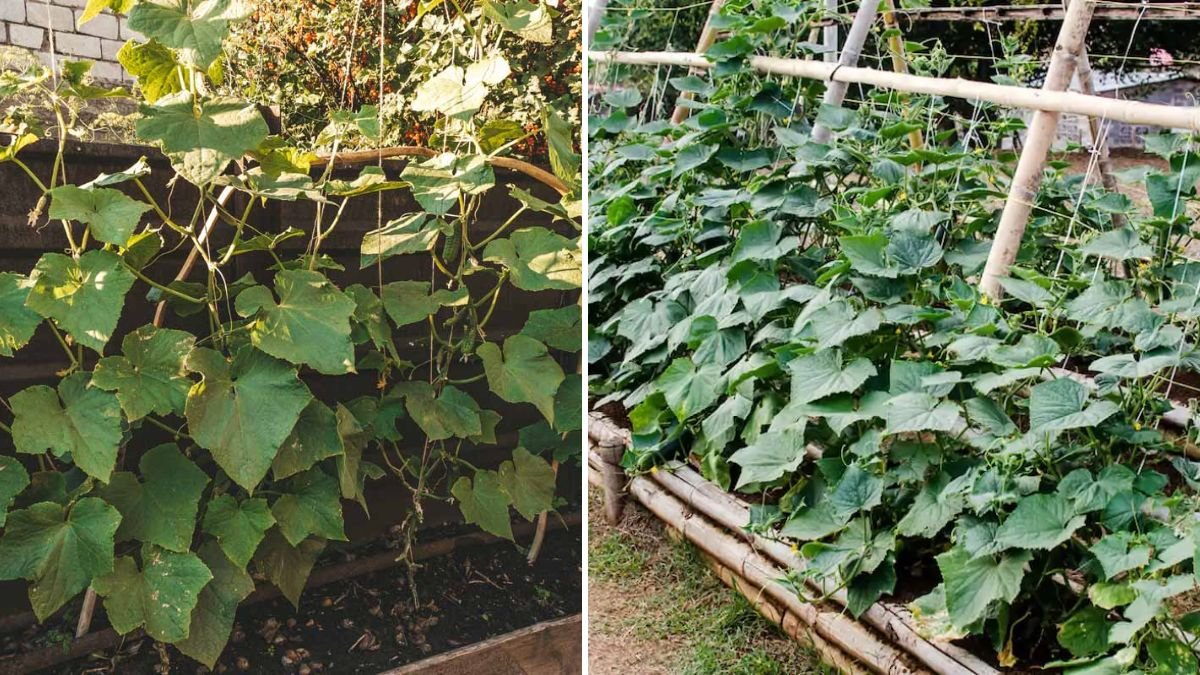
Cucumbers are climbing plants that benefit from vertical support. Building a structure improves airflow and sunlight exposure. It reduces soil contact, preventing rot. Structures save space in small gardens. Trellises, arches, and cages support vigorous growth. Proper support improves fruit quality. Gardeners gain easier harvesting. This approach maximizes yield per square foot.
Benefits of Vertical Growth
Vertical growth reduces pest problems. Fruits are cleaner and more uniform. Space efficiency allows intercropping. Air circulation reduces fungal diseases. Trellised plants require less bending during harvest. Fruit quality improves with sunlight exposure. Supports prevent stem breakage. Vertical growth enhances garden organization.
Choosing the Right Location
Select a sunny area with at least 6 hours of sunlight. Ensure the structure does not shade nearby crops. Good soil drainage is essential. Accessibility for watering and maintenance is key. Avoid windy areas that may topple lightweight structures. Flat terrain simplifies construction. The location affects growth and yield. Proper placement ensures stability and productivity.
Selecting the Type of Structure
Various structures suit cucumbers. Wooden trellises provide durability. Metal frames last longer. Netting or string supports are lightweight. Teepee-style structures add aesthetic appeal. Choose based on garden size and available materials. Structure type affects plant growth and harvest ease. Sturdy construction prevents collapse. Design flexibility improves garden layout.
Materials Needed
Materials include wood, bamboo, metal rods, or strong strings. Screws, nails, or ties secure joints. Optional netting supports fruits. Tools such as saws, hammers, and drills are required. Use weather-resistant materials. Recycled materials reduce cost. Materials must withstand wind and plant weight. Proper selection ensures long-lasting structures.
Designing the Structure
Plan height and width based on cucumber variety. Allow space for spreading leaves. Ensure easy access for watering and harvesting. Consider anchoring methods for stability. Vertical height should support climbers without bending. Proper spacing prevents overcrowding. Design affects sunlight penetration. A well-planned structure supports healthy growth.
Preparing the Ground
Clear weeds and debris from the planting area. Loosen soil to encourage strong roots. Level the ground for stability. Optionally add mulch or compost. Check for drainage issues. Proper preparation prevents structural instability. Healthy soil ensures vigorous growth. Ground preparation simplifies construction.
Building a Trellis
Assemble vertical posts securely. Attach horizontal supports at intervals. Add netting or wires for climbing. Ensure posts are firmly anchored. Check for sturdiness before planting. Proper construction prevents collapse under vine weight. Trellis height should accommodate mature plants. Vertical support encourages upward growth.
Teepee and Arch Structures
Teepee structures use poles tied at the top. Arches can support multiple rows. Both designs allow sunlight penetration. Secure tightly to avoid movement. Ensure wide base for stability. Plant cucumbers around poles. Structure supports multiple vines. Creative designs enhance garden aesthetics.
Planting Cucumbers
Plant seedlings at the base of the structure. Maintain spacing to prevent overcrowding. Water immediately after planting. Label varieties for identification. Use high-quality soil enriched with compost. Proper planting ensures healthy roots. Trellis proximity encourages climbing. Early training prevents tangling.
Training Vines
Guide cucumber vines onto support carefully. Use soft ties if necessary. Train young vines gradually. Avoid breaking stems. Rotate vines to optimize sunlight exposure. Proper training prevents overcrowding. Healthy vines climb efficiently. Structured growth ensures better yields.
Watering Cucumbers
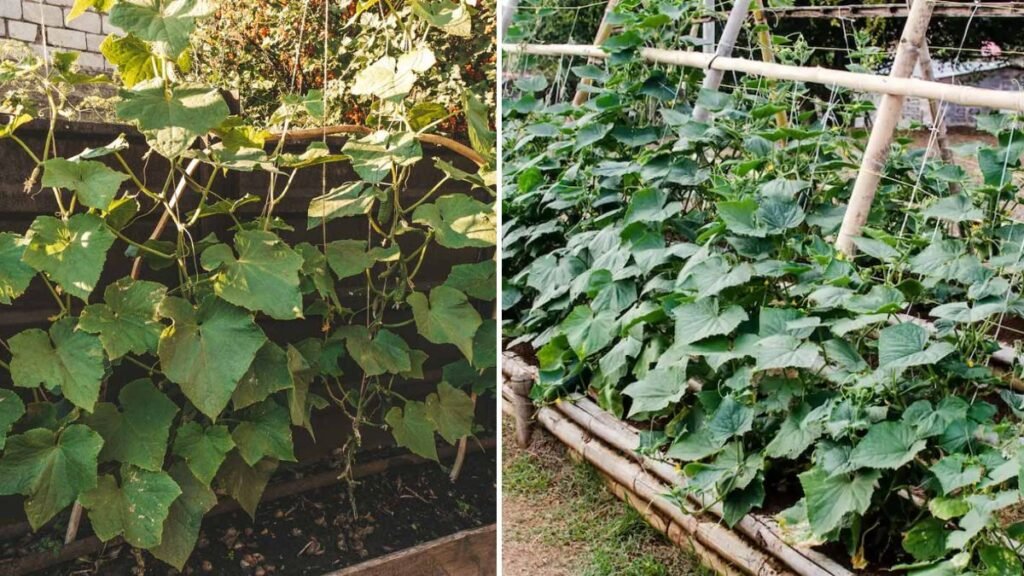
Consistent watering is essential for climbing cucumbers. Drip irrigation reduces leaf wetting. Morning watering is ideal. Avoid water stress during flowering. Mulching conserves moisture. Even hydration supports rapid growth. Overwatering can cause root rot. Proper care promotes fruit development.
Fertilizing Cucumbers
Use balanced organic fertilizer. Feed during vegetative and flowering stages. Compost tea improves nutrient uptake. Avoid excessive nitrogen to prevent excessive leaf growth. Regular feeding enhances fruit size. Fertilize early morning or late evening. Healthy nutrition prevents disease. Balanced feeding increases yield.
Pest and Disease Management
Monitor cucumbers for aphids, powdery mildew, and beetles. Inspect leaves regularly. Remove affected areas. Use organic solutions where necessary. Ensure good airflow through proper spacing. Early detection prevents crop loss. Healthy plants resist pests better. Preventive care improves harvest.
Harvesting Cucumbers
Harvest regularly for continuous production. Pick fruits when they reach optimal size. Use sharp scissors to avoid damaging vines. Frequent harvesting encourages more flowering. Handle carefully to prevent bruising. Store in cool, dry places. Timely harvesting ensures quality. Mature cucumbers taste best.
Maintenance of Structures
Inspect supports periodically. Tighten loose wires or ties. Repair damaged posts. Remove debris that may damage plants. Seasonal maintenance prolongs life. Proper care prevents collapse. Structures last multiple seasons. Well-maintained trellises improve yield.
Cucumber Structure Care Table
| Aspect | Best Practice | Benefit |
|---|---|---|
| Structure | Sturdy trellis | Supports growth |
| Watering | Consistent | Healthy fruit |
| Fertilizer | Balanced organic | Larger yield |
| Training | Regular vine guidance | Prevents tangling |
Common Mistakes to Avoid
Weak structures collapse easily. Overcrowding reduces air circulation. Overwatering leads to root disease. Neglecting pest monitoring reduces yield. Incorrect planting limits growth. Ignoring vine training causes tangling. Skipping maintenance shortens structure lifespan. Avoiding mistakes ensures productive growth.
Conclusion
Building a structure for cucumbers significantly improves yield and fruit quality. Vertical growth saves space and reduces disease. Proper materials, design, and maintenance ensure longevity. Well-supported vines are easier to manage. Training, watering, and fertilizing optimize harvest. Careful monitoring prevents pest and disease issues. Structured cucumber gardening is efficient and rewarding. Vertical gardening maximizes space in any home garden.