
Cucumber plants are vigorous climbers that require support for optimal growth. Without proper structure, vines sprawl on the ground, leading to damaged fruits and increased pest problems. Vertical support improves air circulation, reduces fungal diseases, and makes harvesting easier. Structures help cucumbers grow upright, saving space in small gardens. A strong structure supports heavy fruits and ensures even sunlight exposure. It also reduces the risk of fruit rot caused by soil contact. Building the right framework can increase yield significantly. With careful planning, anyone can design an efficient cucumber trellis. This article explains step-by-step how to create the best structure for cucumber cultivation. It combines practicality with sustainable gardening principles.
1. Understanding Cucumber Growth Habits
Cucumber plants are climbers that naturally seek vertical support. They have tendrils that wrap around trellises, fences, or strings. Knowing growth habits helps in designing the right structure. Vines can extend several feet in one season. Fruits develop along the main stem, requiring adequate support. Without a proper framework, plants lie on the ground. Soil contact increases disease risk and pest damage. Understanding growth patterns ensures healthier plants. Proper planning at planting stage improves long-term success. Observing natural behavior guides structural decisions.
2. Benefits of Using Structures for Cucumbers
Using a support structure provides multiple benefits. It prevents fruits from touching soil, reducing rot. Air circulation improves, minimizing fungal infections. Trellises save garden space. Harvesting becomes easier and faster. Vertical growth allows better sunlight exposure. Plants use nutrients more efficiently. Structures can be reused season after season. Fruit shape remains uniform and attractive. Healthy vines produce higher yields. Overall, support structures optimize plant performance.
3. Choosing the Right Location
Select a sunny location with at least six to eight hours of sunlight daily. Ensure the area has good soil drainage. Avoid low spots prone to waterlogging. Wind protection prevents damage to tall trellises. Space should allow easy access for maintenance. Consider proximity to water source. Choose a level surface for stability. Avoid planting near tall trees that cast shadows. Correct location ensures strong growth and high yield.
4. Materials Needed for a Cucumber Structure
Common materials include bamboo poles, wooden stakes, metal rods, and strong strings. Twine or garden netting helps guide vines. Nails, screws, and zip ties secure components. Tools required include a hammer, saw, and measuring tape. Choose materials resistant to weather. Recycled materials work well for eco-friendly gardening. Lightweight materials ease handling. Strong supports prevent collapse under fruit weight. Quality materials ensure longevity.
5. Types of Structures for Cucumbers
Several structural designs are effective. A-frame trellis is sturdy and space-saving. Vertical poles with strings work well for single rows. Netting stretched between posts supports multiple vines. Teepee-style structures are visually appealing. Horizontal trellises suit espalier planting. Each type suits different garden layouts. Choose based on available space. The right design simplifies maintenance. Variety allows creative solutions.
6. Building an A-Frame Trellis
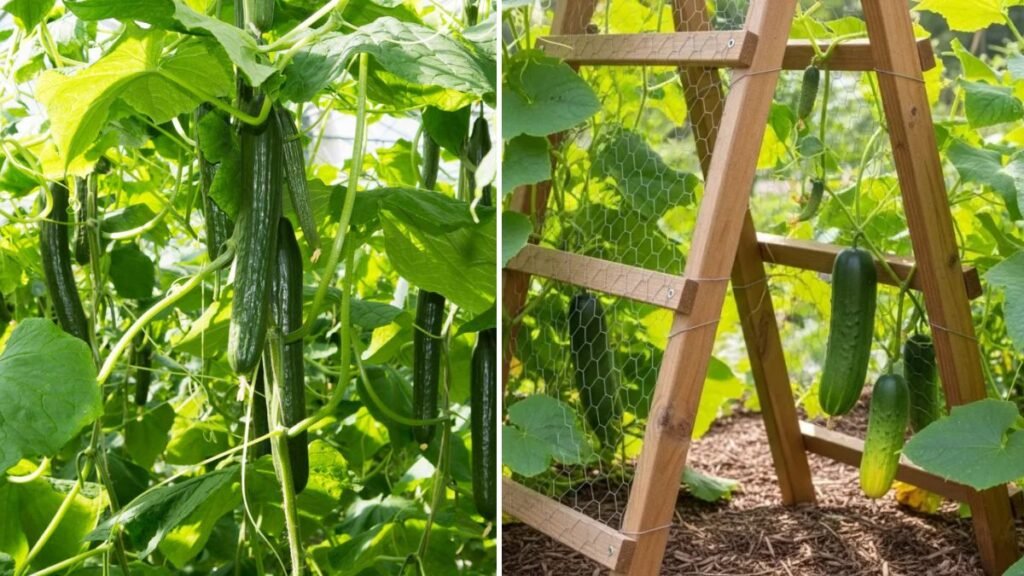
A-frame trellis uses two sets of poles forming a triangle. Connect the top with a crossbar. Tie netting or strings diagonally. Space each frame two to three feet apart. Ensure firm anchoring in the soil. A-frame supports heavy cucumber vines. It maximizes vertical space. Easier to harvest from both sides. Durable design lasts multiple seasons. Simple yet effective method.
7. Using Vertical Pole and String Method
Insert sturdy poles along cucumber rows. Tie strong strings from top to soil base. Train vines to climb the strings. Adjust strings as vines grow. Works well for home gardens. Cost-effective and easy to implement. Requires minimal materials. Effective for high-density planting. Supports multiple plants per row. Encourages straight growth and healthy fruits.
8. Using Garden Netting for Support
Stretch garden netting between two strong posts. Guide cucumber vines through net squares. Netting provides flexible support. Reduces labor compared to individual strings. Supports heavy fruits evenly. Easily removable after season. Safe for plants and fruits. Effective for both backyard and small-scale commercial gardening. Ensures vertical growth and good yield.
9. Soil Preparation Before Installing Structures
Prepare soil before placing supports. Loosen soil to allow easy anchoring. Add compost to enrich nutrients. Ensure level ground for stability. Mark planting spots for poles. Adequate soil preparation prevents structural collapse. Healthy soil supports vigorous vine growth. Proper preparation improves root establishment. Adds long-term benefit to garden productivity.
10. Planting Cucumbers Along Structures
Plant seedlings close to support bases. Space plants two feet apart. Train vines gently towards structures. Secure vines loosely if needed. Avoid damaging roots during planting. Early guidance ensures upright growth. Healthy planting encourages thick vines. Correct spacing prevents overcrowding. Supports optimal fruit production.
11. Training Vines on Trellises
Tie young vines loosely with twine. Guide tendrils to wrap around support. Adjust ties regularly. Avoid constricting stems. Maintain vertical growth. Remove lateral shoots if necessary. Consistent training ensures strong structure adherence. Healthy vines produce more fruits. Observing growth patterns improves efficiency.
12. Watering and Fertilizing Near Structures
Irrigate directly at root zone. Avoid wetting leaves excessively. Apply liquid fertilizers monthly. Compost or organic amendments improve growth. Consistent moisture supports vertical development. Balanced feeding strengthens vines. Water stress reduces fruit size. Healthy hydration improves taste. Fertilization promotes heavier yield.
13. Pest and Disease Management
Structures reduce soil-borne diseases. Inspect vines regularly. Neem oil or organic pesticides control pests. Remove damaged leaves promptly. Maintain airflow to prevent fungal growth. Support structure facilitates monitoring. Early intervention prevents crop loss. Healthy vines resist insects. Reduce chemical use for eco-friendly gardening.
14. Harvesting Cucumbers from Structures
Harvest regularly to encourage continuous growth. Pick fruits when they reach desired size. Avoid letting cucumbers overgrow. Structures make harvesting easier. Fruits are cleaner without soil contact. Regular picking improves yield. Gentle handling prevents damage. Supports uniform fruit development. Enhances quality and presentation.
15. Maintenance of Structures
Check stability periodically. Tighten loose ties or netting. Replace damaged poles. Maintain soil around posts. Ensure durability for multiple seasons. Proper care prevents collapse. Saves reinstallation effort. Strong structures support future crops. Easy maintenance ensures consistency.
16. Seasonal Adjustments for Structures
Remove or store structures during off-season. Repair before next planting. Adjust height or spacing as needed. Seasonal care prolongs lifespan. Consider weather impact on material. Proper preparation ensures readiness. Protect from extreme wind or rain. Maintain structural integrity. Adapting to seasons ensures success.
17. Cost-Effective Solutions
Recycled bamboo and wood reduce expenses. DIY approaches save money. Minimal materials can create durable frameworks. Efficient designs maximize return on investment. Planning avoids unnecessary costs. Budget-friendly solutions suit small-scale gardeners. Reusable structures lower annual expenditure. Simple yet functional structures provide excellent value.
18. Space-Saving Vertical Growth
Structures allow cucumbers to grow upward. Ideal for small gardens or balcony planting. Reduces ground coverage. Multiple rows can be managed efficiently. Vertical growth improves air circulation. Optimizes light exposure. Easy access for harvesting. Space-saving design increases productivity. Perfect for urban gardening.
19. Combining with Companion Planting
Planting flowers or legumes near cucumbers supports growth. Enhances pollination. Reduces pest pressure. Structures allow mixed planting without crowding. Companion planting improves garden biodiversity. Vertical cucumber vines coexist with shorter plants. Maximizes garden efficiency. Enhances aesthetic appeal. Supports sustainable gardening.
20. Final Thoughts on Cucumber Structures
Building a proper structure is crucial for healthy cucumbers. Vertical supports save space, reduce disease, and improve yield. Durable materials and proper maintenance increase longevity. Training vines early ensures successful growth. Combined with good soil and care, structures maximize productivity. Even small gardens can benefit significantly. Using eco-friendly materials enhances sustainability. Cucumber cultivation becomes easier and more rewarding. Start building a structure today for a successful harvest.
Table: Comparison of Cucumber Structures
| Structure Type | Cost | Ease of Use | Best For | Durability |
|---|---|---|---|---|
| A-Frame | Medium | Easy | Backyard gardens | High |
| Vertical Poles & Strings | Low | Moderate | Small gardens | Medium |
| Netting Trellis | Medium | Easy | Medium gardens | Medium |
| Teepee | Medium | Moderate | Decorative & small plots | High |