
Plastic waste is one of the biggest environmental challenges today. Instead of throwing bottles away, I turned them into productive garden containers. Plastic bottle gardening is affordable and beginner friendly. It allows anyone to grow vegetables without land. This method is perfect for balconies, rooftops, and small yards. Plants grow surprisingly well in recycled bottles. With correct preparation, bottles last multiple seasons. Vertical bottle gardens save space efficiently. This approach combines sustainability and food security. Anyone can replicate this method easily at home.
1. Why Plastic Bottle Gardening Works So Well
Plastic bottles retain moisture longer than open soil. They are lightweight and easy to hang or arrange vertically. Bottles reduce weed growth significantly. Soil remains protected from erosion. Drainage holes can be customized easily. Bottles allow controlled watering and feeding. Plants experience fewer soil-borne diseases. Root systems grow efficiently in confined spaces. Bottles are easily movable in harsh weather. This makes plastic bottle gardening reliable and flexible.
2. Choosing the Right Bottles
Two-liter and five-liter bottles work best. Transparent bottles help monitor root health. Thick plastic bottles last longer outdoors. Avoid bottles that held chemicals. Clean bottles thoroughly before use. Cut openings based on plant size. Make drainage holes at the base. Smooth sharp edges for safety. Bottle choice affects root development. Strong containers ensure plant stability.
3. Vertical vs Horizontal Bottle Setup
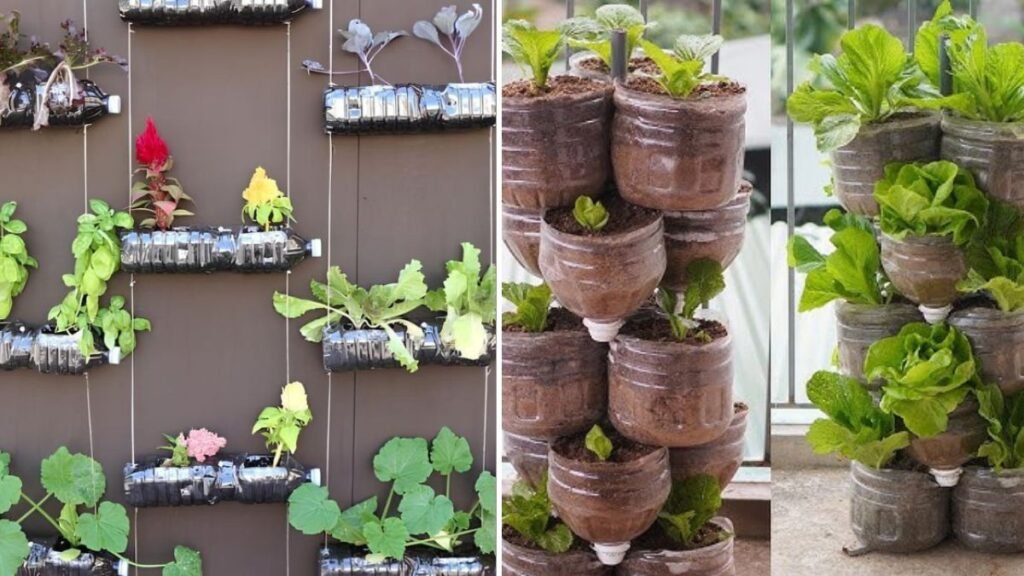
Vertical systems save maximum space. Horizontal bottles work better for leafy greens. Wall-mounted bottles improve sunlight exposure. Hanging bottles prevent pest attacks. Horizontal placement supports root spread. Vertical systems require strong support. Choose layout based on available space. Both setups are highly productive. Arrangement impacts airflow and sunlight. Proper planning increases overall yield.
4. Soil Preparation for Bottle Gardening
Use loose, well-draining soil. Mix compost, coco peat, and garden soil. Avoid heavy clay soils. Organic matter improves moisture retention. Soil fertility is crucial in small containers. Fresh soil prevents disease buildup. Balanced soil promotes strong roots. Avoid reusing old soil repeatedly. Nutrient-rich soil supports continuous harvest. Healthy soil equals healthy plants.
5. Best Crops for Plastic Bottles
Leafy greens grow exceptionally well. Tomatoes and peppers thrive vertically. Herbs require minimal root space. Strawberries adapt well to hanging bottles. Cucumbers grow well with support. Spinach and lettuce mature quickly. Root vegetables need deeper bottles. Choose compact varieties for success. Crop selection determines productivity. Matching plants to bottle size is essential.
6. Planting Seeds and Seedlings
Seeds should be planted shallowly. Transplant seedlings gently. Avoid overcrowding bottles. Firm soil lightly after planting. Water immediately after planting. Shade seedlings for initial days. Proper spacing ensures airflow. Healthy starts lead to vigorous growth. Avoid disturbing roots frequently. Careful planting improves survival rates.
7. Sunlight Requirements
Most vegetables need six to eight hours of sunlight. Morning sunlight is ideal. Rotate bottles weekly for even exposure. Avoid intense afternoon heat in summer. Observe shadow patterns carefully. Insufficient light reduces yields. South-facing walls work best. Balanced sunlight improves flavor. Light management is critical. Proper placement boosts productivity.
8. Watering Plastic Bottle Plants
Bottle plants dry faster than ground soil. Water when topsoil feels dry. Avoid waterlogging roots. Drip watering works efficiently. Morning watering reduces evaporation. Mulching helps retain moisture. Consistent watering prevents stress. Overwatering causes root rot. Balanced hydration supports growth. Water discipline ensures healthy plants.
9. Fertilizing in Small Containers
Plants need regular feeding. Use liquid organic fertilizers. Compost tea works very well. Feed every ten to fourteen days. Avoid excessive nitrogen early. Potassium boosts flowering and fruiting. Observe plant response carefully. Adjust feeding as needed. Balanced nutrients increase yield. Proper feeding prevents deficiencies.
10. Supporting Plants Vertically
Tall plants need support. Use bamboo sticks or wires. Tie plants gently. Prevent stem breakage. Vertical growth improves airflow. Fruits remain clean and straight. Support reduces disease risk. Install supports early. Strong structures ensure stability. Proper support improves harvest quality.
11. Pest Management in Bottle Gardens
Bottle gardens face fewer pests. Aphids and mites may appear. Inspect leaves weekly. Use neem oil spray. Remove affected leaves quickly. Keep surroundings clean. Healthy plants resist pests naturally. Avoid chemical pesticides. Early action prevents damage. Natural control is safest.
12. Disease Prevention Tips
Ensure good airflow. Avoid wetting leaves at night. Use clean soil and tools. Remove diseased plants promptly. Avoid overcrowding bottles. Sunlight reduces fungal growth. Prevention saves time and effort. Regular monitoring is important. Healthy practices reduce disease spread. Clean gardens last longer.
13. Flowering and Fruiting Stage
Plants need stable care during flowering. Avoid stress during bloom. Maintain consistent watering. Increase potassium slightly. Support heavy fruits. Pollination improves fruit shape. Healthy flowers lead to better yield. Monitor daily during this stage. Proper care ensures success. Flowering determines harvest size.
14. Harvesting Vegetables Properly
Harvest at peak maturity. Use clean tools. Avoid pulling plants roughly. Frequent harvesting boosts production. Morning harvest preserves freshness. Gentle handling prevents damage. Remove overripe produce promptly. Harvest timing affects taste. Regular harvesting encourages new growth. Proper technique maximizes yield.
15. Year-Round Bottle Gardening
Bottle gardens adapt to seasons easily. Move bottles during extreme weather. Use shade nets in summer. Protect plants in winter. Indoor windows support winter crops. Adjust watering seasonally. Choose seasonal vegetables wisely. Continuous harvest is possible. Planning improves year-round yield. Flexibility is a major advantage.
16. Common Mistakes to Avoid
Using small bottles for large plants. Overwatering containers. Ignoring sunlight needs. Skipping fertilization. Crowding plants. Poor drainage setup. Neglecting pest checks. Learning from mistakes improves success. Small corrections make big differences. Awareness prevents failure.
17. Cost and Space Benefits
Plastic bottles are free. Minimal soil required. Vertical systems save space. Reduced water usage. Low setup cost. High yield per square foot. Ideal for apartments. Budget-friendly gardening solution. Food savings increase quickly. Efficient and economical.
18. Environmental Impact
Recycling plastic reduces pollution. Homegrown food lowers carbon footprint. Reduced packaging waste. Sustainable urban farming. Encourages eco-friendly habits. Improves air quality. Promotes green living. Small actions create big impact. Bottle gardening supports sustainability. Environment benefits greatly.
19. Why Bottle-Grown Vegetables Taste Better
Fresh harvesting improves flavor. Controlled nutrition enhances taste. No chemical residues. Stress-free growth improves texture. Cleaner fruits and leaves. Immediate consumption preserves nutrients. Homegrown food tastes superior. Flavor difference is noticeable. Quality exceeds store produce. Taste rewards the effort.
20. Conclusion: Turn Waste Into Food
Plastic bottle gardening transforms waste into nourishment. Anyone can start with simple materials. Small spaces become productive farms. Consistent care ensures high yield. Sustainability meets self-reliance. Beginners can succeed easily. Expand gradually as confidence grows. Bottle gardens inspire creativity. Fresh food becomes accessible. Start today and grow smart.
Table: Plastic Bottle Gardening Summary
| Aspect | Recommendation | Benefit |
|---|---|---|
| Bottle Size | 2–5 liter | Root space |
| Soil | Compost mix | Nutrients |
| Sunlight | 6–8 hours | High yield |
| Water | Moderate | Healthy roots |
| Support | Vertical | Space saving |