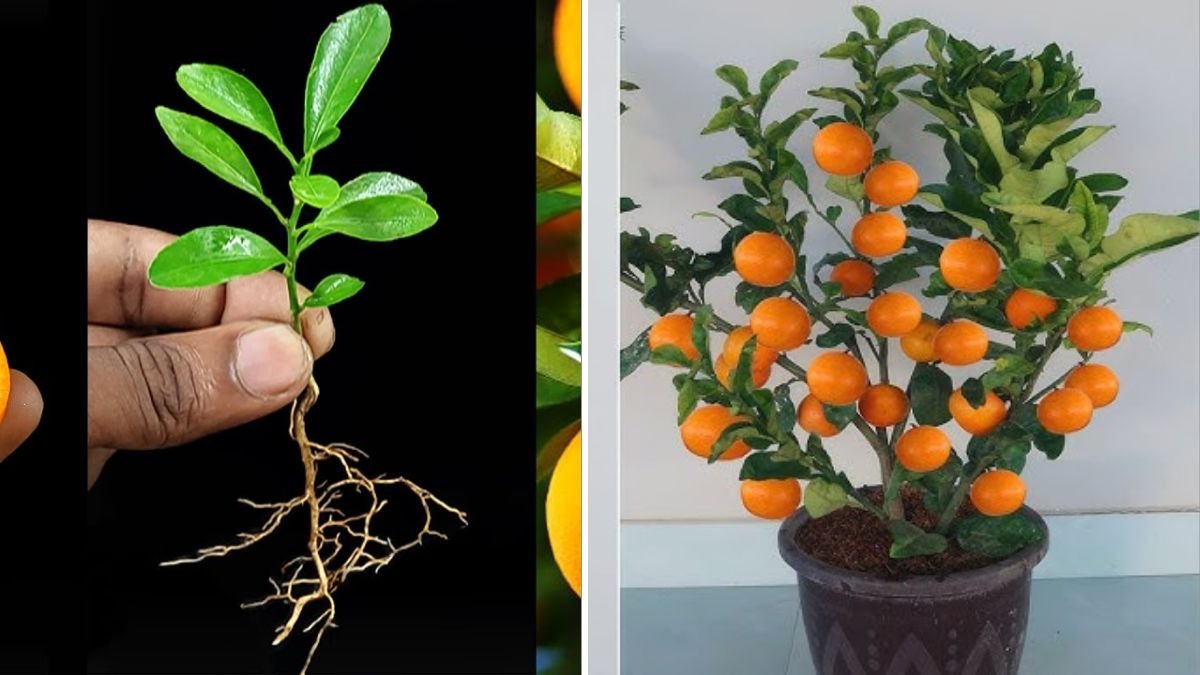
Orange trees are beautiful, fragrant, and incredibly rewarding to grow. Whether you love their sweet-smelling blossoms or their juicy fruits, having an orange tree at home is a true joy. While growing oranges from seeds can take years and may not produce true-to-type fruit, propagating an orange tree from cuttings is faster, easier, and much more reliable.
In this complete 1200-word guide, you will learn how to successfully propagate orange trees from cuttings—even if you’re a beginner. This simple method will help you grow healthy, fruit-bearing orange plants using nothing but a branch from a mature tree.
Let’s dive into the easiest and most effective way to grow an orange tree from cuttings!
Why Propagate Orange Trees from Cuttings?
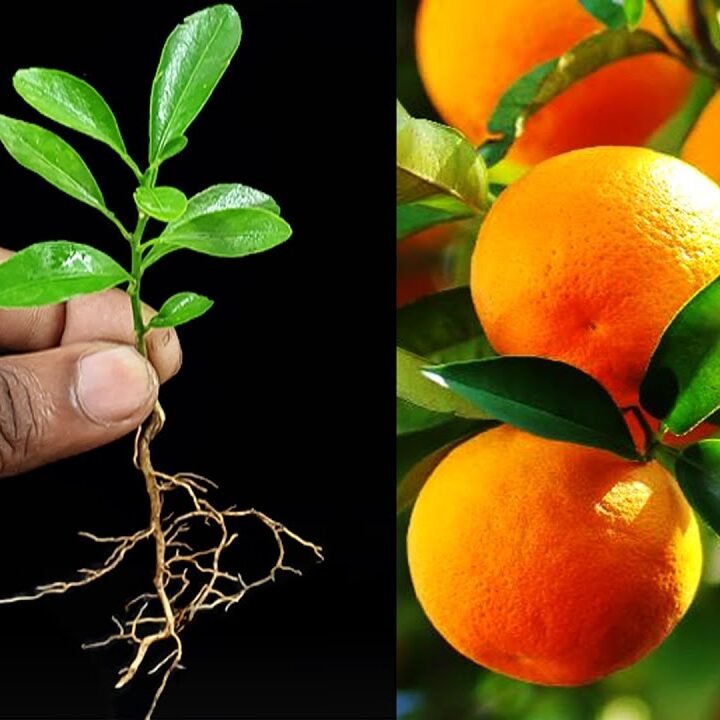
Propagating orange trees from cuttings has several advantages over growing from seeds:
Fast Growth
Cuttings root quickly and grow faster into fruit-producing trees.
Identical Fruit Quality
The new plant will have the same taste, size, and sweetness as the parent tree.
Higher Success Rate
With proper method, you can achieve 80–100% success.
Saves Money
One tree can give you dozens of new plants.
Beginner-Friendly Method
Even first-time gardeners can succeed.
Best Time to Propagate Orange Tree Cuttings
To maximize rooting success, choose the right season:
Spring (February–April)
Early Summer (May–June)
Monsoon (July–August)
During these months, the plant is actively growing and root formation is much faster.
Avoid winter—cuttings root very slowly in cold temperatures.
Step 1: Selecting the Perfect Orange Cutting
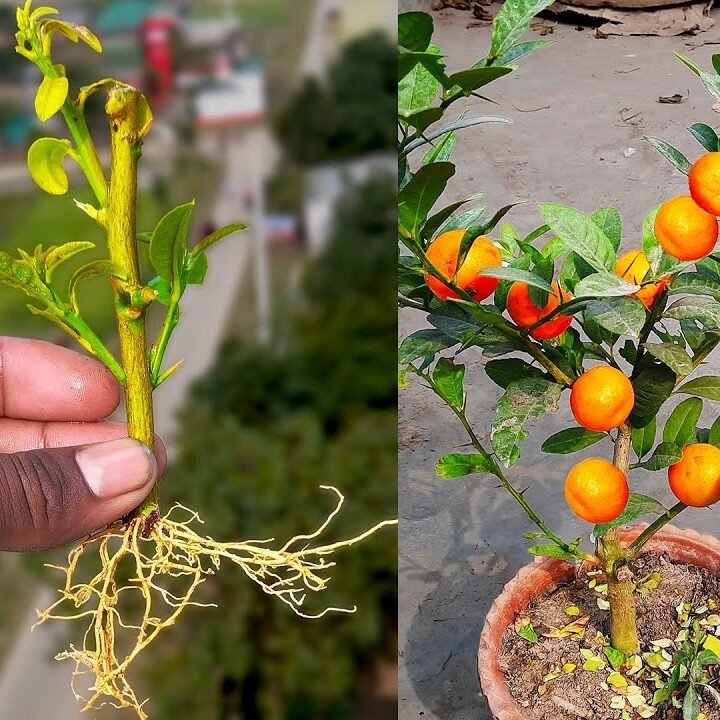
Choosing a healthy, strong cutting is the foundation of successful propagation.
Choose Semi-Hardwood Branches
These are partially mature, firm stems—not too soft, not too woody.
Length: 6–8 inches
Enough size for multiple nodes and good root formation.
Thickness: Pencil-thick
Thicker stems root slowly; thin stems dry quickly.
Contains 3–4 Nodes
Root growth happens mainly at nodes.
Disease-Free & Healthy
No spots, fungus, or insect damage.
Avoid Flowering Stems
Flowers drain energy and slow rooting.
Once you have chosen the right cutting, it’s time to prepare it.
Step 2: Preparing the Cutting for Rooting
Proper preparation is crucial for rooting success.
Remove Lower Leaves
Strip off all leaves from the bottom 2–3 nodes.
Trim Upper Leaves
Cut the top leaves to half their size to reduce evaporation.
Make a Slanted Cut
A diagonal cut increases rooting surface area.
Remove Thorns (if present)
This helps prevent rot.
Apply Rooting Hormone (Highly Recommended)
Dip the cut end into:
- Aloe vera gel
- Honey
- Cinnamon powder
- Turmeric
- Commercial rooting hormone
This boosts root growth and prevents fungal infections.
Step 3: Prepare the Perfect Soil Mix
Orange cuttings need a light, aerated, and well-draining soil.
Best Soil Mix:
- 40% Perlite or Coarse Sand
- 30% Cocopeat
- 30% Garden Soil or Compost
Why this works:
Prevents waterlogging
Keeps soil light and airy
Encourages fast rooting
Prevents fungus and stem rot
Avoid heavy clay soil—it suffocates the roots.
Step 4: Planting the Orange Cutting
Once your soil and cutting are ready, follow these simple steps:
- Fill a small pot (4–6 inch) with the soil mix.
- Make a hole with a stick or finger.
- Insert the cutting 2–3 inches deep, ensuring 2 nodes are buried.
- Firm the soil around the cutting.
- Water gently until the soil is moist—not soaked.
Your cutting is now ready for the rooting environment.
Step 5: Create the Ideal Environment for Rooting
Orange cuttings root best under warm, humid, protected conditions.
Light
Place the pot in bright, indirect sunlight.
Avoid direct sunlight—it dries the cutting quickly.
Watering
- Keep the soil lightly moist.
- Do NOT overwater.
- Water only when the top layer feels dry.
Temperature
Ideal rooting temperature ranges from 22°C–30°C.
Humidity Dome (Optional but Helpful)
Cover the pot with:
- A plastic bottle (cut into two)
- A plastic bag
- A transparent jar
This traps humidity and prevents the cutting from drying out.
Leave a small opening for airflow to prevent fungus.
How Long Do Orange Cuttings Take to Root?
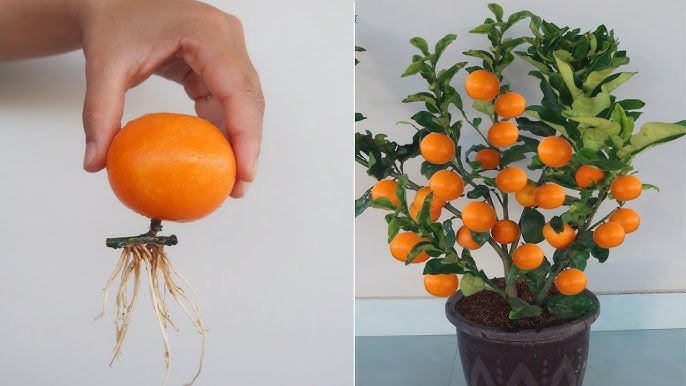
Rooting time may vary with temperature and branch quality:
Root initiation: 3–4 weeks
Strong rooting: 6–8 weeks
Signs of success:
- New leaf growth
- Cutting becomes firm
- No yellowing or drooping
- Resistance felt when gently pulled
Congratulations—your orange cutting has rooted!
Step 6: Transplanting the Rooted Cutting
Once your cutting has strong, healthy roots, transplant it into a larger pot.
Use a Nutrient-Rich Soil Mix:
- 50% Garden Soil
- 30% Compost or Cow Dung
- 20% Sand or Cocopeat
Steps:
- Loosen the soil and gently remove the cutting.
- Avoid disturbing the roots.
- Replant in a bigger pot (8–10 inch).
- Water lightly.
- Keep in shade for 5–7 days.
After this, gradually shift to full sunlight.
Caring for Your Growing Orange Plant
Once established, the orange plant grows rapidly with proper care.
1. Sunlight (Most Important)
Orange plants love sunlight.
They require 6–7 hours of direct sunlight daily.
More sun = better growth + more fruits.
2. Watering
- Water the plant only when soil becomes dry.
- Do NOT keep soil constantly wet—citrus roots rot easily.
Deep watering once or twice a week is ideal.
3. Fertilizing
Feed your orange plant every 25–30 days with:
- Compost
- Banana peel fertilizer
- Epsom salt (magnesium boost)
- Citrus fertilizer
- Cow dung manure
Avoid heavy nitrogen fertilizers—they promote leaf growth instead of fruits.
4. Pruning
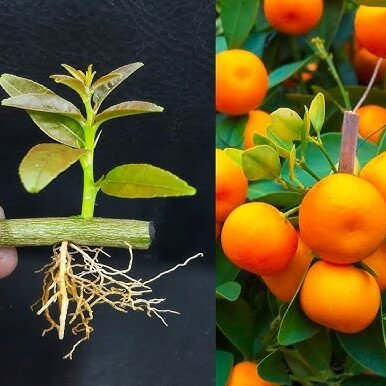
Prune your orange plant to:
- Remove weak branches
- Encourage bushy growth
- Increase fruiting branches
Best time to prune: Early spring.
5. Pest Control
Watch for common pests:
- Aphids
- Mealybugs
- Leaf miners
Use neem oil spray weekly to keep the plant healthy.
Common Problems & Solutions
Cutting turns yellow
Cause: Overwatering
Reduce water, improve drainage.
Leaves dry up
Cause: Too much sun
Move to indirect light.
Fungus in soil
Cause: Poor airflow
Open humidity dome daily for ventilation.
No rooting
Cause: Stem too woody
Use semi-hardwood cuttings next time.
When Will Your Orange Tree Start Fruiting?
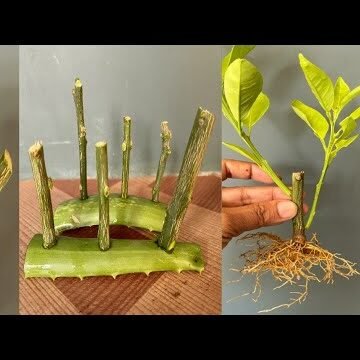
With proper sunlight, watering, and fertilizing:
Your propagated orange tree may bear fruits in 2–3 years.
This is much faster than growing from seeds, which can take 5–10 years!
Final Thoughts: Grow Your Own Orange Tree Easily!
Propagating orange trees from cuttings is a simple, rewarding, and highly effective method. With a healthy branch, good soil, and the right care, you can grow your own orange tree at home—saving money and enjoying fresh, homegrown citrus.