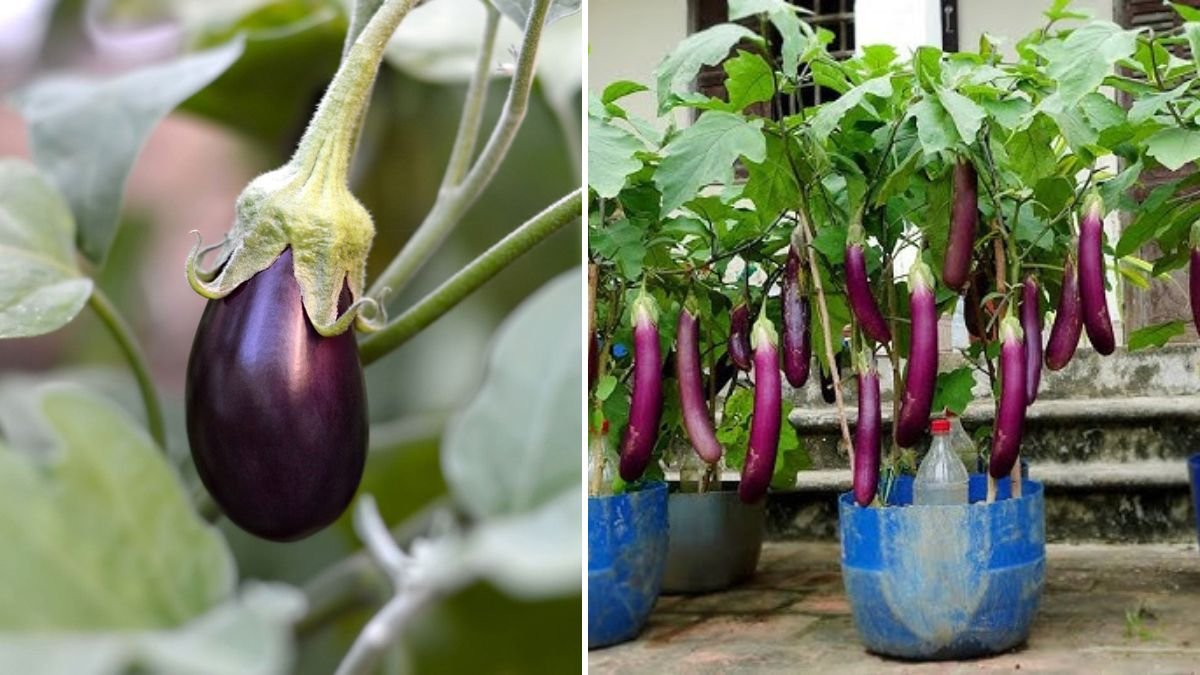
Eggplants are among the easiest—and most rewarding—vegetables you can grow at home. They thrive in warm weather, love sunshine, and produce continuously when cared for properly. But in the last few years, home gardeners around the world have discovered a simple technique that delivers bigger plants, healthier leaves, and a surprisingly higher yield of eggplants:
Growing eggplants directly in bags of soil.
This method has quickly become a favorite in modern home gardening because it is space-efficient, budget-friendly, and dramatically increases fruit production compared to traditional pots or ground planting.
In this detailed guide, you’ll learn why eggplants grown in soil bags produce so many fruits, how to set up your container garden, and the step-by-step care that transforms small saplings into fruit-producing machines!
Why Soil Bags Work Better Than Regular Pots or Ground Planting
Growing in soil bags isn’t just a trend—it’s backed by real gardening science. Let’s explore why eggplants respond particularly well to this method.
Better Root Expansion Means More Fruits
Eggplants develop a strong root system that spreads quickly.
Soil bags allow roots to expand naturally without hitting hard pot edges or becoming root-bound. This leads to:
- Stronger root structure
- Better nutrient absorption
- Faster plant growth
- More flowering and fruiting
Healthy roots = productive plants.
Excellent Drainage Prevents Root Rot
Eggplants hate waterlogged soil.
Soil bags provide natural drainage through their fabric or plastic sides, keeping the soil consistently moist but never soggy.
Good drainage ensures:
- Prevented root rot
- Healthy soil microbes
- More oxygen for roots
- Stronger fruit set
Plants grown in overly wet soil often produce fewer fruits—soil bags eliminate this problem.
Soil Bags Stay Warmer—Eggplants LOVE Heat
Eggplants are heat-loving plants. They grow their best when soil temperatures stay warm.
Soil bags absorb sunlight more efficiently than clay pots or ground soil, helping maintain ideal warmth for:
- Faster growth
- Continuous flowering
- Better fruit development
Warmer root zones = more flowers that successfully turn into fruits.
Easy to Control Soil Quality
When planting in the ground, soil conditions vary.
But with soil bags, you choose the perfect mix, giving your eggplants a nutrient-rich environment.
A high-quality soil mix ensures:
- Faster root penetration
- Better aeration
- Higher nutrient availability
- Stronger fruit formation
This controlled environment is one reason soil bag eggplants consistently outperform ground-planted ones.
No Competition from Weeds
Eggplants hate competing with weeds for nutrients.
In soil bags, weeds are greatly reduced, meaning:
- More nutrients for your eggplant
- Stronger plant growth
- Better yield
All the energy goes into producing fruits instead of fighting off invading weeds.
Stress-Free Growing Space
Plants produce more when they’re not stressed.
Soil bags reduce transplant shock and allow eggplants to grow comfortably in a stable environment.
When stress is minimized:
- Plants flower more
- Plants fruit more
- Growth remains steady
Less stress = more eggplants.
How to Plant Eggplants in Soil Bags for Maximum Yield
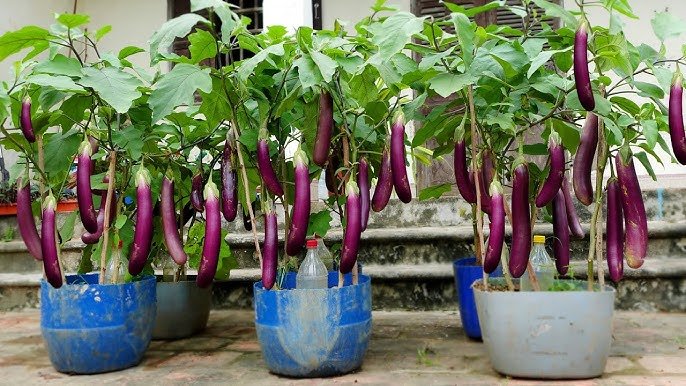
Now that you know why this method works, let’s go step by step.
Step 1: Choose the Right Bag Size
The ideal size for eggplants is:
- 20–30 liter soil bag
- Depth of 12–16 inches
Bigger bags = bigger root system = bigger harvest.
Step 2: Prepare the Best Soil Mix
Eggplants LOVE rich, loose soil.
Use this ideal mix:
- 40% garden soil
- 40% compost / cow manure / vermicompost
- 20% cocopeat or sand for aeration
Optional boosters:
- A handful of bone meal
- A handful of neem cake powder
- A handful of wood ash or organic potash
This creates a nutrient-packed environment that boosts flowering and fruit size.
Step 3: Plant the Seedling Deep
Plant your eggplant sapling 2–3 inches deeper than its original height.
This encourages extra root formation, resulting in:
- Stronger anchoring
- Thicker stems
- Better nutrient absorption
- More fruit branches
Step 4: Provide Full Sunlight
Eggplants need 6–8 hours of sunlight daily.
More sunlight increases:
- Flowering
- Fruit set
- Plant strength
- Leaf size
Place soil bags on rooftops, balconies, or sunny courtyards for the best results.
Care Tips That Guarantee An Abundant Eggplant Harvest
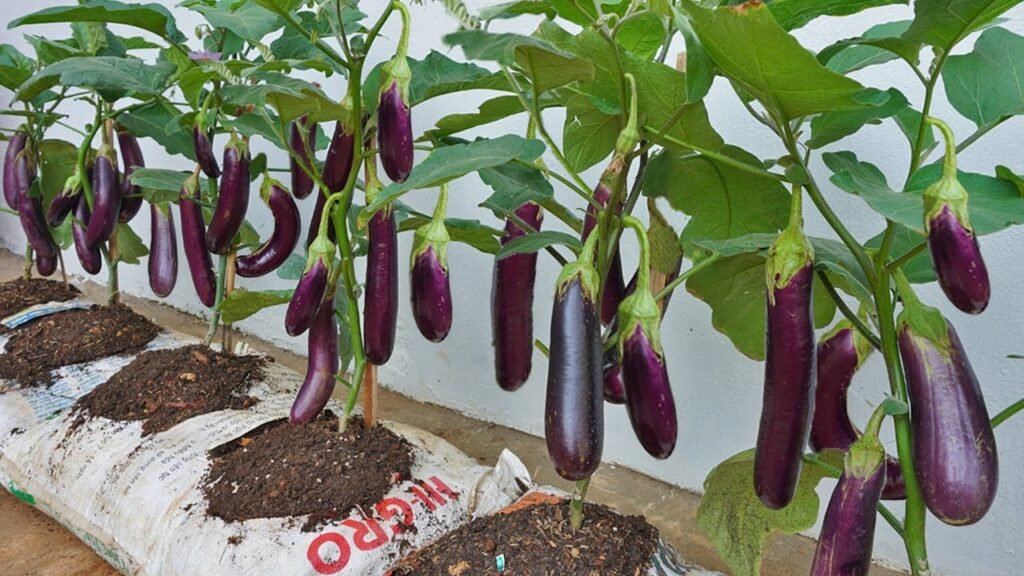
Growing eggplants is easy—but with the right techniques, your plant can become a fruiting machine.
Fertilize Regularly
Eggplants are heavy feeders.
Apply these every 15 days:
- 1 cup compost / vermicompost
- 1 tablespoon bone meal
- Banana peel fertilizer
- Diluted cow dung tea
- Epsom salt (once a month)
Balanced feeding ensures:
- More flowers
- Stronger fruits
- Faster plant growth
Water Deeply but Not Daily
Eggplants prefer deep, infrequent watering.
Follow this routine:
- Water every 2–3 days in summer
- Ensure soil stays moist but not soggy
Deep watering encourages deeper root growth and better nutrient uptake.
Pruning Increases Production
Cutting small branches makes the plant stronger.
Remove:
- Small suckers
- Weak lower branches
- Dry leaves
This channels all the plant’s energy into fruit-bearing branches.
Support the Plant with Stakes
Eggplants can get heavy when full of fruits.
Use sticks or bamboo to support the main stems.
This prevents:
- Branch breakage
- Fruit loss
- Soil disturbance
Pollination Tips for Bigger Harvests
Eggplants self-pollinate, but wind and bees help.
To boost fruiting:
- Tap the plant gently every morning
- Keep flowers dry
- Maintain good airflow around the plant
More pollination = more eggplants.
Why Eggplants in Soil Bags Produce MORE and BIGGER Fruits
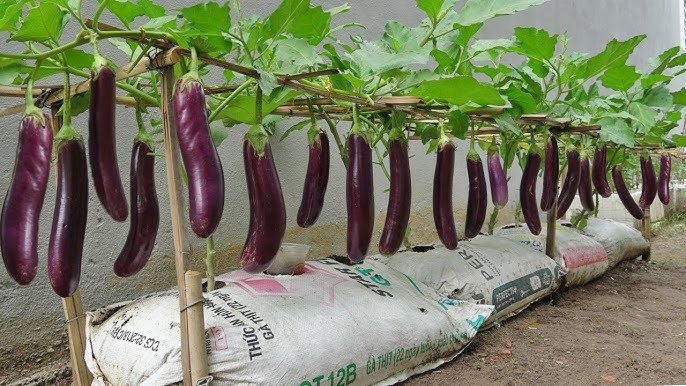
Let’s summarize the key reasons:
Better root development
Superior drainage
Optimal warmth
Controlled soil mix
Reduced competition from weeds
Less stress and better aeration
Faster nutrient cycling
Enhanced fruit setting
These combined conditions transform eggplants into highly productive plants capable of yielding more fruit than ground-grown ones.
Common Mistakes to Avoid
Avoid these to keep your plants thriving:
Overwatering
Using small bags
Lack of sunlight
Poor soil quality
Not pruning
Allowing pests (especially aphids & whiteflies)
Conclusion: Soil Bag Gardening is the Future of Home Eggplant Growing
Growing eggplants in soil bags is not just a gardening trick—it’s a proven method that improves plant health, accelerates growth, and maximizes fruit production. Whether you live in a small apartment or have a spacious yard, soil bag gardening enables you to grow bigger, healthier, and more productive eggplants with minimal effort.