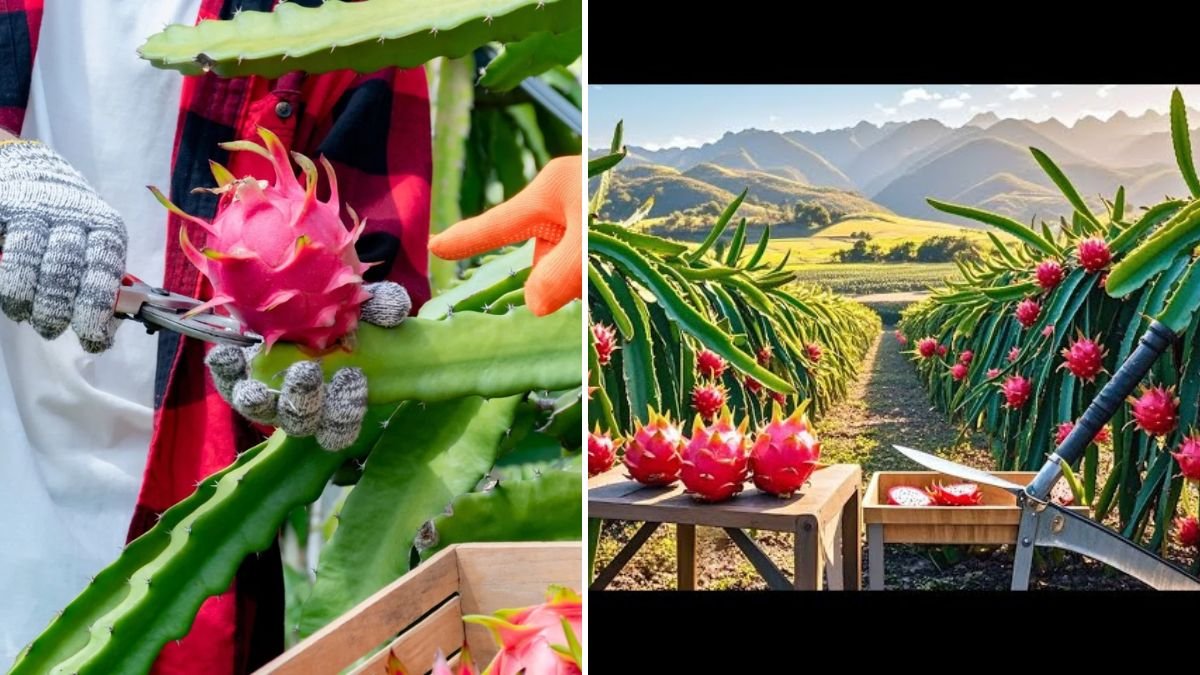
Growing dragon fruit (pitaya) in containers is one of the most rewarding gardening projects—perfect for small spaces, balconies, rooftops, and home gardens. With its exotic look, minimum maintenance needs, and the ability to produce kilos of sweet fruit, dragon fruit is an ideal plant for beginners and hobby gardeners.
In this complete 1200-word guide, you’ll learn exactly how to grow dragon fruit from stem cuttings in containers, how to care for it, how to support its climbing habit, and how to get a successful, sweet harvest even in limited space.
Let’s begin your dragon fruit journey!
Introduction: Why Grow Dragon Fruit in Containers?

Dragon fruit is a type of climbing cactus that loves warmth, sunlight, and well-draining soil. While many people think you need a big farm or trellis system to grow it, the truth is dragon fruit thrives beautifully in containers—as long as you give it proper support and care.
Benefits of growing dragon fruit in containers:
- Saves space – great for balconies and terraces
- Easy to move during extreme weather
- Fewer soil-borne diseases
- Controlled watering and fertilizing
- Faster root development from cuttings
Whether you’re a beginner gardener or someone experimenting with new plants, dragon fruit is an effortless beauty you’ll love to grow.
Step 1: Choosing the Perfect Stem Cutting
Growing dragon fruit from cuttings is much easier and faster than growing from seeds.
What makes a good cutting?
- 12–15 inches long
- From a healthy, mature plant
- Free from rot, scars, or disease
- At least three ridges (triangular sides)
Preparing the cutting
- Cut a healthy stem at a slanted angle.
- Allow the cut end to dry for 3–7 days until it forms a callus.
- This prevents the cutting from rotting.
- Keep it in a shaded, airy place.
Once your cutting has callused, it is ready for planting.
Step 2: Selecting the Right Container
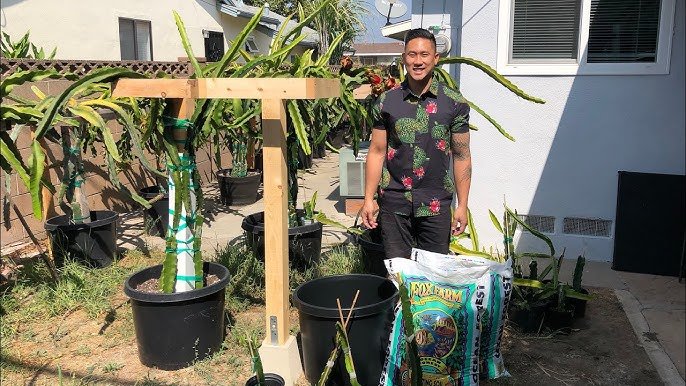
Dragon fruit grows big and tall, so the container must be strong and spacious.
Ideal container size:
- Minimum 15–20 liters for starters
- Best size: 40–60 liters for long-term growth
- Depth: At least 30–40 cm
Material options:
- Plastic grow pots (lightweight, easy to move)
- Cement pots (very stable)
- Barrels or drums cut in half
- Strong fabric grow bags (at least 40 lbs capacity)
Drainage is crucial
Dragon fruit hates sitting in water. Ensure the container has:
- multiple drainage holes
- raised bottom or pot feet
Step 3: The Best Soil Mix for Dragon Fruit
Dragon fruit loves light, airy, well-draining soil.
Perfect soil mix recipe:
- 40% sandy soil or coarse river sand
- 30% compost or cow dung manure
- 20% cocopeat
- 10% perlite, pumice, or small gravel
Why this works:
- Sand improves drainage
- Compost provides nutrients
- Cocopeat keeps moisture balanced
- Perlite enhances aeration
You can also sprinkle a handful of neem cake or crushed eggshells for extra health.
Step 4: Planting the Stem Cutting
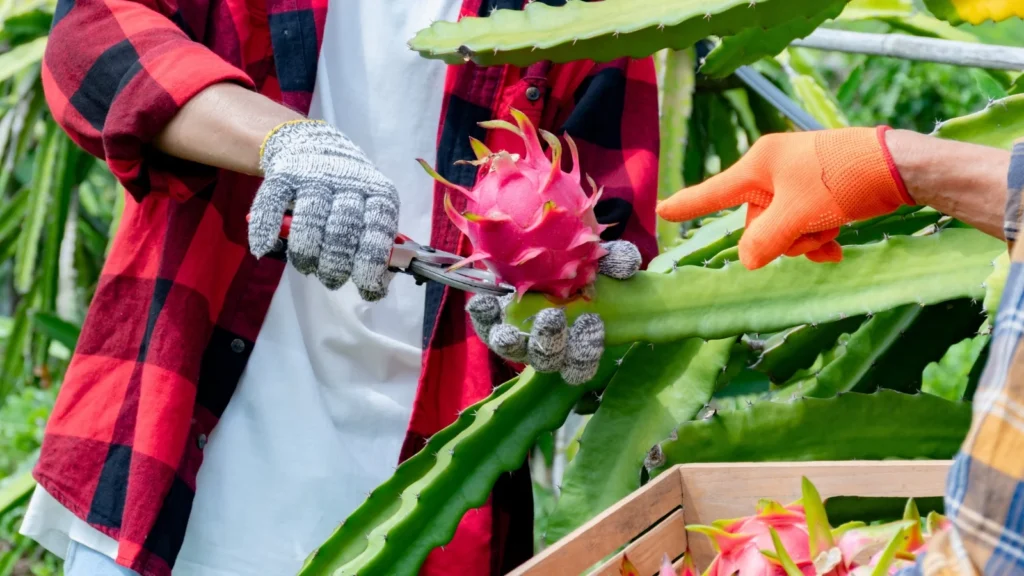
Now that your pot and soil are ready, it’s time to plant the cutting.
How to plant:
- Make a hole in the center of the soil about 3–4 inches deep.
- Insert the cutting callus-end down.
- Firm the soil gently around it.
- Water lightly—just enough to settle the soil.
Important tip:
Do not overwater newly planted cuttings. They root faster in slightly dry soil.
Step 5: Setting Up Strong Support
Dragon fruit plants are climbers. Without proper support, they will not grow upward or produce good fruit.
Best support structures:
- Wooden or concrete post (4–6 feet tall)
- PVC pipe with cross-bar
- Bamboo tripod
- Metal trellis
Diameter: 3–5 inches
Top support: a cross-shaped head or circular frame for branches to hang
Once the plant reaches the top of the pole, it will begin branching—this is when fruiting starts.
Step 6: Watering Schedule
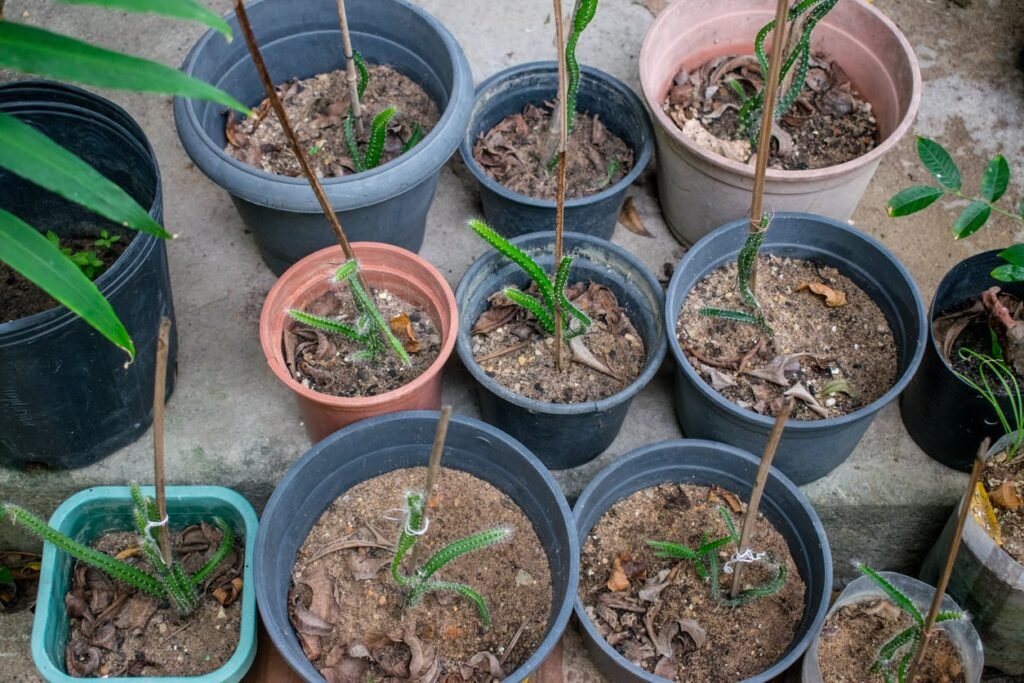
Dragon fruit is a cactus, but it still needs regular moisture.
Watering Rules:
- Water twice weekly in hot summers
- Water once every 7–10 days in winter
- Keep soil lightly moist, not soggy
Overwatering is the number one cause of root rot, so always check soil moisture before watering.
Step 7: Providing Sunlight
Dragon fruit requires full sun to grow well.
Sunlight needs:
- 6–8 hours of direct sunlight daily
- Partial shade during extreme heatwaves
If you’re growing on a balcony, place the container where it gets maximum sunlight.
Step 8: Fertilizing for Strong Growth and High Yields
Dragon fruit plants respond extremely well to balanced fertilization.
Best organic fertilizers:
- Vermicompost (monthly)
- Cow dung manure
- Banana peel fertilizer
- Seaweed extract
- Bone meal (for stronger roots)
- Epsom salt (once in 6 weeks)
Feeding schedule:
- Fertilize every 30–40 days during the growing season (March–October).
- Reduce feeding in winter when growth slows down.
Step 9: Flowering and Pollination
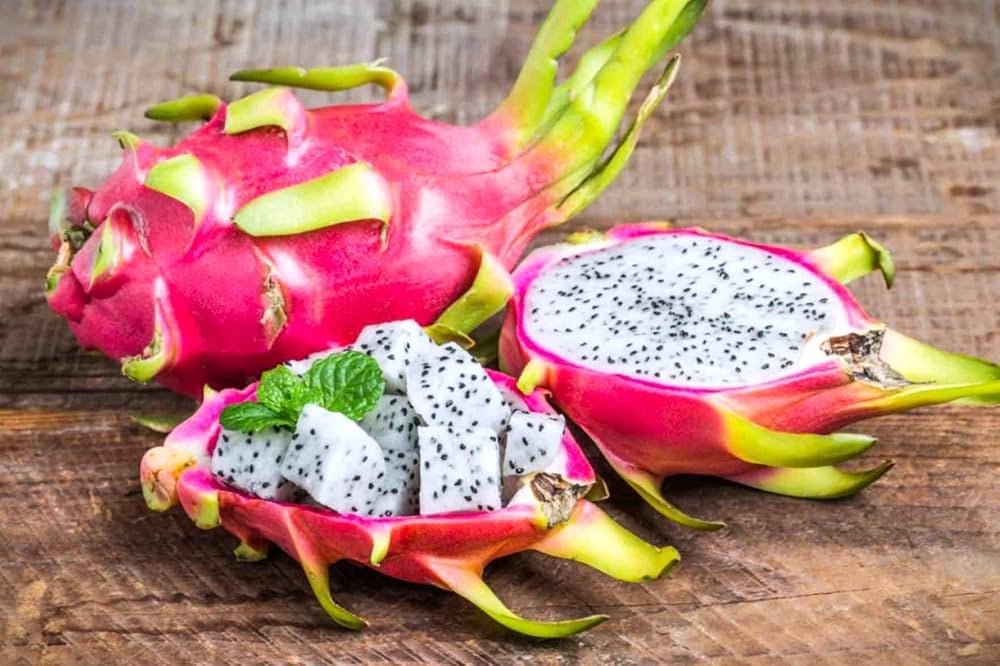
Your dragon fruit will begin producing its first flowers once the plant matures (usually 8–12 months from cuttings).
Flowering conditions:
- Long hours of sunlight
- Regular fertilization
- Healthy branching
Dragon fruit flowers bloom at night and last for only one night!
Is hand pollination needed?
- Self-pollinating varieties → no need
- Cross-pollinating varieties → hand pollination increases yield
Just use a soft brush to move pollen from the stamen to the stigma.
Step 10: Harvesting Sweet Dragon Fruits
After pollination, the fruit takes 25–40 days to ripen.
Signs of a ripe dragon fruit:
- Skin turns bright red or yellow
- Small “wings” on the fruit start to dry
- Fruit feels slightly soft when pressed
- Fruit easily twists off the stem
Harvest using clean garden scissors.
Additional Tips for Bigger Yields
Tip 1: Prune regularly
Remove old, weak, or overly long branches to encourage new growth.
Tip 2: Provide a thick mulch layer
Use dry leaves, wood chips, or coco husk to:
- retain moisture
- prevent weeds
- keep soil temperature stable
Tip 3: Protect from heavy rain
Use a temporary cover during monsoon to avoid waterlogging.
Tip 4: Train branches
Guide branches over the top support structure to promote flowering.
Final Thoughts
Growing dragon fruit in containers is surprisingly easy, fun, and rewarding. With the right stem cutting, proper soil mix, strong support, and regular care, you can enjoy organic dragon fruits right from your balcony or rooftop garden.
From planting the stem to enjoying your first juicy harvest, every step is exciting and fulfilling. Dragon fruit plants also add a unique tropical charm to your home garden.
If you follow this step-by-step guide, you’ll soon become a proud gardener harvesting your own colorful and delicious pitayas!