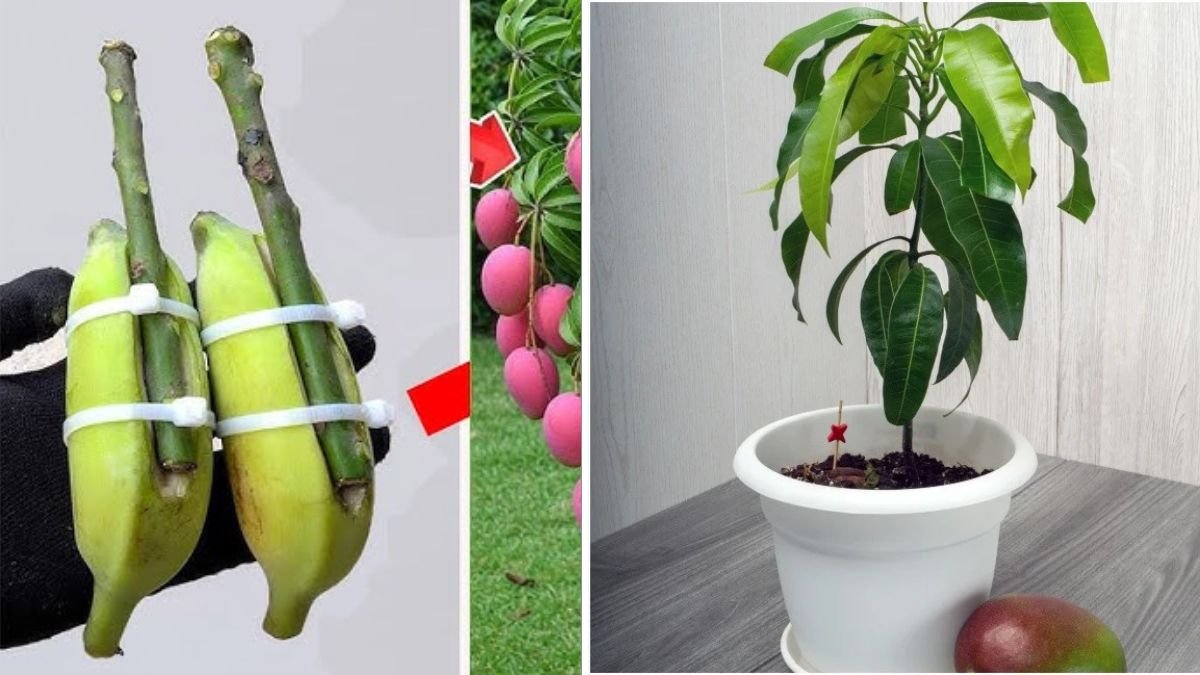
Mango trees are often seen as majestic giants—full of sweet fruit, lush leaves, and a tropical charm that can transform any garden. Many gardeners admire them from afar, assuming that propagating a mango tree must be difficult, technical, or something only expert horticulturists can do.
But here’s the good news:
Mango trees are actually much easier to propagate than most people think.
With simple methods, basic materials, and natural boosters, even beginners can successfully multiply their favorite mango variety.
And best of all—some techniques allow you to grow fruiting mango trees much faster than planting from seeds.
Whether you want to grow a mango tree for shade, beauty, or delicious fruits, this detailed guide will walk you through the best and easiest methods to propagate mango trees at home.
Let’s begin your mango propagation journey!
Why Propagating Mango Trees Is Easier Than It Seems
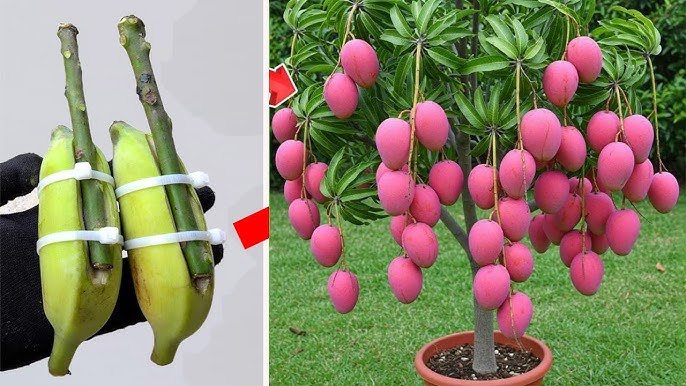
Mango trees respond extremely well to propagation because:
They root well from semi-hardwood cuttings
They thrive in warm, tropical climates
They grow extremely fast when young
Many varieties adapt well to pot culture
Natural rooting boosters work effectively on them
Most people struggle only because they use the wrong branch, wrong season, or wrong soil. When done correctly, mango propagation becomes simple, reliable, and surprisingly quick.
The 3 Easiest Ways to Propagate Mango Trees
There are three tried-and-tested methods you can use:
1. Seed Propagation (Beginner-Friendly)
2. Cutting Propagation (Fast & Effective)
3. Air Layering (Best for Fast Fruiting & High Success)
Each method has its strengths, and the right choice depends on whether you want ease, speed, or guaranteed fruit quality.
1. Propagating Mango Trees from Seeds
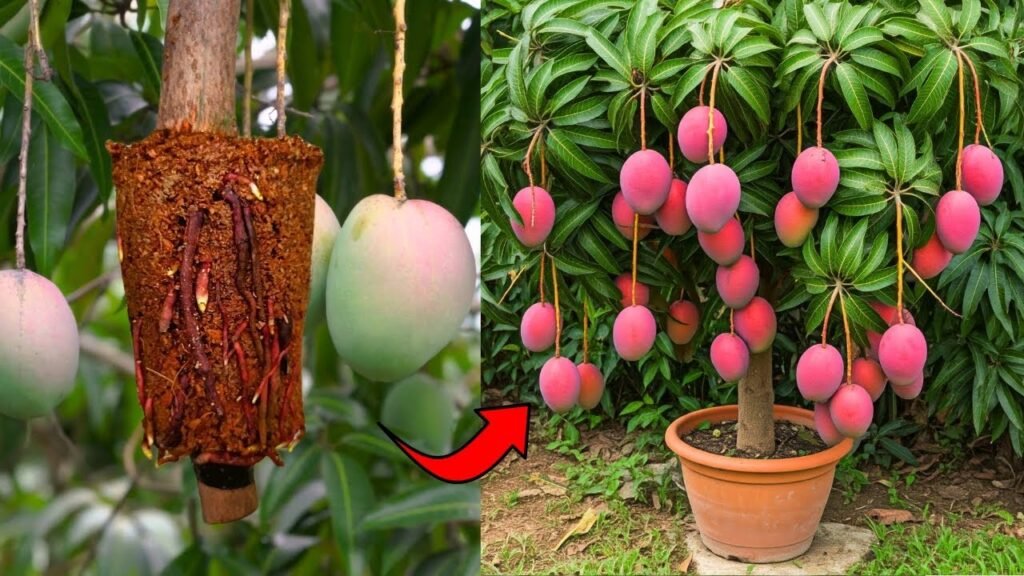
🌱 Easiest method—perfect for beginners
Growing mango from seeds is the simplest way to start, and it’s a satisfying process to watch.
Advantages
- Very easy
- No special tools needed
- High germination rate
- Fast early growth
- Great for rootstock or ornamental trees
Disadvantages
- May not taste like the mother fruit
- Fruiting takes longer
- Not always true-to-type
Step-by-Step Seed Propagation
Step 1: Choose a Fully Ripe Mango
Seeds from ripe, in-season mangoes germinate best.
Step 2: Remove and Clean the Seed
Scrape off all flesh to prevent fungus.
Step 3: Open the Husk
Carefully pry open the outer shell to reveal the real seed inside.
Step 4: Prepare Soil
Use a loose mix of:
- 40% garden soil
- 40% compost
- 20% sand or cocopeat
Step 5: Plant the Seed
Plant horizontally with a light cover of soil.
Step 6: Water & Wait
Keep moist but not soggy.
Germination occurs in 2–4 weeks.
When Will a Seed-Grown Mango Tree Fruit?
Expect fruits in:
👉 4–6 years
Still, it’s worth growing—seedlings make strong trees and grow extremely fast.
2. Propagating Mango Trees from Cuttings
🌱 A simple, fast method for clones of your favorite variety
Many gardeners believe mango cuttings don’t root, but this is a myth. With the proper technique and natural boosters, mango cuttings root beautifully.
Advantages
- Clone of the parent
- Fruits faster
- Ideal for limited space
- Works well in warm climates
Disadvantages
- Requires humidity maintenance
Step-by-Step Cutting Propagation
Step 1: Choose the Right Branch
Select semi-hardwood:
- 6–8 inches
- Pencil-thick
- Healthy
- No flowers
Step 2: Make a Slanted Cut
Cut cleanly below a node.
Step 3: Remove Lower Leaves
Keep 1–2 leaves to reduce stress.
Step 4: Apply Natural Rooting Boosters
Use:
- Aloe vera
- Honey
- Cinnamon
- Clove water
These prevent fungal growth and stimulate root formation.
Step 5: Prepare the Rooting Medium
Best mix:
- 40% cocopeat
- 40% compost
- 20% sand
Step 6: Insert Cutting
Push 2–3 inches deep.
Step 7: Maintain High Humidity
Cover with:
- Clear plastic bag
- Bottle
- Mini greenhouse
Step 8: Provide Indirect Light
Direct sun is dangerous at this stage.
Rooting Time
Cuttings typically root in:
👉 4–6 weeks
Signs your cutting has rooted:
- New leaves appear
- Stem becomes firm
- Slight resistance when pulled
When Will Cutting-Grown Mango Trees Fruit?
Expect fruits in:
👉 2–3 years
Much faster than seeds!
3. Air Layering (The BEST Method for Early Fruiting)
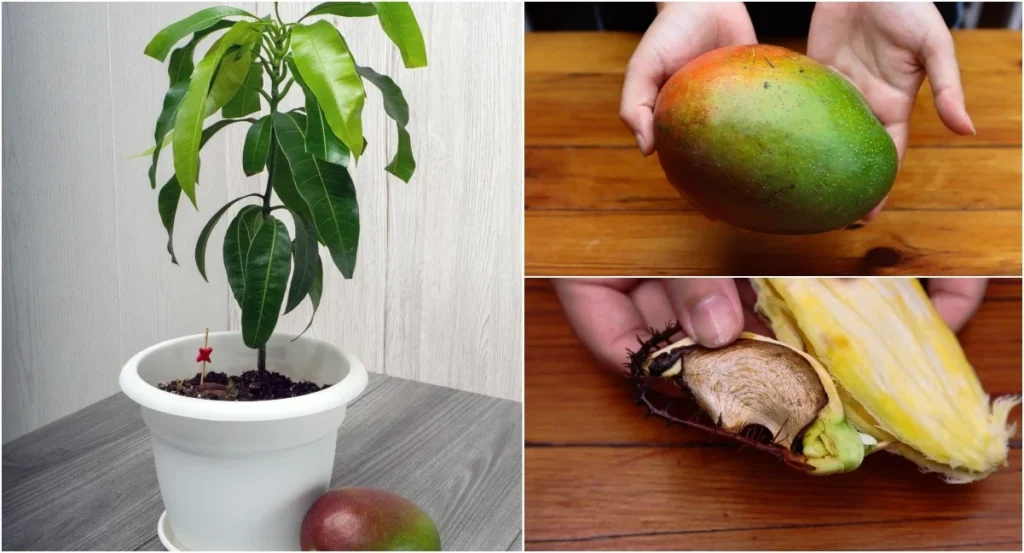
🌱 Highest success rate—perfect for fast results
Air layering produces the strongest, fastest-growing, and most reliable mango saplings.
Advantages
- Nearly 100% success rate
- Roots form while still attached to the tree
- Plants fruit quickly
- Zero transplant shock
- Grow true-to-type
This is the method most professional nurseries use.
Step-by-Step Air Layering Guide
Step 1: Select a Healthy Branch
Choose:
- Thumb-thick
- 1–2 years old
- Green and healthy
Step 2: Remove a 1-Inch Ring of Bark
Expose the white wood underneath.
Step 3: Scrape Off the Green Layer
This stops the wound from healing back.
Step 4: Apply Rooting Boosters
Use:
- Aloe vera
- Honey
- Natural hormones from willow water
Step 5: Wrap with Moist Cocopeat
Pack tightly around the wound.
Step 6: Seal with Plastic Wrap
Tie both ends securely.
Step 7: Wait for Root Formation
Roots appear in:
👉 4–8 weeks
Step 8: Cut and Transplant
Cut below the rooted ball and plant in a pot.
When Will Air-Layered Mango Trees Fruit?
These plants fruit earliest:
👉 1–2 years
This is the best method if you want fast mango production at home.
How to Grow Your Propagated Mango Tree Faster
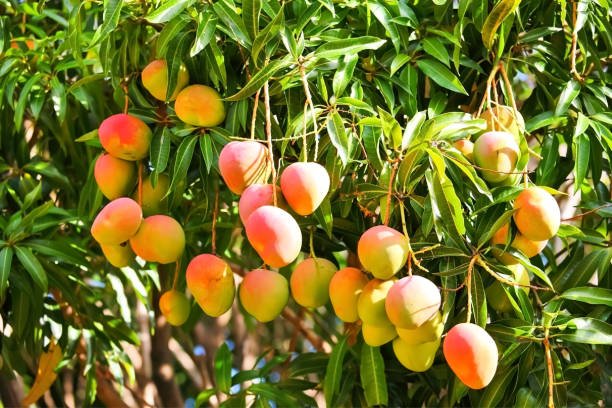
Propagation is just the beginning—proper care is what makes your tree thrive.
1. Give Full Sunlight
Mango trees need:
- 6–10 hours of direct sun
- Warm temperatures
Sunlight = growth + flowers + fruits.
2. Water Correctly
Watering mistakes kill more young mango plants than anything else.
Rules:
- Keep soil moist, not soaked
- Allow top 1 inch to dry before watering
- Reduce watering during cold seasons
3. Feed With Organic Fertilizers
Use every 30–45 days:
- Vermicompost
- Banana peel fertilizer
- Seaweed extract
- Cow dung manure
Avoid chemical fertilizers for young plants.
4. Prune for Good Structure
Pruning encourages:
- Strong branching
- Better fruiting
- Compact shape
Cut the top after the plant reaches 3 feet to encourage side branches.
5. Protect From Pests Naturally
Common pests:
- Aphids
- Mealybugs
- Scale insects
Use:
- Neem oil
- Soap water
- Turmeric spray
How to Ensure Your Mango Propagation Always Succeeds
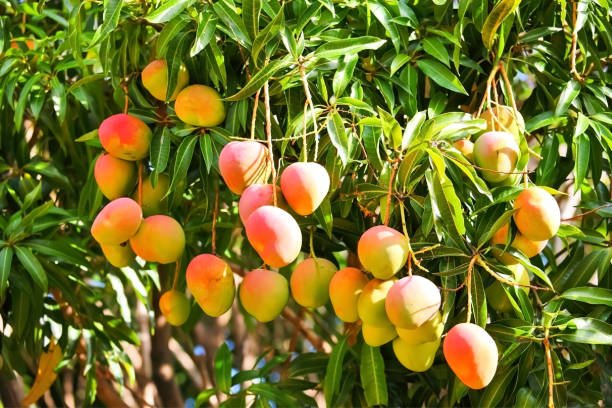
Choose healthy parent trees
Use clean, sharp tools
Maintain moisture but avoid waterlogging
Provide warmth—mango loves heat
Keep cuttings in humidity
Never expose young plants to strong sun too early
Consistency is more important than perfection.
Final Thoughts: Mango Trees Truly Are Easy to Propagate!
Many gardeners assume mango propagation is complicated, but with the right methods, it becomes surprisingly simple.
Whether you choose:
- Seeds for fun and experimentation
- Cuttings for quick results
- Air layering for guaranteed fruiting
you can grow a thriving mango tree right in your backyard, balcony, or terrace.
Propagation is not just about making new plants—it’s about learning, nurturing, and enjoying the journey of watching your mango tree grow from a tiny seed or branch into a fruit-bearing beauty.